
The Changing Landscape of Las Vegas: A City at a Crossroads
In the summer of 2023 , it became increasingly evident that Las Vegas was undergoing a significant transformation. Data confirmed that the so-called “city of sin” attracted fewer visitors than in 2019 . However, operators were extracting vastly more money from those who did come. This shift marked a disturbing trend towards exorbitant prices across the board—an escalation that coincided with the departure of essential tourists who once underpinned the city’s economy.
The Neon Cemetery hosts multiple tales of Las Vegas’s past. Not far from the Strip, one can find the remnants of the city’s storied history, featuring iconic symbols like the pink feathers of the Flamingo and the dancing shirt of Liberace. According to a striking report from The New York Times, the neon signs stand testament to Las Vegas’s ability to continually reinvent itself. Gone are the days of vibrant energies; today’s atmosphere resonates more with a sense of turbulence than euphoria. European tourists, surprised at the escalating costs, have reported meals priced at a staggering one hundred dollars for breakfast , heightening the narrative that Las Vegas may be entering a thematic crisis .
A Descent as a Warning showcases recent statistics from the Convention and Visitors Authority, indicating an 11% decline in visitor volume over a single year. Experts caution that Las Vegas serves as a barometer for the broader economy. When foot traffic slows in Vegas, it may signal that the national economy is also cooling down.
This decline is evident in every facet of the city: empty dance floors in clubs, gondolas drifting in silence through artificial channels, and card tables struggling to draw crowds.
The Canadian Factor looms large over Las Vegas’s visitor numbers. With 1.4 million Canadians visiting annually, recent tensions with the Trump administration have led to a 20% drop in those trips. Experts argue that the potential for a Canadian boycott could result in hundreds of thousands fewer tourists in 2025 , an alarming statistic for a city that relies heavily on international tourists for hotel occupancy, restaurant traffic, and show attendance.
The predicted decline threatens to leave hotel rooms vacant and revenue opportunities evaporating almost overnight.
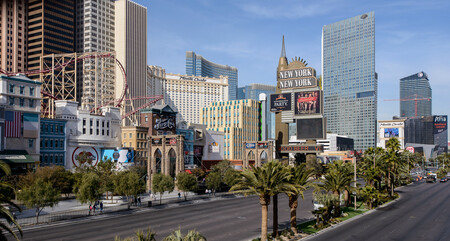
Price Bubble continues to plague both businesses and tourists alike. Room rates have surged from an average of $120 in 2019 to over $160 in 2023 , with some luxury hotels charging over $1,000 per night. Additional fees, such as $50 daily resort fees and show tickets that exceed $300 , further exacerbate the problem. This trajectory of rising costs, initially driven by post-pandemic “revenge travel,” is now perceived as pure greed , dissuading average visitors.
The era of $29 buffets has largely vanished, making way for overwhelming banquets priced at almost $90 . Even routine expenses, like a bottle of water or parking, have turned into symbols of excessive pricing.
The Crossroads of Identity show that Las Vegas has historically balanced luxury with accessibility. However, this equilibrium seems to have tilted toward exclusivity, sidelining the tourists who used to find the city an affordable destination . The risk is palpable: the city may lose its identity as a “theme park for all” and evolve into an unsustainable bubble .
<pVoices like Guy Martin, a veteran contractor, assert that the rising costs are a natural consequence of economic principles, noting that recent infrastructure projects like the Sphere and Allegiant Stadium have each required over $2 billion in investment. However, even industry insiders acknowledge that the sector has “lost enthusiasm” following the pandemic.
Global Comparisons reveal that Las Vegas’s challenges are not isolated phenomena. Macao, once considered the world’s gambling capital, experienced a collapse in 2014 after Beijing imposed restrictions. The city broadened its appeal by diversifying into family tourism, conventions, and entertainment. Though it has regained strength post-pandemic, it remains vulnerable to the whims of wealthy tourists.
In juxtaposition, Dubai has cemented its status as a luxury destination, investing significantly in global marketing and infrastructure. Yet even this metropolis faces similar tensions brought on by price inflation and oversaturation.

Persistence, Nostalgia, and Uncertainty illustrate an increasingly complex reality. Despite facing hurdles, loyal visitors like Mary Reyes and her husband continue to return, still cherishing the city they’ve frequented for decades. The Neon Museum epitomizes this dual narrative—the city of endless reinvention, yet currently trapped in a dilemma regarding its future. Will Las Vegas reinstate its allure as a vibrant and affordable destination, or will it devolve into an enclave reserved for only the affluent? The resolution of this question will ultimately determine whether the city retains its iconic glimmer or whether the neon signs become mere relics of its past.