
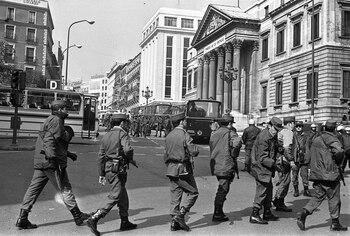
Declassification of 23-F Documents: A New Era of Transparency
The declassification of documents relating to the attempted coup d’état (23-F) on February 23, 1981, marks a significant step toward transparency in Spain’s historical narrative. The Official State Gazette (BOE) has declared that the passage of time has diminished any real threats to the nation’s security, paving the way for public access to these records. Starting today, citizens can consult a wide range of materials related to this pivotal event on the La Moncloa website.
Context of the Declassification
The decision to declassify these documents was supported by multiple ministries, including Foreign Affairs, the Presidency, and Defense. The Council of Ministers concluded that the specific information contained within these files no longer needed protection. This measure aims to facilitate public access to information that is essential for understanding the democratic transition of Spain.
What Does the Declassification Cover?
According to the BOE, the declassified materials encompass various types of documents including written reports, audiovisual content, and other related objects. These documents will provide insight into the events surrounding the coup attempt led by Lieutenant Colonel Antonio Tejero, who attempted to seize control during a critical moment in Spain’s political history.
Implications of the Decision
With the declassification comes a pivotal opportunity for citizens, historians, and researchers to access and analyze the information that has been restricted for over four decades. This decision aligns with constitutional principles ensuring the public’s right to receive truthful information. It also reflects a commitment to transparency over mere state secrecy.
Conditions and Limitations
While this move represents increased transparency, the BOE emphasizes that it does not equate to unrestricted access. Some documents may remain classified due to other legal protections unrelated to national security. The declassification supports the idea that threats to institutional safety have effectively disappeared, thereby justifying public access.
The Judicial Response
The Supreme Court’s earlier convictions of those involved in the coup attempt have fortified the rationale for this declassification. In a ruling on April 22, 1983, the Court deemed the perpetrators guilty of military rebellion, which adds a historical context that reassures both the government and the citizenry regarding the contents of these documents.
Steps Towards Access
To facilitate citizen access, the Council of Ministers has implemented electronic consultations through the La Moncloa website. This digital platform allows for easier research and engagement with the materials, addressing previous demands for greater transparency from the populace.
Conclusion: A Step Toward Historical Clarity
The declassification of the 23-F documents can significantly contribute to understanding Spain’s contemporary political landscape. By allowing public access to these crucial historical records, the government is not only fulfilling a constitutional duty but also setting a precedent for future transparency-related initiatives. As we move forward, this step encourages a more informed citizenry and fosters open dialogue about Spain’s democratic evolution.