

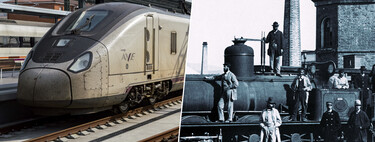
They say that things in the palace go slowly. We could say the same about high speed. Not only because “high-speed” trains are taking longer than ever, but also because the construction of each new line resembles a birth that lasts decades.
For example, the AVE to Extremadura. A quarter of a century has now passed since the project was approved. 25 years. And what we continue to have are connections typical of the 70s until we enter Extremadura where, coincidentally, the pace is already accelerating past Cáceres.
We don’t lie. In 1970, whoever took a train to Extremadura would arrive at the current Monfragüe station in 181 minutes. Today, if everything goes well, it will only take 20 minutes less. More than half a century later, it still takes more than three hours to get from Madrid to Plasencia. Currently, you must stop at Monfragüe station and take a bus since the train no longer goes there.
At least, in Extremadura, they can boast of having Cáceres and Badajoz connected since last December by high speed. It is now possible to cover the journey in just 50 minutes, thanks to long-awaited works that have finally been completed.
A milestone that Castilla-La Mancha cannot claim. Following 25 years of deliberations on where the AVE will pass on its way to Lisbon, a new step forward has been taken. However, this step also feels reminiscent of nearly ten years ago.
One Step Forward, Toledo. One Step Back
When the AVE was initially planned to connect Madrid with Extremadura, it was decided the work would have two clearly differentiated sections: Madrid-Oropesa and Talayuela-Cáceres.
Despite significant delays, the Talayuela-Cáceres section is nearing completion, enabling high-speed trains in that region. According to a recent review from Today, the project’s end could have been much closer if the La Mancha section had progressed at a similar pace.
Since 2008, discussions about the AVE’s passage through Toledo have slowed progress. Initially, an environmental impact report was approved, which included a connection with the Andalusian corridor next to Pantoja. The aim was to extend the line towards Extremadura and reduce costs.
However, the works never began. The 2008 economic crisis derailed the project, and the environmental report expired. By 2017, the Ministry of Public Works proposed that the AVE should pass through Toledo, believing this would attract more travelers due to the city’s status as a World Heritage Site. However, this change increased travel distance and time.

The plan faced rejection from local authorities. The proposed AVE would theoretically connect to the existing station, which is merely two kilometers from Toledo’s city center. However, building a necessary viaduct to cross the Tagus has met with local resistance, as officials fear it would detract from the city’s charm.
By 2020, the project had evolved into subdividing the line into four sections: Toledo, Torrijos, Talavera de la Reina, and Oropesa. Pushback from local authorities in Torrijos further complicated the plan, leading to additional studies extending into 2022. Although Toledo eventually agreed to subsequent proposals, their overall approval remains elusive.
In a bid to expedite the project, the Ministry of Transport has approved a new study proposing to create two branches from the Andalusian corridor. If this plan progresses, it will originate from Pantoja (as was initially intended) and involve both Iberian gauge and international gauge trains. However, trains capable of making this transition would be necessary since the rest of the route to Extremadura is on Iberian gauge.
Currently, the discussions seem to echo conclusions reached back in 2008, remaining unresolved since until a firm decision about the AVE to Extremadura’s route through Toledo is made.
Photo credits: Gunnar Ridderström, Jaime Lillo, and Falk2
In Xataka | The theory said that the entry of the AVE into Galicia would plummet aircraft prices. Practice is something else.