
The Impact of Youth Stories in New Caledonia: A Dive into “6 Kilometers”
In recent years, the **documentary genre** has evolved dramatically, showcasing authentic narratives that give voice to often unheard communities. One notable addition to this trend is **”6 kilometers,”** directed by Julian Starke. This documentary captures the **aspirations** and **challenges** faced by the youth of New Caledonia, particularly in the wake of societal fractures highlighted by tumultuous events. Following its release on France.tv, the film offers a potent exploration of identity, belonging, and the dreams of young Caledonians.
France.tv – on demand – Documentary
Contextual Background: The Aftermath of Riots
Documentaries grounded in reality often serve as platforms for dialogue. **”6 kilometers”** emerges a year after the **violent riots** of May 13, 2024, in New Caledonia, a region marked by **ethnic tensions** and historical struggles for autonomy. These disturbances underscored existing societal fractures, leaving a palpable sense of distrust among communities. The documentary not only depicts the landscape but breathes life into it through the voices of its youth.
A Dive into Personal Narratives
To bring these stories to life, **three young individuals** are featured prominently in the film:
- Rose Waïa: A young mother of two, she hails from the island of **Maré** and is on the hunt for employment.
- Alfa Gopoea: A civic service volunteer at the **Maison de la Biodiversity**, hailing from **Lifou, Métis la Grande Terre**. He is also pursuing a master’s degree.
- Iouri Mroz: An aspiring rapper who works at **Decathlon**, having just released a debut album—he considers himself “very happy” despite the challenges.
Initially, these characters might seem to fit certain **stereotypes**, but as the film progresses, they reveal deeper narratives filled with aspiration, struggle, and identity.
The Journey of Exploration
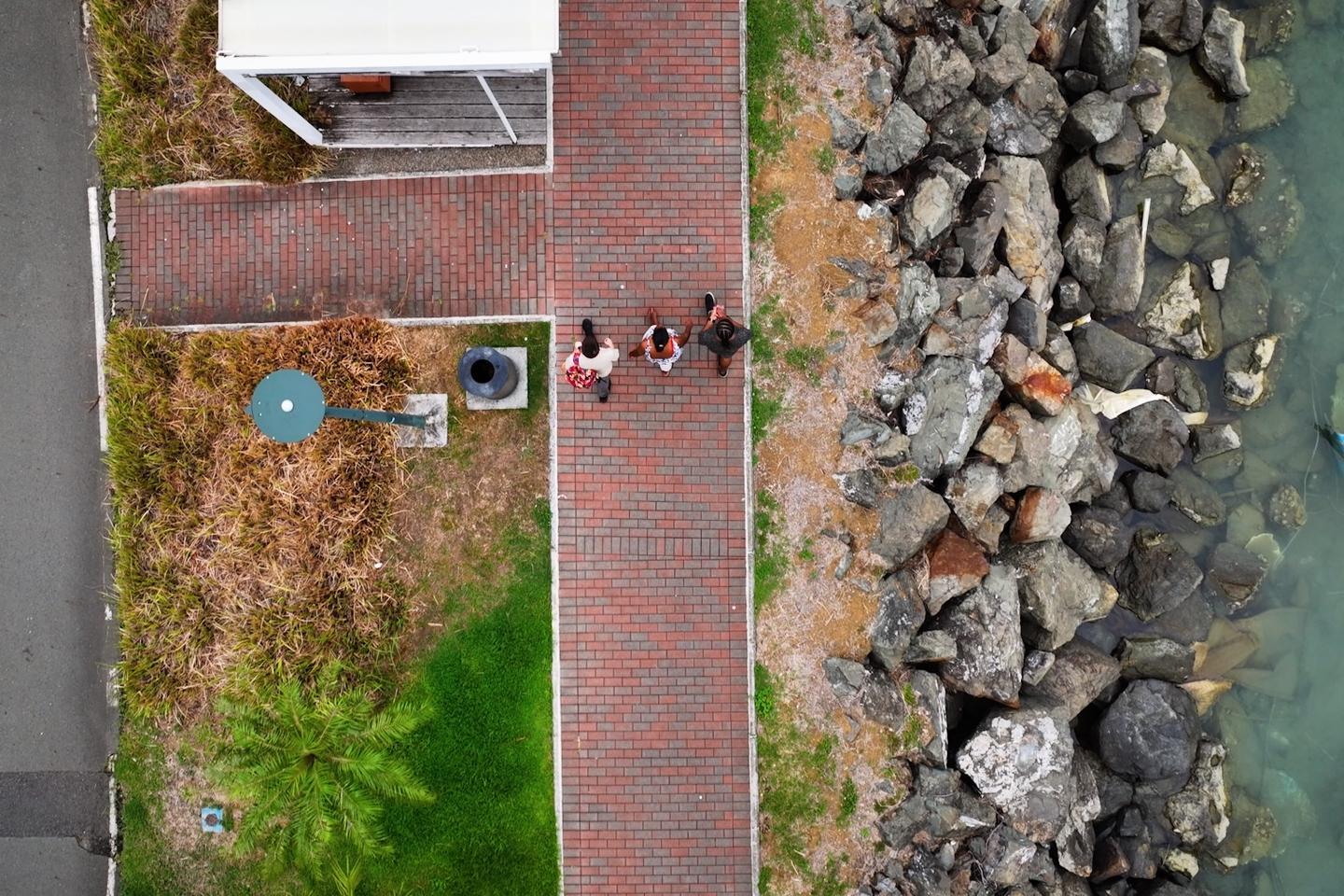
The documentary unfolds as the protagonists walk through **Nouméa** with the camera capturing their journey. Questions about **parenthood**, **identity**, and cultural belonging lead to profound conversations. For instance, Iouri—born to a **French mother** and **Polish father**, and raised by a **Kanake nanny**—identifies as deeply Caledonian. His reflections invoke broader questions of **cultural identity** and the hybridity that comes with global influences.
The cinematography, particularly the use of **drone footage**, offers a fresh and picturesque perspective of the region. This amplifies the emotional resonance of the stories being told, situating them within the majestic landscapes of New Caledonia.
Societal Fractures and Youth Perspectives
As the voices of youth echo through the documentary, the reality of **societal distrust** becomes evident. One character encapsulates this sentiment, stating, “There is twice as much distrust between people.” This statement not only serves as an emotional high point but also as a critical reflection on the divisions present in contemporary Caledonian society.
Conclusion: The Power of Representation
“6 kilometers” succeeds in offering a nuanced perspective on youth in New Caledonia. By focusing on personal stories, the documentary frames complex social issues, fostering empathy and understanding. It invites viewers to reflect deeply on the **aspirations**, **dreams**, and **challenges** of its characters, while also shedding light on the ongoing quest for identity amidst a backdrop of **tension** and **change**. This important work reinforces the power of storytelling in transcending barriers and illuminating the lives of young people seeking their paths in a fractured world.