
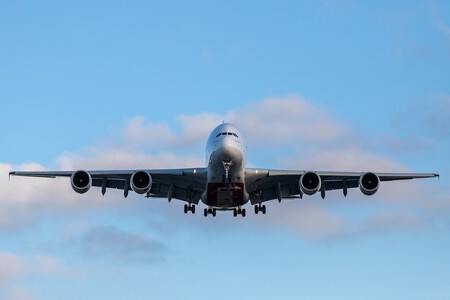
The Airbus A380: An Unforeseen Opportunity
The Airbus A380 was intended to be a groundbreaking advancement in aviation, symbolizing European engineering excellence and a solution to the increasing demand for long-haul travel. Initially viewed as a game-changer in the airline industry, particularly for high-density routes, the A380’s legacy took an unexpected turn with the cessation of its production in 2021. However, its story has not ended; the aircraft’s retired units are becoming valuable commodities in a niche market centered around salvaged parts.
The Market Dynamics at Play
As global air traffic continues to grow, a noticeable gap emerged in the availability of large long-haul aircraft. VAS Aero Services reported in April 2025 that delays in the rollout of the Boeing 777X have heightened reliance on the existing A380 fleet, which may still number around 175 active units worldwide. This situation has created a shortage of certified used parts, making the recovered components from decommissioned A380s increasingly valuable.
Turning Aircraft into Components
The retired A380s are no longer just viewed as obsolete machines but rather as potential sources of essential components for operational fleets. VAS Aero Services has partnered with Tarmac Aerosave in France to efficiently manage the salvage and redistribution of high-quality used parts from these aircraft. This collaboration aims to bridge the gap between retired A380s and airlines needing spare parts, particularly within the EMEA market.
Valuable Assets: The Parts Market
The potential revenue generated from retired A380 units is significant. For instance, as noted by industry insights, a set of landing gear from the A380 can weigh approximately 5,443 kg and command several million dollars on the secondary market. Additionally, one of the aircraft’s engines, the Rolls-Royce Trent 900, is valued at around 10 million dollars when in serviceable condition. This stark reality illustrates that each retired aircraft presents a treasure trove of parts rather than just scrap metal.
The Future of the A380 Parts Market
Tommy Hughes, CEO of VAS, describes the A380 as a “growth opportunity in the aftermarket.” His company is committed to investing in decommissioned A380 aircraft to ensure that valuable components remain available to the vast market of large aircraft operators. According to Hughes, the time has come to focus on a structured program to retire A380s strategically, thereby monetizing the residual value of their parts.
A Paradox of Aviation History
The A380’s narrative has come full circle. Initially designed to redefine long-haul travel, the aircraft turned out to be too large and expensive for many airlines to sustain. Yet, paradoxically, its retired parts are now fulfilling a vital role in maintaining existing fleets, illustrating how even major setbacks in aviation can evolve into profitable avenues.
This complex scenario is not a simple redemption of the A380 program but rather a nuanced understanding of how decommissioned aircraft can still contribute to the aviation industry’s economy. Thus, even in retirement, the Airbus A380 continues to adapt and generate business value one part at a time.
Images | Airbus | Engine Alliance