
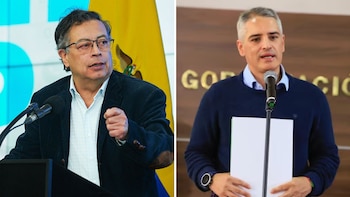
Recently, accusations against the Colombian President, Gustavo Petro , intensified following an event held on June 21, where nine heads of criminal gangs were present. This gathering took place in the historic plaza de La Alpujarra and was termed ‘Un pacto por la paz urbana’ (A Pact for Urban Peace). The participation of these notorious figures sparked outrage among many citizens and raised questions about the government’s approach to dealing with crime.
The criminal leaders were transferred from the Itagüí prison , where they are incarcerated for various offenses, to Medellín, igniting public outrage. Critics argue that bringing these criminals to such a high-profile event undermines law enforcement efforts and sends a troubling message to society.
As reported by the regional newspaper El Colombiano , significant figures who attended the event included José Leonardo Muñoz Martínez (alias Douglas), Juan Carlos Mesa Vallejo (alias Tom), and Freyner Alfonso Ramírez García (alias Carlos Pesebre), among others. Their involvement in organized crime has made them infamous for homicides, extortion, and terror , yet the government has deemed it necessary to engage with them for the sake of peace initiatives.
The rationale behind this approach is rooted in the total peace policy advocated by the national government, which seeks to negotiate with armed groups to cease violence. Nonetheless, this strategy faced backlash from various sectors, including political leaders and citizens, who believe that such engagement rewards criminal behavior.
One prominent critic was Andrés Julián Rendón , the governor of Antioquia. In a video shared on social media, he condemned the event, expressing that it was inappropriate to host criminals as part of a governmental initiative. His statement, “ Dime con quién andas y te diré quién eres! ” translates to “Tell me who you walk with, and I will tell you who you are,” reflects his concerns about the troubling message conveyed by the President’s actions.
Governor Rendón warned that the utilization of taxpayer money to support gatherings that include criminals not only jeopardizes public safety but also disrespects law-abiding citizens who have suffered at the hands of these organizations. He decried the normalization of alliances with individuals tied to serious crimes, asserting that this representation at a state event could alienate the very victims that the government should be serving.
“The presence of these criminals shows a lack of respect towards the victims who have experienced the consequences of homicides, displacement, and extortion ,” Rendón lamented. Furthermore, he argued that such associations cast doubt on the government’s commitment to uphold justice and security.
In his counterargument, Governor Rendón asserted, “We are solid with the Constitution, the law, and the military and police forces against criminals.” In contrast to the President’s methods, he underscored that his administration remains steadfast in its mission to protect citizens and uphold the rule of law.
During his remarks, Rendón emphasized the importance of genuine societal progress and highlighted advancements made under his administration, including essential social programs aimed at improving community welfare. “While President Petro has talked for three years without tangible results, we have already made strides in delivering vital services and support to our vulnerable populations,” he pointed out.
Furthermore, Rendón rebuked any attempts to intimidate law enforcement officers, insisting that the President should respect their roles and responsibilities. The rising proximity of criminal figures within political discussions raises alarms about the democratic integrity of the nation, making the public question whether law enforcement is truly on the side of justice.
The presence of criminal leaders at such a high-profile event presents a complex dilemma for Colombia. While efforts towards peace are critical, the approach and methods adopted must carefully balance between dialogue and upholding the rule of law. The government’s strategy appears contentious, prompting debates that question the efficacy and morality of negotiating with individuals who embody societal fears and crime.
In conclusion, the gathering of criminal leaders with a sitting president highlights deep societal divisions and the crucial need for transparent governance and accountability. As discussions surrounding peace and crime continue, it is essential for leaders to ensure that they maintain integrity while working towards a safer future for all Colombians.
General News – 2