
Pavél Dúrov’s Strong Stand Against Pedro Sánchez’s Social Media Regulations
The recent proposal by Spanish President Pedro Sánchez to regulate social networks has drawn sharp criticism from influential figures in the tech world, including Elon Musk. However, it’s not just Musk who is speaking out; Telegram’s CEO and co-founder Pavél Dúrov has also stepped into the fray, delivering a pointed message to Spanish users regarding the implications of Sánchez’s measures.
A Bold Notification to Users
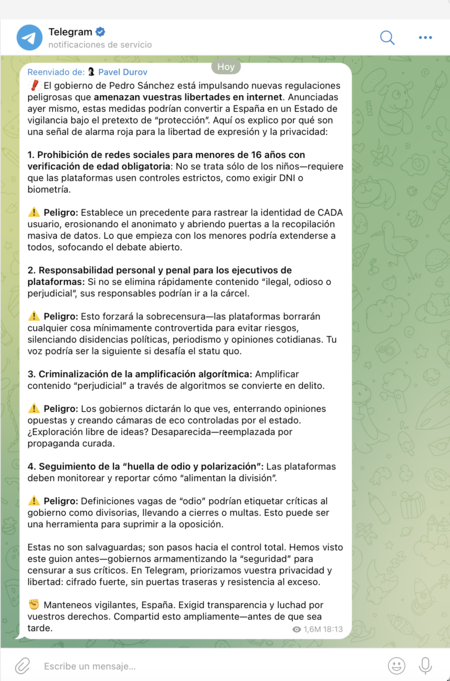
If you’re a Telegram user in Spain, you likely received an unusual notification from the official ‘Telegram’ bot today. The message, which usually deals with security updates, took a political turn. It relayed Dúrov’s assertion that “the government of Pedro Sánchez is promoting new dangerous regulations that threaten your freedoms on the internet.” He emphasized that the proposed measures could have serious ramifications for freedom of expression and privacy.
Concerns Over Age Restrictions
One of Dúrov’s main criticisms centers around the proposal to restrict access to social networks for minors under 16 years of age. He argues that enforcing such a restriction would necessitate stringent identity verification protocols—tools like national IDs or biometric data—which could erode user anonymity and pave the way for extensive data collection. “What starts with minors could spread to everyone, stifling open debate,” Dúrov cautioned.
It’s worth noting that Sánchez’s government has yet to outline specific details about the technical mechanisms for age verification, leaving Dúrov’s concerns somewhat speculative but grounded in a realistic fear of overreach.
The Risk of Over-Censorship
Dúrov’s message also highlights another critical issue: increased pressure on social media platforms to regulate content deemed illegal or hateful. This change, according to Dúrov, could lead to over-censorship. He claims that platforms may preemptively remove any slightly controversial content to avoid repercussions, thereby silencing dissenting voices, independent journalism, and casual opinions.
The Dangers of Algorithm Regulation
Additionally, the proposed regulations aim to legally punish the manipulation of algorithms that amplify illegal content. Dúrov interprets this as a troubling shift towards governmental control over what users see online. He warns that such measures could lead to state-sanctioned echo chambers where opposing viewpoints are buried and public discourse is severely restricted.
Polarization and the Footprint of Hate
Another component of Sánchez’s package involves creating a framework for evaluating social media’s role in promoting societal division. Dúrov is skeptical, arguing that vague definitions of “hate” could easily target legitimate criticism of the government, leading to closures or fines for dissent.
A Broader Context for Dúrov’s Critique
Dúrov’s concerns are underscored by the broader complexities surrounding Telegram. The platform has been scrutinized for its role in hosting content that’s difficult to moderate and for its relationship with law enforcement. With ongoing investigations in France regarding criminal activities tied to Telegram, Dúrov’s messaging cannot simply be viewed as political opinion; it signals a deeper fight for digital rights amid increasing regulatory pressures.
As the conversation unfolds, the implications of Sánchez’s social media regulations for freedom of expression and privacy are more critical than ever. The stakes are high, and the outcome will determine how social media platforms operate in Spain and beyond.