
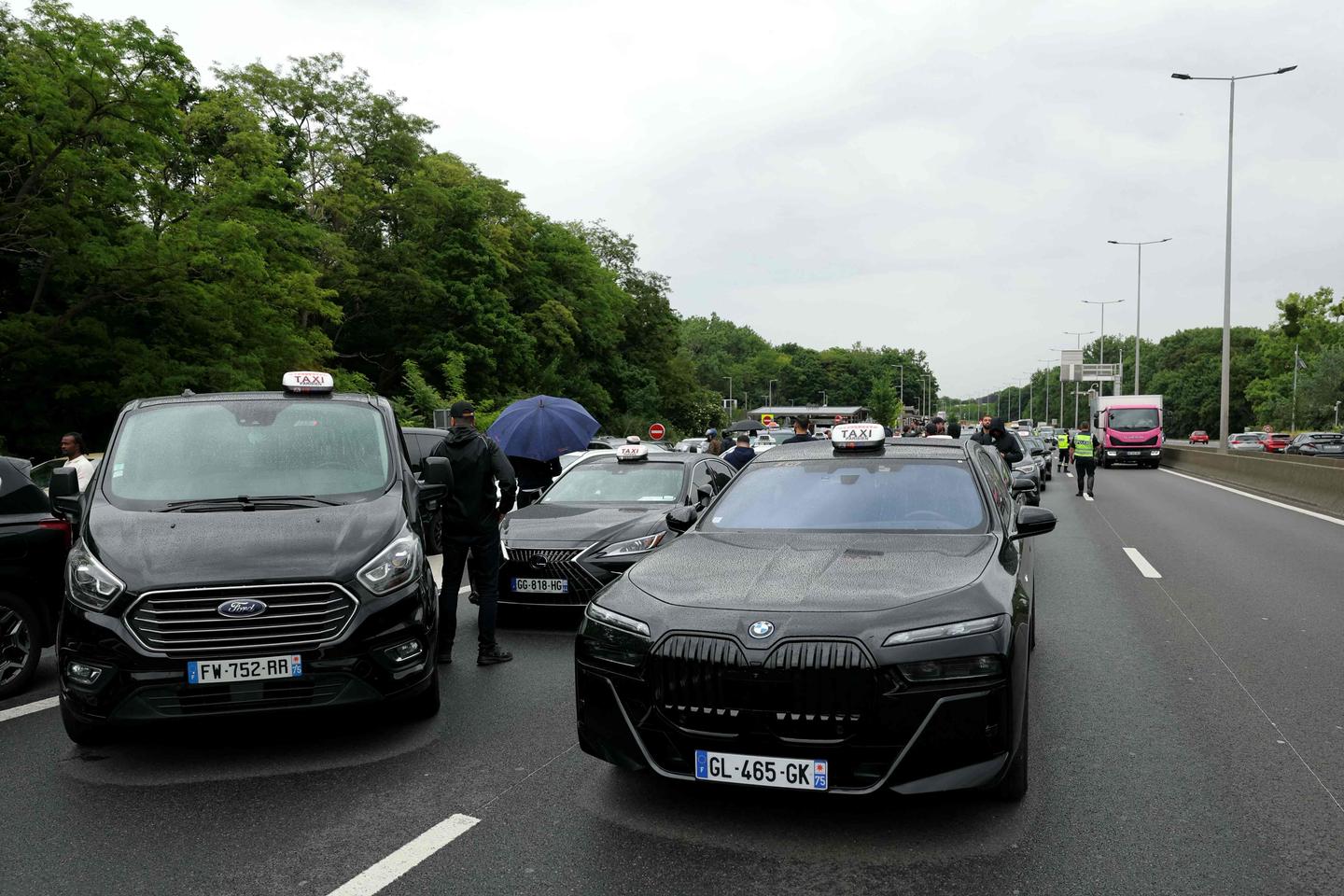
Taxi Drivers Unite: Protests Against Transport Regulations in Paris
The streets of **Paris** were filled with the sounds of honking horns and chants of **discontent** as taxi drivers demonstrated vehemently against new health transport regulations. On May 22, hundreds of taxi drivers took to the streets, marking the fourth consecutive day of protests. Their discontent stemmed from new conditions imposed on health transport and the increasing competition from **Transport Cars with Drivers (VTC)**. The situation escalated as protests spread throughout the city, with significant blocks occurring in central areas.
The Protests Intensify
According to a report by **Agence France-Presse (AFP)**, a filtering blockade was established at the entrance to **Charles-de-Gaulle Airport** by around twenty taxi drivers. This move was part of a larger strategy to gain visibility for their cause. The **Elite Taxi association**, representing many drivers across France, indicated that several hundred taxis were involved in blocking key roads, including **Boulevard Raspail**, which is located near the **Ministry of Transport**.
The protests were triggered by a call-to-action from the intersyndicale, a coalition of taxi employee unions, which began mobilizing on **Monday**. They protested against what they considered **unfair pricing** regulations imposed by health insurance on transport services, particularly for patients requiring transport to **hospitals** or **medical offices**. For many taxi drivers, these patient transport services are crucial for their livelihood, and the new pricing models threatened to significantly reduce their earnings.
Rising Tensions: Clashes and Confrontations
Tensions escalated as the protests intensified, leading to confrontations not only with law enforcement but also with VTC drivers. These **confrontations** sometimes turned violent, prompting the **Uber VTC platform** to issue a public plea for calm. They expressed regret over incidents involving physical assaults on four VTC drivers, which allegedly included threats involving firearms, **tasers**, and even the use of **tear gas**.
In response to the unrest, the **Ministry of Transport** proposed enhanced controls for VTC operations, aiming to address the safety concerns raised by taxi drivers and to possibly reduce the competition affecting conventional taxi services.
Drivers’ Perspectives: Voices from the Ground
During the protests, many taxi drivers voiced their frustrations and concerns. “We are not against competition, but we want a **level playing field**,” said one driver who wished to remain anonymous. “The new regulations undermine our work and severely impact our income. We are fighting not just for ourselves, but for future generations of taxi drivers.”
Another driver added, “Transporting patients is not just a job for us; it is a service that requires dedication and skill. The government should recognize our importance in the healthcare system and compensate us fairly.” This sentiment was echoed by many protesters who felt undervalued in the face of rising operational costs.
Government Response: Seeking Solutions
In light of the ongoing protests, the **French government** is under increasing pressure to address the concerns raised by taxi drivers. Discussions have emerged regarding potential **policy changes** that could ease regulations on taxi operations and improve the economic viability of the profession. Transport Minister **Clément Beaune** has suggested that the government is open to dialogue and is exploring ways to enhance support for taxi drivers.
However, some advocacy groups question whether the government is truly committed to resolving these issues or if the latest proposals are mere lip service to quell the protests. The coming days will be crucial in determining whether a meaningful agreement can be reached between the taxi industry and policymakers.
Looking Forward: The Future of Taxi Services in Paris
The ongoing protests by taxi drivers serve as a stark reminder of the challenges facing traditional transport services in an era dominated by VTC platforms. The taxi community’s demands highlight broader issues relating to competition, safety, and economic sustainability in urban transport. As the situation develops, it remains to be seen how the government will navigate these turbulent waters and what the future holds for the traditional taxi service in **Paris**.
In the meantime, both taxi drivers and VTC drivers must find a way to coexist in a rapidly changing transport landscape. Each side must engage in constructive dialogue to address grievances and propose solutions that ensure equitable opportunities for all transport providers. The protests may hinge on immediate regulations, but their impact could reverberate for years to come, redefining the future of urban transport in France.