
Taiwan’s Defense Strategy: Building Strength Against Chinese Pressure
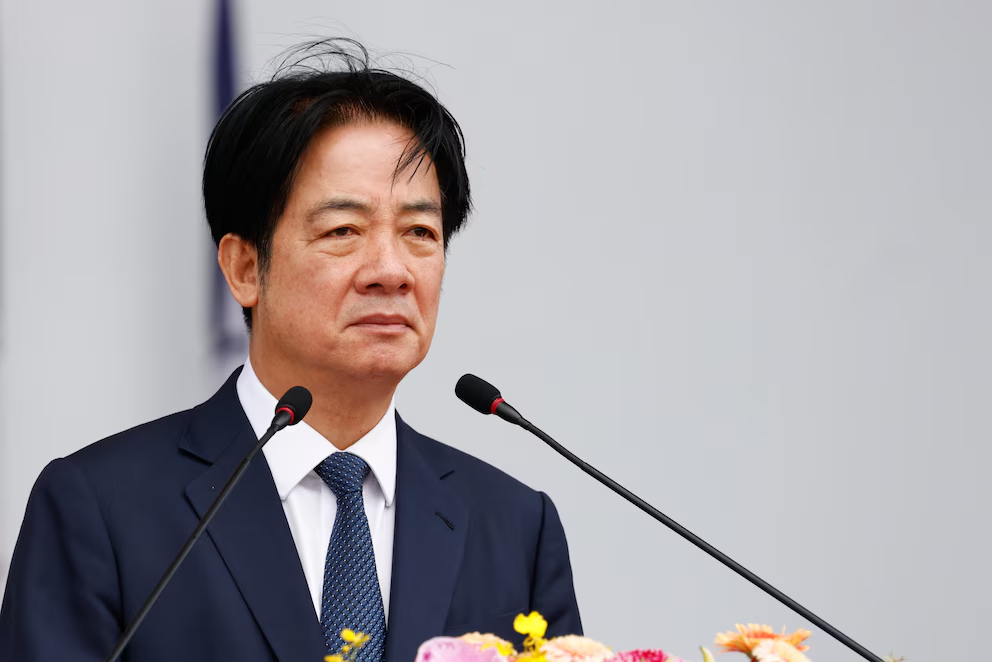
Taiwanese President William Lai during the launching ceremony of the M1A2T Tank Battalion in Hukou, Taiwan, on October 31, 2025. EFE/EPA/RITCHIE B. TONGO
Building Strength and Readiness
Taiwanese President William Lai has underscored the necessity for the island to “build its own strength” to ensure peace in the Taiwan Strait amidst increasing pressure from China. He recently proposed an extraordinary defense budget amounting to 1.25 trillion Taiwan dollars (approximately $39.4 billion), highlighting a proactive approach to national security.
During a forum with high school students in Taipei, Lai emphasized that peace cannot be maintained if a nation lacks the strength to safeguard its interests. He noted that accepting the demands of an aggressor undermines the foundation for lasting peace.
Military Preparedness
When questioned about the likelihood of a Chinese attack, Lai refrained from giving a definitive answer, instead insisting that Taiwan must prepare for all eventualities. The proposed budget is designed to establish a multi-layer anti-aircraft defense system, known as ‘T-Dome,’ and to bolster Taiwan’s local defense industry.
Political Divisions and Opposition
Despite U.S. backing, the initiative faces stiff resistance within Taiwan’s Parliament, where the opposition party, the Kuomintang (KMT), and its partner, the Taiwan People’s Party, hold a majority. Opposition leader Cheng Li-wun has accused Lai of “playing with fire,” arguing that this extensive military spending could reach over 5% of Taiwan’s GDP, risking cuts to vital sectors like education and welfare.
Cheng raised concerns that if these defense budgets come to fruition, Taiwan’s public debt could surpass 500 billion Taiwan dollars (around $15.9 billion), substantially exceeding the legal limit allowed. He expressed disappointment that the Taiwanese president had not engaged in a thorough discussion with the public or Parliament regarding such critical decisions.
The Regional Context
Cheng’s warnings are particularly alarming given the heightened military activities from China in the region. The KMT leader stressed that Lai’s policies seem to push Taiwan toward greater independence by negating any notion of subordination between Taiwan and China.
The timing of this debate is crucial as Beijing has intensified its military maneuvers around Taiwan, coupled with a crisis stemming from Japan’s Prime Minister Sanae Takaichi’s comments about possible Japanese intervention should a conflict arise over Taiwan.
Conclusion
As Taiwan navigates these complex dynamics, President Lai’s call for strengthening defense capabilities signifies a commitment to national security. However, the political landscape remains fraught with tension, and the response from the opposition indicates a significant divide on how best to ensure Taiwan’s security without compromising its economic stability. With regional tensions escalating, Taiwan’s path forward will be closely scrutinized both domestically and internationally.
(with information from EFE)