
Taipei Metro Hosts Unusual Military Exercises Amid Rising Tensions
The Taipei Metro is known for its extensive network of transit options that connect various parts of Taiwan’s bustling capital. On a typical day, the metro is filled with passengers carrying work-related items, tourists with their cameras, and families heading to different destinations. However, the early hours of a recent Monday saw a scene vastly different from the ordinary—soldiers, armed with anti-tank missiles , began to fill the stations instead of commuters.
The motivation behind this unusual mobilization? A significant message directed both within Taiwan and beyond its borders.
Unusual Sight: Armed Forces on Public Transit
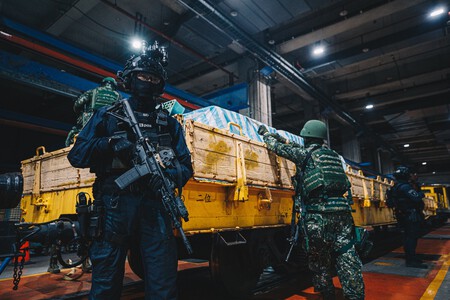
It is not uncommon to encounter civilians using public transit in Taipei; from parents with children to businessmen heading to the office, the metro is usually a melting pot of daily life. However, on that particular Monday, passengers were met with the surprising sight of heavily armed troops riding the cars and moving through the stations, transporting military supplies and equipment.
The Taiwanese Ministry of National Defense and its Military News Agency were quick to disseminate images capturing this unusual military operation. Participants included soldiers from both the Military Police and the Army’s third command, operating along one of the busiest routes in Taipei’s metro system, specifically between Shandao and Longshan Temple stations.
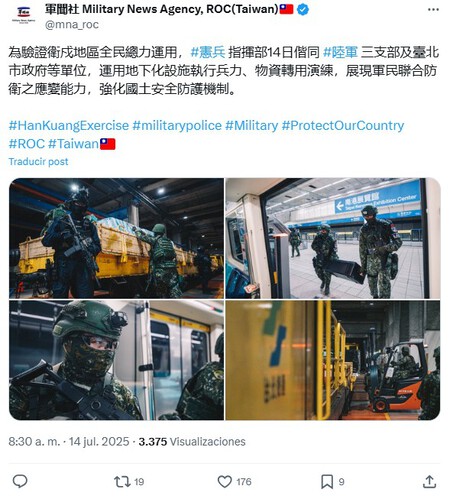
<span>Click on the image to go to Tweet.</span>What Prompted This Display?
Contrary to what some may assume, the presence of armed troops in the metro does not indicate an imminent invasion from the Chinese military. Instead, this unique display forms part of the annual Han Kuang military exercises, designed to prepare Taiwan’s armed forces in the event of an attack from the People’s Liberation Army (PLA). While the Han Kuang drills are not novel—they have been held for decades—this year’s exercises feature a heightened scope, particularly in their public visibility.
Major media outlets such as The BBC and Reuters reported this edition as one of the most extensive in recent history, with an expected duration of ten days from July 9 to 18. This year also includes the involvement of approximately 22,000 reservists , a 50% increase compared to the previous year. Additionally, the exercises feature the US-supplied Himars launch system.
Visibility and Public Awareness
One of the standout aspects of the current Han Kuang exercises is their visibility and direct engagement with the civilian population. Rather than merely mobilizing troops in secluded areas, the military is now showcasing their preparations in the heart of urban centers. As noted by the Financial Times, this approach aims to educate the public on the realities of potential conflict, enhancing awareness of what a military response would entail.
Local residents like an elderly man expressed the sentiments during an interview with the British press: “If there is ever a war, they will fight right here.” This drill also serves to familiarize soldiers with urban transit systems, making them better equipped to mobilize quickly if necessary.
</div>Learners from Recent Conflicts
The military exercises do not solely focus on metro operations. Comprehensive drills are simulating various threats, including urban resilience exercises and defensive naval maneuvers. In one event, the Taiwanese military demonstrated a mine placement strategy to showcase their preparedness for a possible amphibious assault by the PLA.
Additionally, the Taiwanese defense forces are testing high mobility artillery rocket systems and air-to-ground missiles like the Sky Sword . Taiwanese officials have stated they are analyzing lessons from recent conflicts, particularly the situation in Ukraine, to realistically prepare for any challenges they may face.
Strengthening Defenses Against External Pressures
The timing of these exercises is strategic. China has perceived Taiwan as a renegade province for decades and is adamant about reunifying it with the mainland. This ambition has intensified military pressure on Taiwan over the past five years. Statements from US officials recently indicated that China may aim for an invasion as early as 2027 —a concern that Taiwan is taking seriously.
In light of these circumstances, Taipei is determined to project its readiness and resilience to defend against potential threats. However, voices from Beijing continue to downplay these preparations, asserting that Taiwan’s efforts to resist through military means will inevitably fail. This ongoing diplomatic tension underscores the critical atmosphere in which Taiwan finds itself, leading to a complex interplay of preparations and responses.
Images | Ministry of National Defense, ROC (Taiwan)