
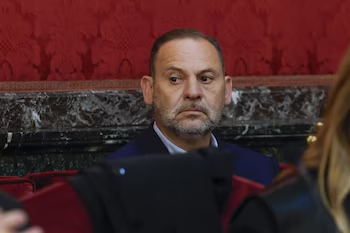
The Supreme Court Sentences José Luis Ábalos and Koldo Garcia in Mask Contract Scandal
The recent ruling by the Supreme Court has sent shockwaves through the political landscape, sentencing former Minister José Luis Ábalos to 24 years and 3 months in prison. His former advisor, Koldo Garcia, received a sentence of 19 years. The case revolves around allegations of corruption linked to mask purchases during the pandemic and irregular hiring practices within public companies.
The Charges Against Ábalos and Garcia
Ábalos was convicted of accepting bribes during the procurement of masks amid the COVID-19 outbreak in 2020. These practices raised significant ethical questions, as public funds were allegedly misused during a national crisis. Additionally, Ábalos faced accusations regarding the irregular hiring of several women within governmental institutions, further complicating his legal standing and public image.
Koldo Garcia’s Involvement
Koldo Garcia, who served as an advisor to Ábalos, was also found guilty in the same scandal. The court imposed a sentence of 19 years on him, reflecting the severity of his actions in facilitating corruption at high levels of government. Together, both men have been in provisional detention since November of the previous year, awaiting the verdict.
The Role of Victor de Aldama
In contrast to Ábalos and Garcia, Victor de Aldama, a commission agent involved in the case, received a lesser sentence of 4 and a half years. Importantly, his sentence has been suspended due to his cooperation with authorities, wherein he confessed to paying bribes as part of a criminal organization. Aldama’s admission of guilt and cooperation may have influenced the court’s decision to impose a lighter penalty.
Legal Proceedings and Reactions
The Anti-Corruption Prosecutor’s Office had initially sought harsher penalties, recommending 24 years for Ábalos and 19 and a half years for Garcia. They argued for significant consequences to serve as a deterrent against political corruption. Conversely, the popular accusations led by the People’s Party (PP) called for even more severe sentences, advocating for 30 years for Ábalos and Garcia.
During the trial, both Ábalos and Garcia maintained their innocence, pleading not guilty and requesting acquittals. However, their denials could not sway the unanimous decision of the seven judges on the case.
Public Sentiment
The verdict has elicited mixed reactions across Spain. For many, it serves as a landmark ruling underscoring the consequences of corruption in government. Others, however, express concern regarding the implications for public trust in political systems, questioning whether the sentences are sufficient to restore faith in democratic institutions.
Conclusion
The sentencing of José Luis Ábalos and Koldo Garcia is a powerful reminder of the repercussions of corruption in public office. As the public awaits potential appeals or further developments in the case, the legal and political ramifications of this scandal linger, suggesting a long-lasting impact on Spain’s political climate. The involvement of figures like Victor de Aldama also reflects the complexities of corruption cases, showing that cooperation with law enforcement can lead to significantly lighter sentences.
Given the gravity of the situation, this decision may pave the way for increased scrutiny and accountability within political frameworks, resonating throughout various sectors and urging government officials to prioritize ethical conduct over personal gain.