
Insecurity in Costa Rican Public Transport
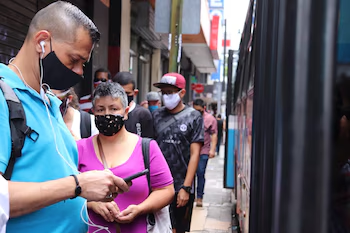
The use of public transportation in Costa Rica has turned into a source of tension for approximately 40% of women, according to a recent study conducted by a Social Work student from the University of Costa Rica (UCR), in collaboration with the Regulatory Authority of Public Services (Aresep).
Growing Concern Over Harassment
The phenomenon of harassment in public transport is not new to Central America. Nevertheless, the study revealed a rising perception of insecurity among women, particularly in rural areas, where long travel times often coincide with limited bus service and insufficient staff presence.
Protocol Against Harassment: Ineffective Implementation
Although there is a formal protocol designed to combat sexual harassment, its inadequate application means that many women remain unprotected. Surveyed participants reported that, despite being aware of the protocol’s existence, they encountered insufficient enforcement in real-world situations.
Staff Response to Incidents
Data indicated that 30% of women faced harassment incidents where bus staff failed to intervene. This lack of action exacerbates feelings of vulnerability among passengers, particularly since many reported that harassment occurred both inside buses and at stops.
The Lack of Trained Personnel
One of the key findings was the significant shortfall in trained personnel within the transport sector. This gap directly impacts both the security of female passengers and the effectiveness of measures against harassment.
“We need to enhance awareness and information within public services,” stated Allison Chevez, a social worker involved in the research. “Women must feel empowered to report incidents, but staff also need to know how to respond appropriately.”

Contributing Factors to Insecurity
Women reported that their feelings of insecurity manifest particularly on long-distance routes, where prolonged waiting at unprotected bus stops makes them more vulnerable to harassment. The lack of staff intervention during incidents of harassment continued to perpetuate a sense of helplessness among female passengers.
Implementation of Protocols
Despite existing protocols designed to address harassment, their effectiveness remains in debate among experts. As it stands, bus drivers are expected to intervene first before the involvement of law enforcement, which underscores the need for proper training.
Juan Carlos Chinchilla from Aresep emphasizes the importance of bus companies strengthening employee training to ensure that staff can respond adequately to these critical situations.
Moving Toward Solutions
The collaborative study by UCR and Aresep suggests awareness campaigns, mandatory training for transport personnel, and expanded service coverage in rural areas. These initiatives aim to provide improved safety for all who utilize public transportation.
In conclusion, ensuring safety for women using public transport in Costa Rica necessitates a comprehensive approach involving effective training and community awareness to significantly reduce feelings of insecurity.