
New EU Regulation on Bank Transfers: Ensuring Security and Accuracy
You open the bank’s app, choose “Transfer,” enter the recipient’s name, and confirm. This routine transaction will undergo significant changes starting October 9, 2025. Under the new European Union regulation , banks within the euro area must now check if the name you enter matches the International Bank Account Number (IBAN) before authorizing the transaction. The primary goal? To ensure that money reaches the correct recipient.
Previously, European banks were not required to verify if the beneficiary’s name matched the IBAN before completing a transfer. This system was solely based on the account number, which allowed payments to be processed even when the name did not match. Certain countries, such as the Netherlands, had implemented unofficial verification systems, such as the Iban-Naam Check. However, there was no standardized practice across the EU. The new regulation aims to rectify this inconsistency by establishing a uniform procedure for the entire bloc.
The Three Possible Outcomes of Verification
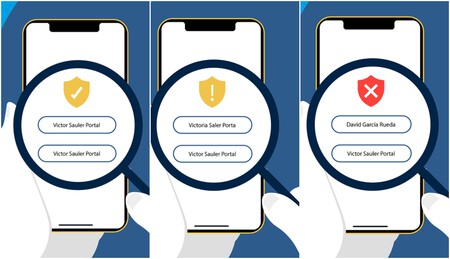
When the bank Crosschecks the name against the IBAN, there are three potential responses:
Total coincidence, partial coincidence, and no coincidence. Image: CaixaBank
- Total coincidence: If the name and IBAN fully match, the transfer will be processed without any alerts.
- Partial coincidence: If there are minor differences (like an incorrect letter or missing accent), an alert will notify the user of this partial match. The user can review the details or proceed at their own risk.
- No coincidence: If there is no match, the system will alert the user but will not reveal the actual name for privacy reasons.
The Impact of Alerts on Transactions
WARNING: DO NOT BLOCK. Receiving an alert does not mean payment is halted. The verification system is intended to inform the user, not to restrict the operation. Even in cases of a name and IBAN mismatch, the user can proceed with the transfer, exercising their own discretion. This new level of transparency enhances the process — previously, users were unaware of potential discrepancies, but now they will be alerted before proceeding.
This mandatory verification applies to both standard and immediate transfers without any additional charges for customers. According to Nickel, one of the payment institutions that outlined how these changes will unfold, recurring transfers scheduled before October 9, 2025, will not be subjected to this verification process; however, all new transfers initiated after this date will be verified at the moment they are created.
Challenges and Considerations
Interestingly, there may be instances when the system fails to verify names with the IBAN due to communication glitches among banks or technical limitations. Nickel indicates that in such cases, the transfer will proceed without verification. Users are advised to cancel transactions if they have any doubts about the recipient, especially with significant amounts or unusual accounts.
The foundation of this regulatory measure lies in the alarming rise of bank fraud in the past decade. European institutions, spearheaded by the Commission and the ECB, recognized the need for a robust mechanism to verify recipients and prevent erroneous payments. With the new guidelines, every transfer will now undergo an automatic verification process, serving as an informative checkpoint without causing delays.

The Various Forms of Fraud
Vishing, Smishing, Romance scams, and BEC. These fraud types are prevalent in Europe, and banks are employing new verification tools to combat them. Vishing relies on deceptive phone calls impersonating bank employees or authorities, while Smishing involves fake SMS messages. Romance scams manipulate victims into a false sense of trust before soliciting money. Similarly, Business Email Compromise (BEC) scams involve fraudulent requests for urgent transfers from supposed company executives.
Common to all these scams is a reliance on psychological manipulation techniques. They create urgency or trust to lead users toward making risky bank transfers. While the verification system may not completely eliminate these risks, it serves as a critical pause point for users, allowing them to detect fraud more effectively.
Best Practices Before Sending Money
Before clicking “Send,” take a moment to verify the recipient’s name and IBAN, especially for new accounts or changes. If an alert for partial or no coincidence is received, it’s prudent to double-check the details through another channel, such as a direct phone call or the official website. If there’s the slightest suspicion, canceling the transaction might be wiser than facing potential regret later.
The Implementation Timeline and Affected Entities
The beneficiary verification requirement will apply to all payment service providers operating within the European Union that handle euro transfers. This includes banks and authorized payment entities. As previously mentioned, Regulation (EU) 2024/886 is set to begin practical application on October 9, 2025, ushering in a new era of security and accuracy in bank transfers.