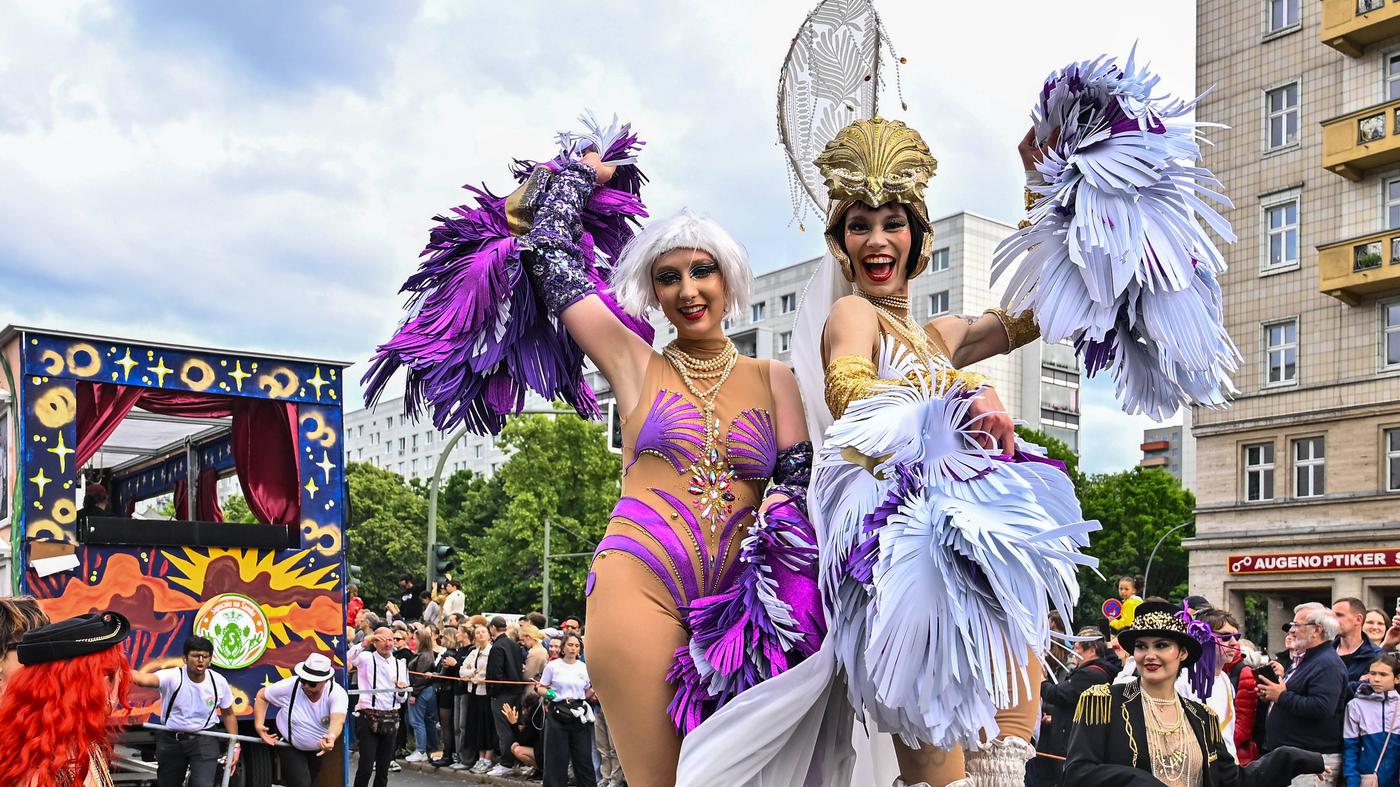
Bright and colorful costumes, thundering drum beats, and hundreds of thousands celebrating joyfully: Despite the mixed weather, the street parade took place on Pentecost Sunday, marking the 27th edition of the Carnival of Cultures in Berlin.
For the first time, the parade route did not traverse Kreuzberg but instead moved along Frankfurter Allee and Karl-Marx-Allee in Friedrichshain and Mitte. This change is due to a major construction site on Gneisenaustraße, which is part of the original route. District mayor Clara Herrmann expressed her willingness to consider a return to this route next year, suggesting a potential evolution for the event.
Throughout the afternoon and evening, a total of 68 groups showcased their talents, with 13 of them participating for the first time. The vibrant colors, driving rhythms, and elaborate dance choreography defined this year’s parade.
The Most Captivating Images from the 27th Carnival of Cultures:
Just like last year, the group “Sapucaiu no Samba” opened the parade with vibrant costumes – featuring a dancer dressed as a frog getting the crowd excited.
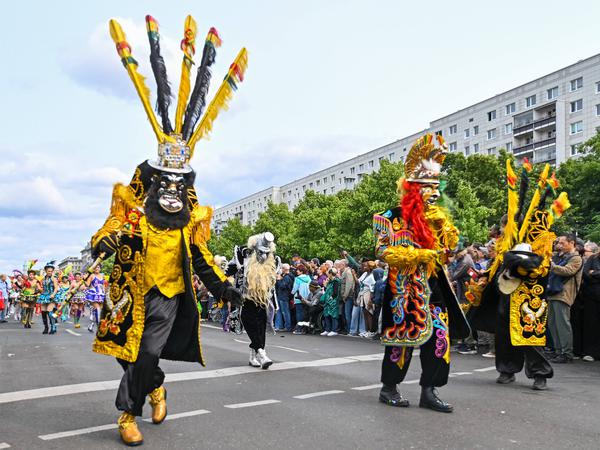
Following closely, “Bolivien Folk” showcased Morenada, a folkloric dance representing the hard labor of enslaved Africans in the silver mines during colonial rule.
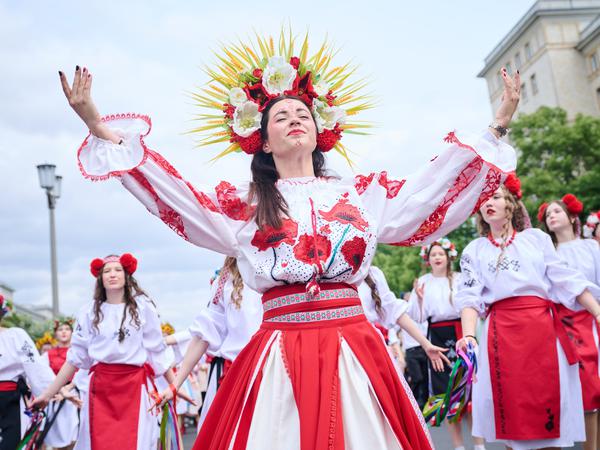
With unique headgear and meticulously designed costumes, dancers from “Kul’tura e.V.” showcased how Ukrainians stand resilient amidst the ongoing war in their country.
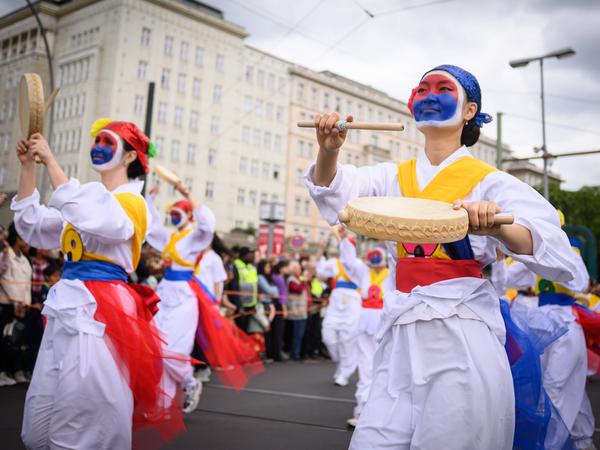
Dressed in traditional attire and adorned with face paint and hand drums, the “Arirang Korea” group brought the culture of the East Asian country to the parade.
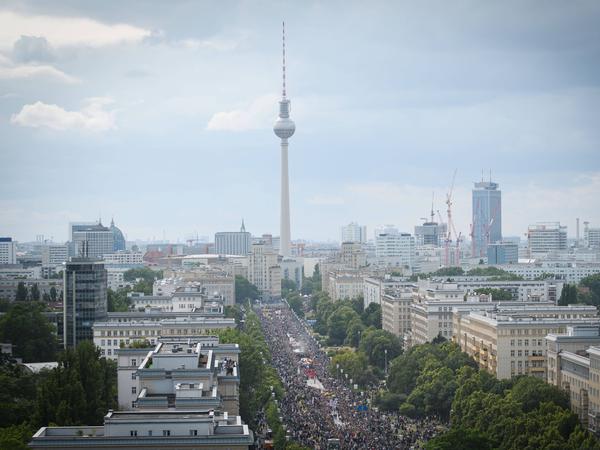
An unusual view: Karl-Marx-Allee, a grand boulevard of the former GDR and one of the widest streets in Europe, hosted the Carnival of Cultures for the first time this year, as ongoing construction at Gneisenaustraße prohibited usage of the traditional route.
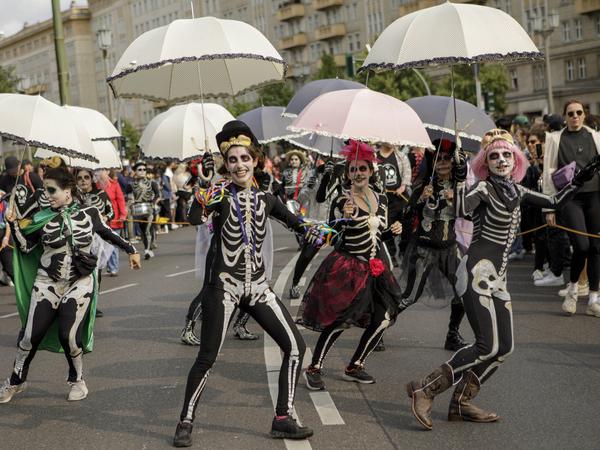
The “March of Skeletons” was brought to life by the “Calaca e.V.” group, highlighting Mexico’s Day of the Dead traditions, prompting reflection on life and death in today’s context. The skeletons symbolize various fates of migrants who encountered death through wars, genocides, or while fleeing to foreign lands.
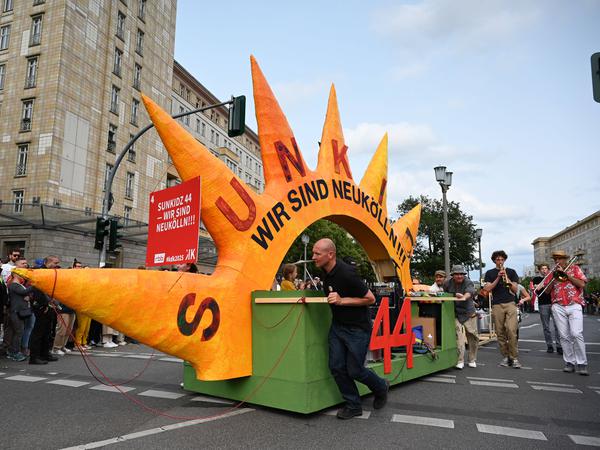
The group “Sunkidz44 – We Are Neukölln!!!” paraded through Berlin with their sun chariot as the central attraction, performing music with drums and wind instruments, complemented with rap and dance performances.
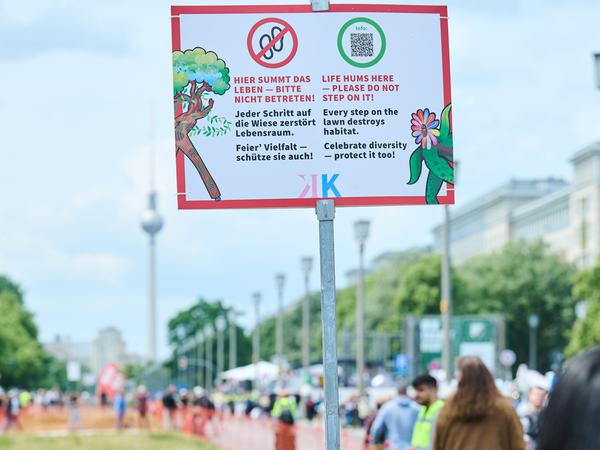
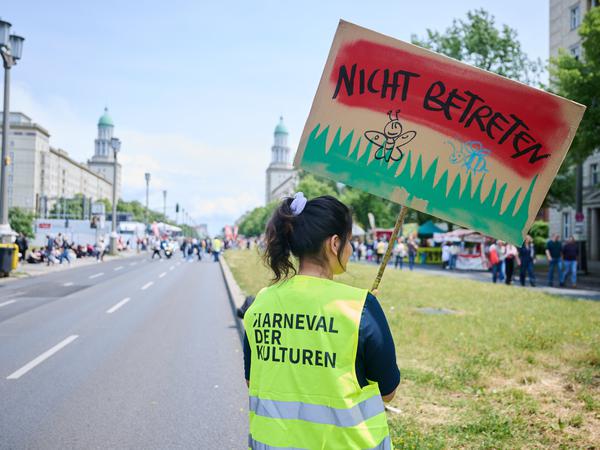
“Here, life is buzzing. Please do not enter!” reads a poster on the median strip of the parade route, who serves to protect the hundreds of animal and insect species that live there.
The lively atmosphere at the carnival brought attention to the hundreds of species that call this area home, reminding attendees to stay aware of their surroundings.
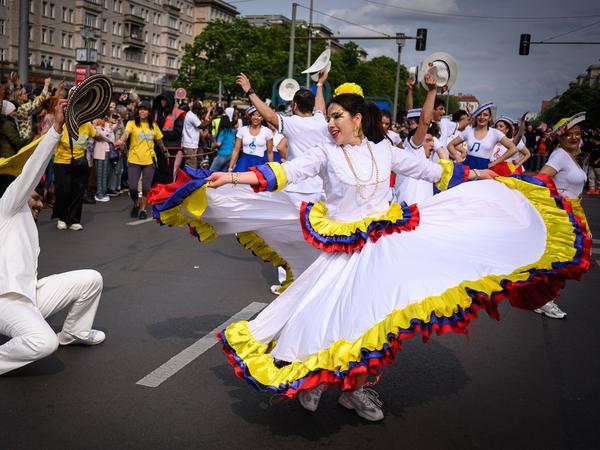
“Colombia Carnaval” presented the Sererese, a traditional dance of miners from Zaragoza in the Antioquía region. With African roots influenced by Caribbean dances introduced by slaves in gold mines, it is also known as Mapalé Negro, danced with torches or lit lanterns.
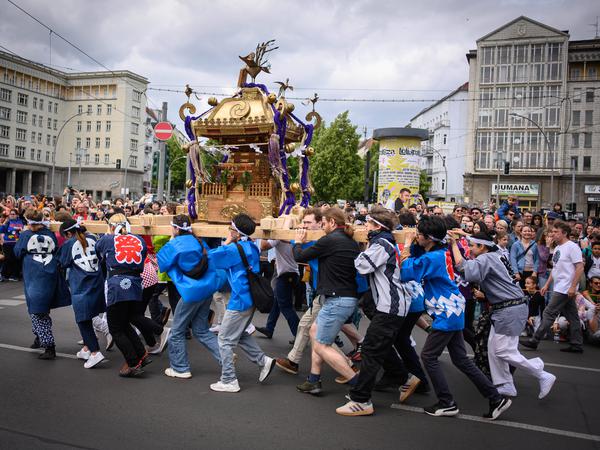
Participants from the Japanese group “Kashiwa-Ren” carried a Mikoshi – a mobile shrine traditionally paraded during local festivals in Japan, making the event extra special.
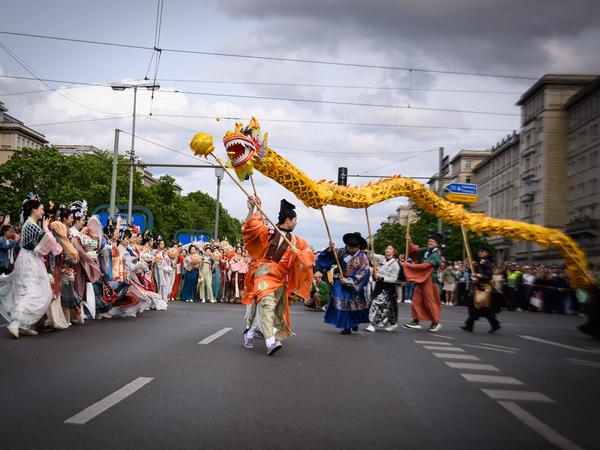
A Chinese delegation from the “Chenyin Hanfu Society Berlin” participated, garnering attention with traditional Chinese attire, particularly panda outfits and a massive dragon.
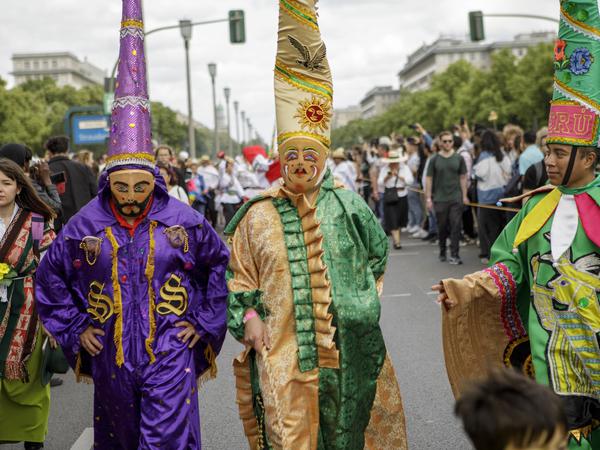
Ten years after the Spaniards arrived in Peru, the Carnival began to be celebrated in the city of Cajamarca, blending with indigenous festivals. This heritage was depicted by the “Grupo Peru,” featuring masks and elaborate costumes.
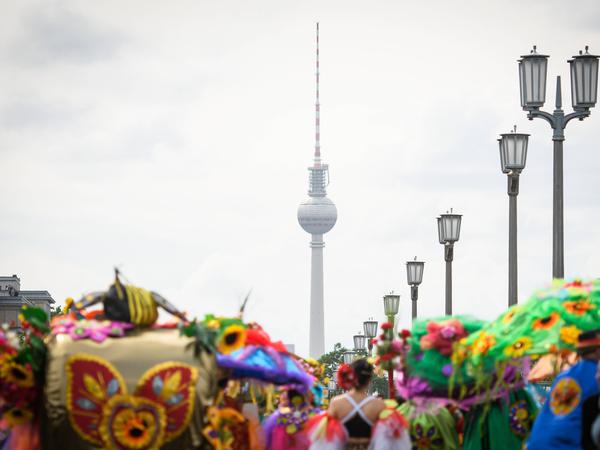
The Carnival of Cultures with the iconic TV tower in the background. Will this return next year? Mayor Clara Herrmann stated on Sunday that she could very well envision another Carnival happening in Friedrichshain and Mitte.