
Spain Urges Diplomatic Solutions Amid Middle East Conflict
The Spanish government has expressed grave concerns over the escalating violence in the Middle East following extensive bombings targeting Iranian nuclear facilities. In an official statement released by the Ministry of Foreign Affairs, authorities emphasized the urgent need for diplomatic measures to alleviate the crisis. The government asserted, “It is imperative to halt the violence and revert to negotiations,” calling for adherence to international law and restraint from all parties involved.
In the statement, the government highlighted that Spain’s embassies in both Iran and neighboring countries remain fully operational to assist any Spanish nationals who may find themselves in precarious situations. This commitment assures citizens that support is readily available in uncertain times.
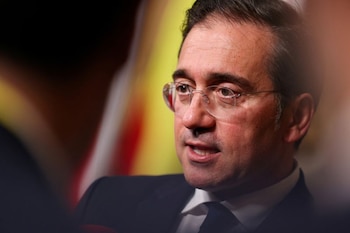
In an interview with Channel 24 hours of TVE, Foreign Minister José Manuel Albares implored for composure, de-escalation, and the prioritization of diplomatic avenues following the unilateral action taken by the U.S. president, Donald Trump. This action involved significant military measures against Iran’s nuclear infrastructure. Albares conveyed the message, “Now is the time for competent diplomats and the European Union to assert their stabilizing influence,” underlining that military solutions will not lead to sustained peace in the region.
Explicitly, Spain stands firmly against Iran—or any country—gaining access to nuclear weapons, while simultaneously advocating for extreme caution regarding military interventions in contexts involving nuclear sites. He noted that upcoming discussions during the EU Council of Foreign Affairs would focus on amplifying Europe’s voice in favor of international law, emphasizing that negotiations are the key to conflict resolution, particularly regarding the Iran nuclear dossier.
Albares plans to reiterate the critical need for progressing toward a two-state solution that would ensure a peaceful coexistence between a Palestinian state and Israel. He aimed to promote mutual security, suggesting, “We can achieve peace and stability in the Middle East only if both states are guaranteed safety.”
The foreign minister argued that all occurrences in the region are interconnected, spanning from Syria and Lebanon to the West Bank and Gaza. He persists in the necessity for establishing a virtuous security framework for the Middle East akin to that which facilitated the formation of the European Union, urging that the natural inclination for nations in the Middle East should not default to conflict.
On the issue regarding the safety of Spanish nationals in Iran, the minister reported no data indicating injuries or fatalities among citizens due to the recent bombings or previous military actions. He reiterated the necessity for Spaniards who chose not to participate in the evacuation convoy to remain vigilant and connected with the Spanish Embassy in Tehran, ensuring they are kept updated through various communication channels.
As the upcoming NATO summit approaches, Albares addressed concerns related to the U.S. request for Spain to elevate its military expenditure to 5% of GDP. He reiterated that while Spain is committed to European security and being a reliable partner within NATO, the focus of the discourse should pivot towards capabilities rather than mere percentages, emphasizing strategic strengths over numerical commitments.
These diplomatic overtures highlight Spain’s pivotal role in advocating for peace and stability across regions embroiled in conflict. The government is navigating a complex geopolitical landscape underscored by historical tensions, urging for dialogue and diplomatic engagement in locations as volatile as the Middle East. With calls for collaborative international efforts, Spain continues to emphasize the importance of shared responsibility in fostering a peaceful future.
The recent developments highlight not only the urgency of diplomatic intervention but also the interconnected nature of global peace and security dynamics. As nations navigate conflicting interests and historical grievances, the path forward remains reliant on strategic dialogues and a commitment to shared values aimed at global stability and peace. A united front strengthened by diplomatic engagement appears as the beacon of hope amidst these turbulent times.