

The Threat of Stablecoins to South Korea’s Economy
Leading **legal** and **financial experts** have raised significant concerns regarding the growing interest in **stablecoins** among political leaders in South Korea. These experts warn that the adoption of **US dollar-based stablecoins** could pose a serious **danger** to the South Korean economy, impacting exchange rates and fiat currencies.
At a recent meeting organized by the **Korea Economic Association**, held at the FKI Tower Conference Center in **Yeouido, Seoul**, experts discussed the potential ramifications of expanding stablecoin use in South Korea. The meeting took place on May 19, and it brought together experts who highlighted the risks associated with stablecoin proliferation.

KRW Stablecoin on the Political Agenda
Prominent political figure **Lee Jae-myung** has pledged to launch a **KRW-pegged stablecoin** if elected president on June 3. His party, the **Democratic Party**, advocates that financial regulators—not the **Bank of Korea (BOK)**—should have the authority to oversee stablecoin issuance. This proposal is aimed at positioning South Korea as a forward-thinking nation in the global digital economy.
However, proponents of using existing stablecoins argue that not adopting these technologies could hinder **Seoul’s** competitiveness in the tech sector. They support allowing South Korean companies to collaborate with high-cap stablecoins like **USDT** and **USDC**. This support indicates a lack of consensus among policymakers regarding the future of stablecoins in South Korea.
“If dollar-based stablecoins become established as a means of payment in South Korea, this could lead to structural changes in the won/dollar exchange rate mechanism. There could be soaring exchange rates due to reduced demand for KRW and increased demand for foreign currency.”
This alarming forecast was made by **Lee Seung-seok**, a senior researcher at the **Korea Economic Research Institute**. He elaborated on the risks posed by decentralized financial technologies, stating that swift capital mobility facilitated by dollar-based stablecoins could lead to massive capital outflows during financial instability.
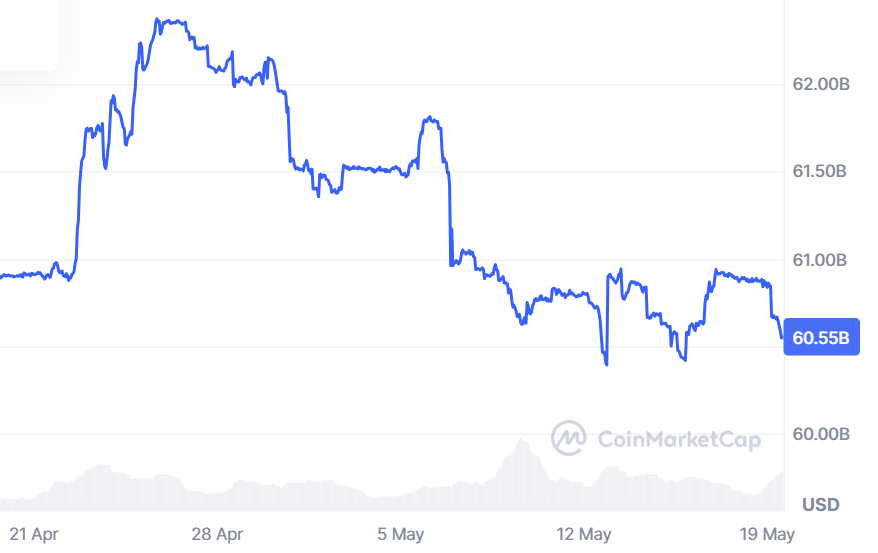
In this evolving landscape, experts like **Kim Hyo-bong**, a former official of the **Financial Supervisory Service**, noted that both **Washington** and **Brussels** are expected to introduce stablecoin legislation in 2025. He emphasized the need for **South Korea** to align its regulations with global standards.
**Kang Tae-soo**, a professor at **KAIST Graduate School of Finance**, acknowledged the advantages that stablecoins bring to the payment and settlement sectors. However, he cautioned that their difficult regulatory nature might generate uncertainty within both monetary and foreign exchange policy sectors.
There is a growing discourse among experts about the necessity of ensuring that South Korea’s stablecoin adoption minimizes potential **side effects** while maximizing the associated advantages.
“We must ensure that South Korea does not fall behind due to excessive regulations. An appropriate financial framework can help provide international consistency while enhancing competitiveness.”
A War of Words Among Candidates
The political landscape surrounding stablecoin adoption is marked by a heated debate. During a televised debate on May 19, **Lee Jae-myung** reiterated his commitment to a KRW-pegged stablecoin. However, his rival, **Lee Jun-seok** of the **Reform Party**, challenged him on this issue. Lee Jun-seok argued that there are no viable use cases for stablecoins pegged to currencies other than the USD, highlighting that USDC and USDT together dominate the stablecoin market.
This debate reveals the extent to which stablecoins are becoming a focal point in South Korean politics as candidates strive to present their innovative solutions to the economic challenges posed by digital currencies.
Lee Jun-seok raised concerns regarding the potential for illegal circulation of stablecoin funds, particularly regarding potential remittances to North Korea. This underscores the necessity for a structured regulatory framework surrounding the adoption of stablecoins in South Korea.
As South Korea grapples with the implications of adopting stablecoins, the path forward remains uncertain. Challenges abound, but the **outcome** of these discussions will determine how the nation navigates the murky waters of digital currency.