
La Grazia: The Soul of a Fallen Leader
“¿De quién son nuestros días?”, wonders the character played by Toni Servillo in Paolo Sorrentino’s latest film, *La Grazia*. This film marks the inauguration of the 82nd Venice Film Festival , and it aims to captivate audiences with its profound themes. Servillo, collaborating with Sorrentino for the sixth time, embodies the role of the Italian President in the twilight of his political career, a character reminiscent of current President Sergio Mattarella . The film explores how this president, who presents himself as a believer and a supporter of the Pope, faces the most contentious issue of our times: euthanasia . As he grapples with this dilemma, the perennial question arises: Whose days are we living?
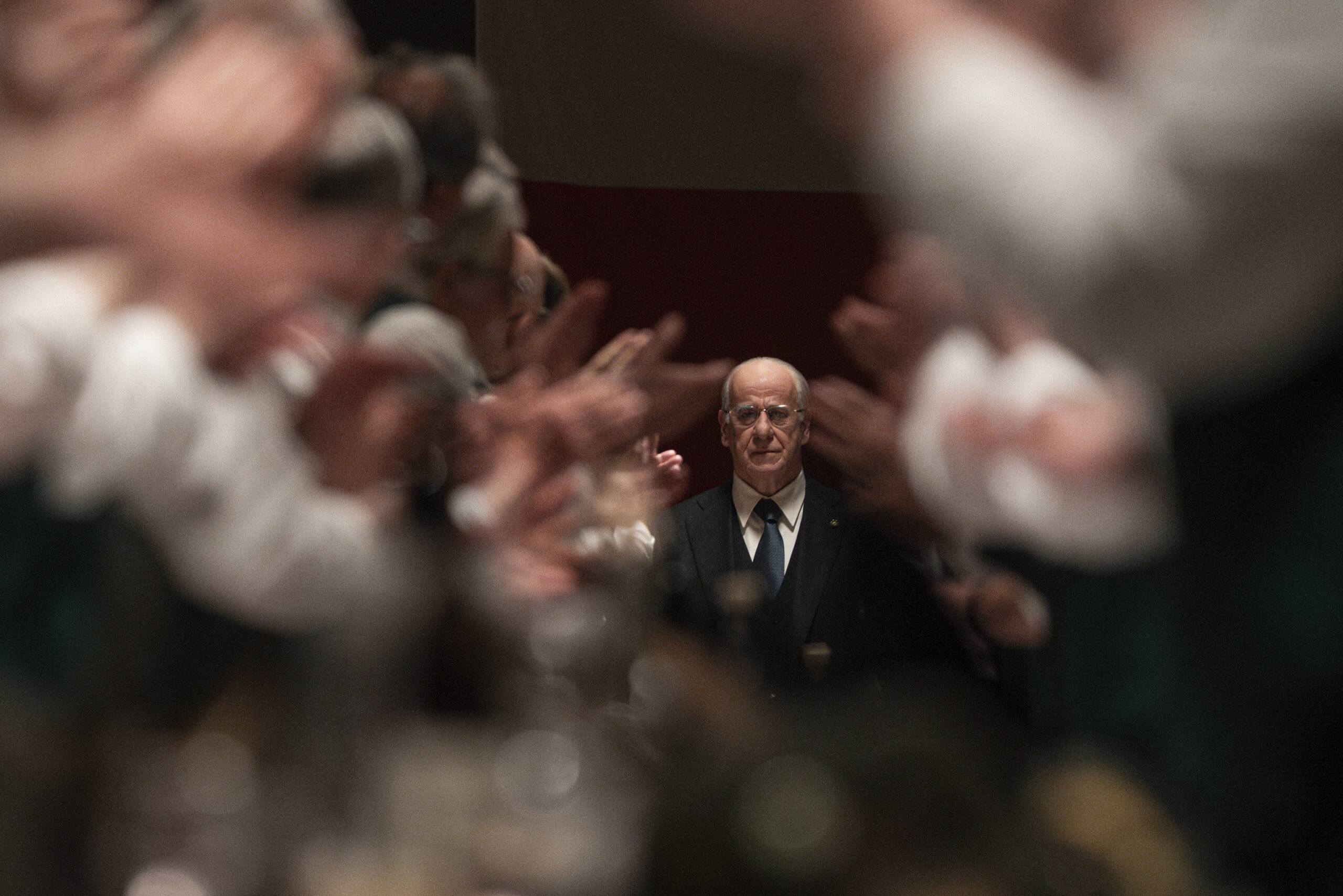
Toni Servillo en un momento de La Grazia.MUNDO
In this film, Sorrentino presents his most coherent narrative since *La grande bellezza* (2013). After previous technical and thematic excesses, *La Grazia* signifies a return to form for the Neapolitan filmmaker. The film balances the exaggeration that Sorrentino is known for with authentic emotional depth, often immersing viewers in an environment that feels simultaneously ludicrous and majestic.
Sorrentino effectively contrasts the current Italian political climate’s freneticism with the indecision of Servillo’s character. This president, once hailed for his intellect and faith, battles with the weight of his decisions, questioning his legacy amidst complex emotions of love, loss, and mortality.
Sorrentino has masterfully utilized cinema as a medium to convey deeper symbols—not just as artifacts, but as representations of a silent, cohesive community that audiences form over shared experiences. Through Sorrentino’s lens, the camera becomes almost an extension of the audience’s conscience, diligently capturing the intricate dance of political life and personal reflection.
The cinematography reflects this ethos, with fluid camera movements down endless baroque corridors and intimate close-ups capturing the anguish and resolve etched on Servillo’s face. This technique elicits an emotional response, allowing viewers to feel the weight of every decision made by the character. Cinematic depth is juxtaposed with moments of levity, illustrating Sorrentino’s knack for balancing the sublime with the absurd.
One powerful theme throughout *La Grazia* is doubt . The president’s oscillation between past regrets and future uncertainties becomes a poignant metaphor for humanity’s struggle with existential questions . Sorrentino candidly invites us to ponder alongside our protagonist. As he interacts with family members, delivers speeches, and contemplates mercy , we are reminded of the incredibly complex web of responsibility that comes with power.
Further distinguishing the narrative are Sorrentino’s sidelights that examine relationships: from familial bonds to those involving power and morality. The character’s contemplations about love and life culminate in vivid scenes that reveal the duality of existence —the intertwining of life’s beauty with its inevitable pain.
The film refrains from utilizing outside distractions, such as football, much to the surprise of fans who anticipate Sorrentino’s hallmark elements. Instead, we witness a powerful portrayal of a protagonist reflecting on his life’s work—haunted by the decisions left unmade, emotions unexpressed, and lives irrevocably altered.
As the Venice Film Festival commences amidst protests regarding geopolitical issues, Sorrentino’s *La Grazia* serves as a potent reminder of art’s role in questioning the status quo. Underneath the spectacle of cinematography and storyline, the film resonates with a unified plea for introspection: whose days are we truly living? The film culminates in an exhilarating exploration of humanity , raising questions of morality and identity while grounding itself in a visceral portrayal of the individual’s plight in a chaotic world.
As audiences leave the theatre, it becomes clear that they have experienced a film that invites both contemplation and conversation, leaving them not merely with answers, but rich and haunting inquiries that linger long after the credits roll.