
The Changing Landscape of Sports Investment
For decades, sports have served as a bridge connecting individuals from all walks of life, from the wealthiest to the most modest backgrounds. This universal appeal has often contrasted with the realities of sports ownership, which has historically been dominated by a select few ultra-wealthy individuals, each boasting a net worth of at least $1 billion . These owners typically showcased their teams more for ego than as lucrative business ventures. However, this narrative is shifting as investment trends change.
The NFL (National Football League) is at the forefront of this transformation, opening doors for investment funds to enter the sports realm. According to a report by analysts at Oliver Wyman , revenue streams and valuations for major teams and leagues are on the rise, driven by the growing popularity of women’s sports and skyrocketing television rights deals . In the UK alone, the women’s football league has witnessed a staggering 800% increase in revenue since their Euro 2022 victory, reaching $65 million .
American banking giants like JP Morgan and Goldman Sachs have also taken notice, recently establishing departments specifically aimed at advising clients on investments related to sports. Public legislation has evolved, allowing private capital infusion for new stadium financing, NBA team sponsorships, and broadcasting rights. Clubs are spinning off their most profitable divisions to capitalize on monetization opportunities , while sovereign funds such as the Public Investment Fund (PIF) of Saudi Arabia have ventured into creating their own sports leagues, including a golf tournament launched in 2022.
A recent survey by Goldman Sachs revealed that 25% of family offices in the U.S. are actively investing in sports, with another 25% interested in getting started. Where are they looking? Primarily within major men’s leagues. Roughly 70% of respondents believe these leagues—like the NFL , NBA (National Basketball Association), MLB (Major League Baseball), and NHL (National Hockey League)—present the greatest value.
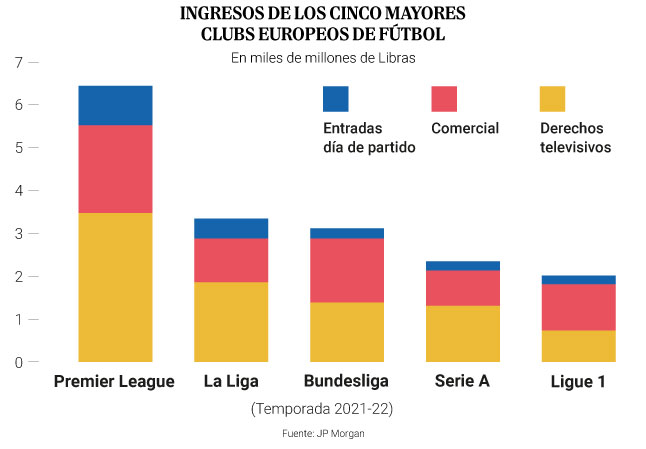
The Super Bowl advertisement rates provide a clear illustration of this trend; a 30-second ad spot has skyrocketed from $0.5 million in 1975 to an astounding $7 million in 2023, according to JP Morgan analysts. In Europe, although football remains king, this trend is gradually emerging. There have been numerous corporate maneuvers between funds and football clubs, particularly in the UK and Italy. In Spain, LaLiga maintains a significant agreement with the CVC fund, aimed at financing growth and innovation in teams in exchange for a percentage of future television rights for 50 years .
“It was only a matter of time before investments and funds began to enter the European market more enthusiastically,” states José Epalza , managing partner of Advisory at AltamarCAM . “The U.S. Football League has professionalized its operations, boasting 200 million fans and creating a market worth $150 billion . In comparison, the four primary European leagues combined cater to 4 billion fans but represent a market only one-fifth the size.”
Current estimates suggest that about one-third of clubs in major leagues now have investment funds involved in their financing structures. In 2022 alone, €5 billion entered from private equity into Europe’s five major sports leagues. Epalza notes that this growing sector isn’t limited to football; investments are shifting towards rugby, Formula 1, Moto GP, and others, although government controls persist in many cases to prevent excessive spending and team bankruptcies.
According to a JP Morgan report, 45% of agreements regarding private equity in sports globally in 2023 were minority investments, particularly within the four major U.S. leagues. These leagues began opening up to private capital in 2019, limiting private equity ownership to a maximum of 30% , with further restrictions for individual funds.
Investment in sports encompasses more than just acquiring a football team. There are extensive avenues to explore, from financing player apparel to developing software for sports statistics, constructing stadiums (e.g., Real Madrid ‘s partnership with Sixth Street to capitalize on their new Santiago Bernabéu stadium), to rights management and sponsorships. The FC Barcelona is also tapping into these opportunities through its fund, Espai Barça FT , created in collaboration with Goldman Sachs , JP Morgan , and MUFG Bank from Japan, aimed at financing its new stadium.
While movements between clubs and international banks are reshaping the landscape, private banking in Spain has yet to develop a clear catalog for investing in sports-related businesses. Banks like Santander España acknowledge a burgeoning interest in this area, attributing it to the allure and value offered by many brands within the sports sector.

One option that specialized banks offer is advisory services for elite athletes. For instance, CaixaBank Banca Privada has a dedicated team focusing on the needs and investments of these high-profile clients, managing commendable assets and conducting financial education events for them, enhancing their financial literacy.
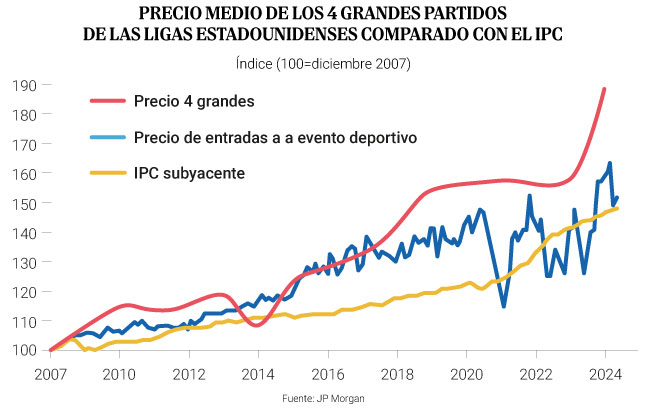
According to JP Morgan , the profitability of major U.S. sports leagues has been outpacing the S&P 500 index since 2005, highlighting that acquiring a sports team typically commands 5 to 12 times sales, contrasting sharply with the 3 times average for S&P companies. This increasing appeal can be traced to a global audience accessible via modern broadcasting, the rise of star athletes who monetize their image extensively, and steep ticket prices that create exclusive experiences for fans. This trend paints a vibrant future for sports investment, promising various lucrative opportunities as fans continue to flock to events worldwide.