
Slovenia’s Bold Move: Prohibiting Arms Trade with Israel Amid Gaza Crisis
On Thursday , the Government of Slovenia made a momentous decision to prohibit arms trade with Israel, citing the inaction of the European Union amid the ongoing humanitarian crisis in the Gaza Strip . Reports indicate that over 60,200 Palestinians have tragically lost their lives due to the Israeli offensive, with a significant number succumbing to hunger and malnutrition.
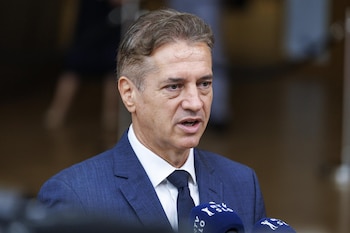
The announcement signifies a proactive measure, driven by the Slovenian Prime Minister Robert Golob , who confirmed that the ban encompasses the export and transit of weapons and military equipment from Slovenia to Israel, alongside halting imports from Israel to Slovenia. This stance marks Slovenia’s commitment to ethical governance in the face of dire humanitarian conditions.
In a statement released on its official website, the Slovenian government expressed growing frustration regarding the European Union’s inability to adopt concrete measures to address the situation. According to them, internal disagreements have hampered the EU’s capacity to respond effectively to the urgent needs arising from the Gaza crisis.
“The result is shameful: Gaza’s people die because humanitarian aid is systematically denied,” the government noted. “They die under debris, without access to drinking water, food, or basic medical attention. This implies a total denial of humanitarian access and a deliberate prevention of the basic conditions for survival.” This heartbreaking observation underscores the grim reality facing many innocent civilians caught in the crossfire.
Slovenia’s decision to act independently reflects a broader sentiment among nations to uphold international law and the protection of human rights . The government emphasized that every responsible state has a duty to act, especially when the humanitarian crisis reaches such catastrophic levels.
In a related move, Slovenia also announced a unilateral ban on the entry of two Israeli ministers, who are associated with far-right political rhetoric. According to Slovenian authorities, the ministers’ reported statements have incited further violence and have led to significant human rights violations against Palestinian civilians in both the Gaza Strip and the West Bank . This decision follows the European Union’s lack of consensus on formulating a united response to Israel’s ongoing actions.
Slovenia’s resolve is commendable in its pursuit of humanitarian engagement . The nation’s commitment to uphold ethical standards in foreign policy resonates with a growing number of global citizens who demand action against perceived injustices. The humanitarian principles that Slovenia is advocating resonate deeply with numerous non-governmental organizations (NGOs) and human rights advocates who have been tirelessly working to provide support for the affected populations in Gaza.
This move comes at a pivotal moment, as public sentiment across Europe has been increasingly supportive of stronger actions to address the plight of Palestinians in light of the ongoing conflict . Observers note that Slovenia’s decision may set a precedent, encouraging other nations to adopt similar measures aimed at holding responsible parties accountable for their actions in situations of humanitarian crises.
By prioritizing humanitarian concerns, Slovenia is not only acting in the spirit of compassion; it is also creating diplomatic leverage to urge the European Union to adopt a more decisive stance on the Gaza crisis. As calls for solidarity with Palestine grow louder, Slovenia stands out as a beacon of ethical governance amid overwhelming political complexities .
As countries grapple with the moral implications of arms sales and their direct impact on civilian lives, Slovenia’s decision serves as a reminder of the sanctity of human life and the role that nations must play in protecting vulnerable populations worldwide. The escalating conflict in the Gaza Strip has drawn widespread attention, and Slovenia’s action may inspire renewed international dialogue aimed at achieving lasting peace.
In conclusion, Slovenia’s proactive ban on arms trade with Israel represents a significant ethical stand in international relations and highlights a growing demand for accountability in the face of humanitarian crises. This action not only fortifies Slovenia’s diplomatic position but also resonates with a global audience concerned about the protection of human rights and international norms.