
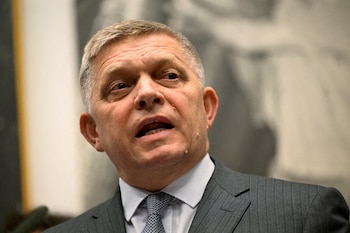
Slovakia’s Prime Minister Vetoes EU Sanctions Against Russia
The Slovak government has taken a bold stance by vetoing the latest sanctions package from the European Union against Russia . This decision is primarily influenced by a legislative proposal aimed at completely halting Russian gas imports in Europe starting from 2028 . Prime Minister Robert Fico made this announcement via a video message while participating in an important EU summit in Brussels .
The essence of Fico’s warning is closely tied to the RepowerEU initiative, which seeks to eliminate the bloc’s dependency on Russian gas by January 1, 2028 . Fico sees this legislative plan as a far greater risk than the latest sanctions package, which is the eighteenth since the beginning of Russia’s invasion of Ukraine, claiming it could have widespread economic repercussions on Slovakia.
As the leader of the populist left party Smer-SD, Fico has voiced his concerns regarding the total ban on Russian gas, asserting that it could prove devastating for the Slovak economy. Reports from Fico indicate that such a prohibition could lead to increases in gas prices for both homes and businesses by anywhere from 30% to 50% , a situation he categorizes as “unacceptable.” Consequently, he is calling for a thorough review of the legislative text before Slovakia is willing to support the new sanctions package.
While the sanctions require unanimity among the 27 EU member states, the legislative act itself can be approved by a qualified majority . This places Slovakia in a precarious position, as the government anticipates using its veto power to negotiate amendments in the legal framework prohibiting Russian gas imports.
“The same legislative act that would paralyze the flow of Russian gas from January 1, 2028, is essentially a sanctions package with far broader implications,” Fico emphasized, asserting that the European Commission has disregarded Slovakia’s previous warnings.
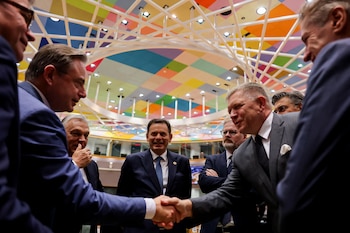
The proposed sanctions, to be voted on in Brussels, encapsulate a variety of measures designed to tighten Russia’s economic isolation. Key elements include:
- The prohibition of financial transactions related to the Nord Stream gas pipeline , which connects Russia to Germany.
- The addition of 22 new Russian banks to a European sanctions blacklist.
- The extension of prohibitions on transactions with external entities that facilitate evasion of existing sanctions.
However, the Slovak government emphasizes that none of these measures pose as significant a threat as a complete ban on Russian gas , given their considerable dependence on this resource.
Fico contends that the European Commission is overstepping its authority. In 2022, EU leaders adopted the Versailles resolution , which outlined a gradual reduction of energy dependence on Russia rather than a wholesale cessation of supplies.
“In 2022, the Versailles resolution emphasized the importance of gradual separation and reduction of dependence, rather than a complete halt to supplies,” said Fico, who believes that Brussels is exceeding prior agreements.
Slovakia’s position sheds light on the internal tensions within the EU concerning the sanctions policy against Russia. While some countries advocate for maximum economic pressure on Moscow, others—especially those reliant on Russian gas—are more reluctant about measures threatening their energy security.
Slovakia’s situation is not unique; Hungary , led by Prime Minister Viktor Orbán , has also signaled dissatisfaction with the overall sanctions strategy, seeking exclusions in earlier packages. Fico, returning to power with a nationalist and critical stance toward Brussels, aligns with Hungary’s sentiments, reflecting a growing trend of dissent within the EU regarding unified approaches to sanctions.
(With EFE information)