
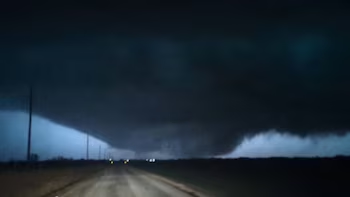
Recent Tornadoes in the Midwest and South Central USA
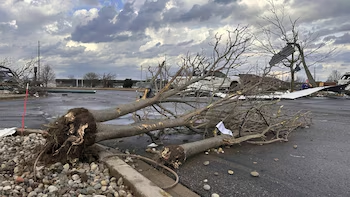
At least six people have died, and numerous communities in the Midwest and South Central USA faced substantial destruction and power outages due to a series of tornadoes and strong winds that swept through the region. Homes were demolished, trees uprooted, and electricity supply disrupted, signaling the onset of what could be a season of extreme weather events.
Emergency Response and Storm Warnings
Emergency response teams, comprising state and local authorities, were promptly mobilized, as reported by CBS News. The National Weather Service has issued warnings for more than 25 million people from Texas to Wisconsin, cautioning them about the continuous risk of severe storms. Unusually high temperatures are also expected in southern states over the weekend.
On the day of the storm, emergency operations were initiated in the most affected areas, responding to widespread destruction of properties. As the situation unfolded, residents were alerted to remain vigilant amidst ongoing meteorological threats.
Tornado Impact in Michigan
In Michigan, a state accustomed to fewer than 15 tornadoes annually, at least one tornado was confirmed near Union City and Union Lake, located about 160 kilometers from Detroit. Authorities reported three fatalities and twelve injuries, with three people hospitalized.
In Cass County, another death was reported along with severe damage to residential areas and industrial barns. Many buildings have been reduced to rubble, and Michigan Governor Gretchen Whitmer activated the State Emergency Operations Center for coordinated assistance.

Warnings were issued for St. Joseph County and areas near the Indiana border, highlighting downed trees, road closures, and possible outages for power and communications. Fortunately, the First Congregational United Church of Christ in Union City reported no damage to its nearly 150-year-old piano.
Oklahoma’s Tornadoes
Oklahoma also faced severe impacts, with reports of fatalities from the storms. One of the most intense tornadoes caused extensive damage over a span of almost 6.5 kilometers (4 miles) in Okmulgee County. The county’s emergency management chief, Jeff Moore, emphasized the immediate need for clearing debris from roads.
In Beggs, local authorities confirmed two deaths, including a tragic incident where a 47-year-old woman and her 13-year-old daughter were found dead in their vehicle after a storm-caused accident. Governor Kevin Stitt reported tornado activity in both Beggs and Tulsa.

Warnings and Future Implications
The National Storm Prediction Center indicated that over 7 million people remain in high risk areas, including regions like Kansas City, Tulsa, and Omaha. Additionally, 25 million people in cities such as Dallas, Oklahoma City, and Milwaukee are under moderate alert for severe storms and extreme temperature fluctuations.
Experts attributed the tornadoes to a conjunction of humidity from the Gulf of Mexico and a warm front that moved toward the Great Lakes, creating instability due to cold air. Such severe weather events are less common in Michigan compared to states like Texas and Kansas, known for their high tornado frequency.
Emergency services urged the public to equip themselves with emergency radios and identify safe shelters due to the onset of tornado season. This unusual atmospheric pattern predicts temperatures significantly higher than normal seasonal averages in regions like the Ohio Valley and Mid-Atlantic, elevating the risk for severe weather.
The widespread destruction caused by these storms has impacted homes, historic structures, and transportation routes. Authorities have advised avoiding affected areas until inspections and restoration of essential services are complete.

This recent climatic event underscores the increasing danger that extreme weather poses to a vast swath of the United States, with more than 25 million citizens currently at risk for severe storms and unusual thermal volatility.