
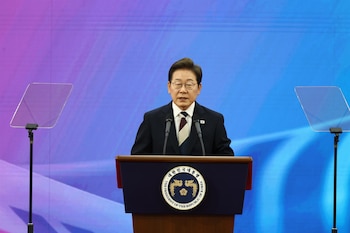
U.S.-South Korea Trade Tensions Escalate: Possible Tariffs Ahead
The South Korean government has signaled a proactive approach regarding its tariff policy amidst escalating trade tensions with the United States. President Donald Trump announced on Monday that he intends to impose a 25% tariff on all imports from South Korea. This announcement has sparked concerns and debate within South Korean circles regarding possible repercussions and retaliatory measures that might follow if such tariffs are enacted.
Seoul’s Response and Negotiation Plans
In an official statement, the South Korean Ministry of Industry interpreted the letter from the Trump administration as a temporary reprieve—a “de facto extension” of the grace period for reciprocal tariffs until August 1 . With a strategic focus, the ministry has committed to accelerate negotiations to forge a mutually beneficial trade agreement with the United States.
Officials emphasized that this period would be leveraged to boost key industries in South Korea. This initiative is encapsulated within the framework of the Association for the Renaissance of the Manufacturing Industry , aiming to align industry standards and regulatory practices with U.S. interests. Such alignment is seen as vital, especially regarding the significant trade deficit that has become a bone of contention for the U.S.
Trump’s Concerns and Demands
President Trump has been vocal about the trade deficit with South Korea, deeming it an “unsustainable” situation that poses both ” serious threats ” to national security and economic stability. He has requested South Korea to refrain from implementing punitive tariffs in retaliation, asserting that it would only compound the financial burdens imposed on both countries.
In a letter addressed to Seoul, Trump stated, “Please understand that 25 percent is much less than what is needed to eliminate the commercial deficit we have with your country.” This stark warning reflects his administration’s commitment to renegotiate terms that would favor American economic interests more robustly.
Economic Impact and Export Statistics
According to Bloomberg, the trade relationship between the United States and South Korea is significant, with the U.S. being the second-largest destination for South Korean exports, following China . Last year, South Korean exports to the U.S. accounted for 18.7% of total shipments, valued at approximately $127.8 billion (equivalent to €108.85 billion). This figure highlights the extensive interdependency that could be disrupted by newly proposed tariffs.
The potential consequences of implementing these tariffs could reverberate across various sectors in both countries, complicating relationships and market dynamics. Industries that rely heavily on exports will be particularly vulnerable to these economic shocks, prompting both governments to carefully consider their next steps.
The Future of U.S.-South Korea Relations
As events unfold, both nations are at a pivotal junction. The outcome of these discussions and potential tariff implementations could shape the trajectory of U.S.-South Korea relations , impacting everything from consumer prices to diplomatic engagements. Economists and analysts alike are keenly observing how these events will influence the economic landscape, particularly in the manufacturing sector, where both nations have vested interests.
In conclusion, the trade tensions between the United States and South Korea bring forth significant implications that extend beyond economic statistics and financial reports. As both governments seek to navigate this turbulent period, the emphasis on negotiation and understanding will be paramount. The path chosen in the coming months could set a precedent for international trade relations and the handling of economic disparities in an increasingly interconnected world.
General News – 2