
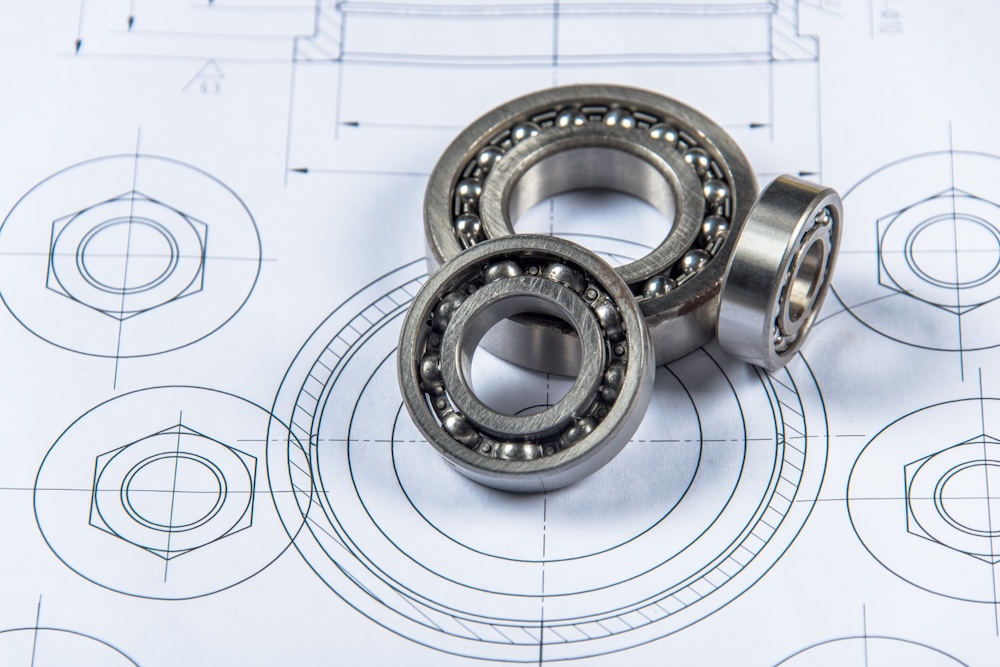
Selecting the Correct Ball Bearing
Selecting the correct ball bearing is essential to ensure the efficiency, reliability, and durability of mechanical equipment.
The appropriate choice not only extends machine lifespan but also optimizes performance by preventing unplanned downtime and minimizing maintenance costs.
A proper selection requires the evaluation of several key factors, including:
- The type of bearing suitable for the specific application;
- The material composition;
- The tolerance and precision class;
- The operating conditions and load capacity.
These parameters are critical for making an informed and safe decision.
In complex or critical applications, consulting a mechanical engineer or bearing specialist is strongly recommended to ensure that all project specifications are fully addressed.
Understanding the Types of Ball Bearings
When selecting the appropriate ball bearing, it is fundamental to understand the different bearing types available on the market.
Ball bearings are crucial mechanical components that facilitate smooth motion between moving parts by reducing friction and supporting loads in specific directions.
Radial Ball Bearings
Radial ball bearings are ideal for applications where the primary load acts perpendicular to the shaft.
They are designed to efficiently handle radial loads, ensuring even weight distribution and stable operation.
These bearings are known for their versatility and ability to operate under varied conditions with reliable performance.
They are widely used in sectors such as automotive manufacturing, electric motors, industrial machinery, and pumps.
Thrust Ball Bearings
For applications where forces act along the shaft direction, thrust ball bearings are the preferred solution.
They are specifically designed to support axial loads at low speeds and high precision levels.
Their structural configuration allows them to absorb continuous axial forces efficiently while maintaining component stability.
However, these bearings are not suitable for significant radial loads, and their use should be limited to controlled axial load environments.
Hybrid Ball Bearings
Hybrid ball bearings combine steel rings with ceramic balls, offering high performance with reduced friction.
Ceramic materials improve performance through:
- Lower internal friction;
- Higher corrosion resistance;
- Better thermal stability and lower weight.
They are ideal for high-precision, high-speed applications, commonly used in the aerospace, automotive, and medical technology industries.
When selecting the correct bearing type, it is crucial to consider both load direction and operational environment.
Investing time in understanding these variables leads to longer bearing lifespan, reduced failure rates, and enhanced overall reliability.
Consulting a bearing specialist ensures that each design decision is technically sound and application-specific.
Material and Durability Considerations
Selecting the correct bearing material is vital to ensure proper operation under specific environmental and mechanical conditions.
Common Materials
- Chrome Steel (AISI 52100):
- High hardness and load-carrying capacity;
- Common in general-purpose industrial applications.
- High hardness and load-carrying capacity;
- Stainless Steel (AISI 440C):
- Excellent corrosion resistance;
- Recommended for humid, chemical, or marine environments.
- Excellent corrosion resistance;
In environments where corrosion exposure is high, stainless steel prevents premature bearing failure and reduces maintenance frequency.
Advanced Materials
Ceramic Bearings (Silicon Nitride or Zirconia):
- Lightweight and highly resistant to temperature, corrosion, and wear;
- Provide superior performance in high-speed or high-temperature systems;
- Ideal for applications where weight reduction and energy efficiency are priorities.
Hybrid Bearings (Steel + Ceramic):
- Combine the strength of steel with the low friction and thermal stability of ceramics;
- Frequently used in precision instrumentation, turbomachinery, and electric motors.
Lubrication and Sealing
Proper lubrication is critical for reducing friction, controlling temperature, and preventing metal-to-metal contact.
Insufficient lubrication leads to accelerated wear, while over-lubrication may increase heat generation.
High-quality seals or shields are equally important:
- Prevent dust, moisture, and contaminants from entering;
- Retain lubricant within the bearing;
- Extend operational life by preserving internal integrity.
In summary, selecting the right material and ensuring proper lubrication and sealing are fundamental to achieving optimal performance and long-term durability.
Tolerances and Precision
Importance of Precision in High-Speed Applications
Precision is a critical factor, particularly in high-speed or vibration-sensitive equipment.
Even minor deviations can lead to excessive vibration, heat buildup, and premature wear.
Bearings manufactured to high-precision standards ensure smooth, efficient operation with minimal energy loss.
Precision Classes (ABEC / ISO)
The tolerance class defines the dimensional accuracy and surface finish of a bearing.
Common classifications include:
- ABEC 1 / ISO P0 – Standard accuracy for general applications;
- ABEC 3 / ISO P6 – Higher accuracy for industrial equipment;
- ABEC 5 / ISO P5 – Precision for high-speed machinery;
- ABEC 7 / 9 / ISO P4 / P2 – Ultra-precision for demanding environments such as aerospace and CNC systems.
Although tighter tolerances increase manufacturing cost, they deliver long-term savings through enhanced reliability and reduced maintenance.
Selecting the Correct Precision Grade
The optimal precision level depends on:
- Rotational speed and acceleration;
- Radial and axial load requirements;
- Operating temperature;
- Environmental conditions (humidity, dust, contaminants).
Where ultra-precision is unnecessary, lower-tolerance bearings offer a cost-effective alternative without compromising safety or functionality.
However, for critical systems, consultation with a bearing engineer is strongly recommended.
Load and Speed Factors
Understanding Radial and Axial Loads
The correct selection of a bearing depends on accurately identifying radial and axial forces:
- Radial loads act perpendicular to the shaft;
- Axial loads act parallel to the shaft.
Proper calculation of these loads — considering component weight and dynamic forces — ensures that the bearing will meet the operational requirements.
Modern software tools and simulation models can provide accurate load estimations, allowing engineers to tailor bearings to each system’s needs.
Dynamic Load Rating
The dynamic load rating (C) indicates the bearing’s capacity to sustain a moving load for a specified number of revolutions before fatigue failure occurs.
This factor is crucial in assessing bearing lifespan under variable load conditions.
Incorrect calculation of dynamic load capacity can lead to premature failure, loss of efficiency, and unscheduled downtime.
Limiting Speed
The limiting speed defines the maximum rotational velocity at which a bearing can operate efficiently without overheating or losing lubrication integrity.
Operating near or beyond this limit can cause excessive heat generation, lubricant degradation, and structural damage.
To ensure reliability, select a bearing rated for a speed margin at least 20–30% above the intended operating speed.
Operating Conditions and Environment
Temperature and Humidity
Extreme temperatures can affect bearing performance:
- High temperatures may degrade lubricants and reduce material hardness;
- Low temperatures can increase lubricant viscosity, hindering rotation.
Humidity and moisture exposure accelerate corrosion, especially in steel bearings.
In such cases, corrosion-resistant materials or protective coatings are essential.
Vibration and Mechanical Shock
Equipment subject to continuous vibration or impact must use reinforced or high-precision bearings.
These designs reduce the risk of fatigue and deformation under dynamic loading, maintaining operational stability and extending component lifespan.
Bearings for Extreme Environments
In harsh environments — such as those with dust, dirt, or chemical agents — choose bearings with contact seals or shields.
Sealed bearings prevent contamination and maintain internal cleanliness.
Stainless steel or ceramic bearings are preferred for:
- High-humidity zones;
- Chemical exposure;
- Heavy-duty industrial operations.
Proper material selection and sealing strategies are key to achieving consistent performance and minimizing unscheduled maintenance.
Conclusion
Selecting the correct ball bearing requires a comprehensive evaluation of multiple engineering factors.
Key considerations include:
- Bearing Type: Radial, thrust, angular contact, or self-aligning, depending on load direction and application.
- Material: Steel, stainless steel, ceramic, or hybrid, based on environment and corrosion resistance.
- Precision and Tolerance: Defines dimensional accuracy and vibration control for high-speed applications.
- Load and Speed Ratings: Ensure mechanical compatibility with operating conditions.
- Lubrication and Sealing: Maintain optimal performance and prevent contamination.
- Environmental Conditions: Temperature, humidity, vibration, and external agents must be assessed.
Consulting with an experienced bearing engineer is highly recommended for critical applications.
An informed selection ensures optimal performance, longer service life, and reduced maintenance costs, maximizing the overall efficiency of industrial systems.