
Concerns Rise Over Health Services for Teachers in Bogotá
The Ministry of Education of the District has raised serious concerns regarding the potential loss of health services for teachers and their families in Bogotá. This alarming situation is set to unfold after July 31, 2025, when several contracts with medical institutions are expected to expire without clear plans for their renewal.
As reported, this departure from continuity may leave teachers and their dependents without vital access to specialized care networks and high-complexity diagnostics. The impending changes could significantly affect teachers’ overall well-being, particularly as many in the system are above the age of 60.
Stay updated on this issue by following us on Facebook and check out our WhatsApp Channel.
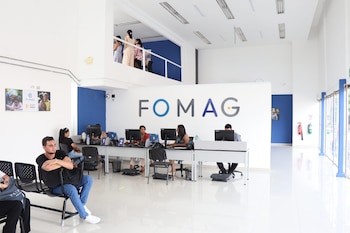
The suspension of crucial health services also places critical agreements with reference institutions—such as the Monserrat Clinic, the Santa Fe Foundation of Bogotá, and the Clinic of the West—at risk. The Ministry’s concerns trace back to irregularities in payments made by the Social Benefits Fund (FOMAG) , which have hindered healthcare providers from fulfilling their obligations.
The Ministry voiced serious messages, stating that the intermittency in payments directly impacts health services, showcasing what it described as “a lack of commitment to promoting the health of educators.” Immediate responses are in high demand from both FOMAG and the National Government to fulfill the right to health for teachers and respond to the promises made by the authorities.
Politically charged debates have emerged from this crisis. Senator María Fernanda Cabal sharply criticized the Colombian Federation of Education Workers (FECODE) regarding the ineffectiveness of the new health model for educators. In her remarks, she pointed directly at FECODE as being responsible for the systemic failures affecting thousands of teachers across Colombia. This statement followed FECODE’s recent outcry to FIDUPREVISORA and FOMAG regarding their failures in providing adequate care and respecting the rights of educators.
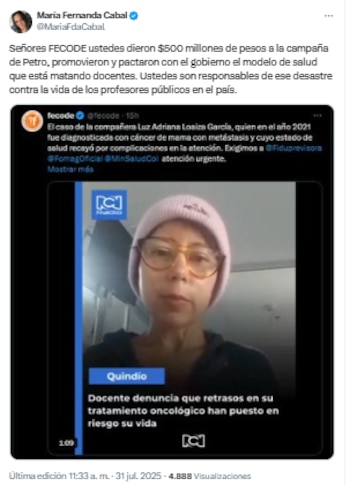
Cabal emphatically stated that there is a direct correlation between FECODE’s political support for the current administration and the problems plaguing the health system. “Gentlemen FECODE, you donated $500 million to Petro’s campaign. You worked with the government on a health model that is endangering the lives of public teachers in this nation,” she expressed. This pointed remark highlights the imperatives of accountability within both political and healthcare frameworks.
Through her statements, Cabal reiterates that the vulnerabilities faced by educators and their families stem from administrative mismanagement and neglect concerning resource allocation. The inefficiencies reported by entities such as FIDUPREVISORA and FOMAG have significantly deteriorated the quality of care available to teachers, further exacerbating the crisis.
The consequences of this new health model are dire, not only affecting the lives of teachers but also threatening the well-being of their families. With delays in essential resources and funding obligations, many educators feel increasingly insecure about their health care and future prospects.
This controversy unfolds amid escalating dissatisfaction among educators. Health service interruptions have led to deeply rooted frustrations within the teaching community. The recent announcement from the Santa Fe Foundation, stating that they would suspend services to teachers next August due to the expiration of agreements only heightens fears of inadequate healthcare provisions going forward.

In response to the uproar, Education Minister Daniel Rojas convened discussions with FECODE and insisted that no institution can refuse to provide care to teachers. Despite these assurances, concerns persist within the educational community. On July 10, 2025, FECODE released a statement demanding guaranteed medical services through the end of the month, spotlighting the need for transparent mechanisms by FOMAG to meet their pending obligations.
As this situation unfolds, the ongoing debate surrounding the new healthcare model emphasizes responsibility across all stakeholders. Educators remain caught in uncertainty—a predicament affecting nearly 900,000 teachers and their families as they wrestle with the ramifications of a faltering health care system.