

Unicoin: The Allegations Behind the $100 Million Fraud
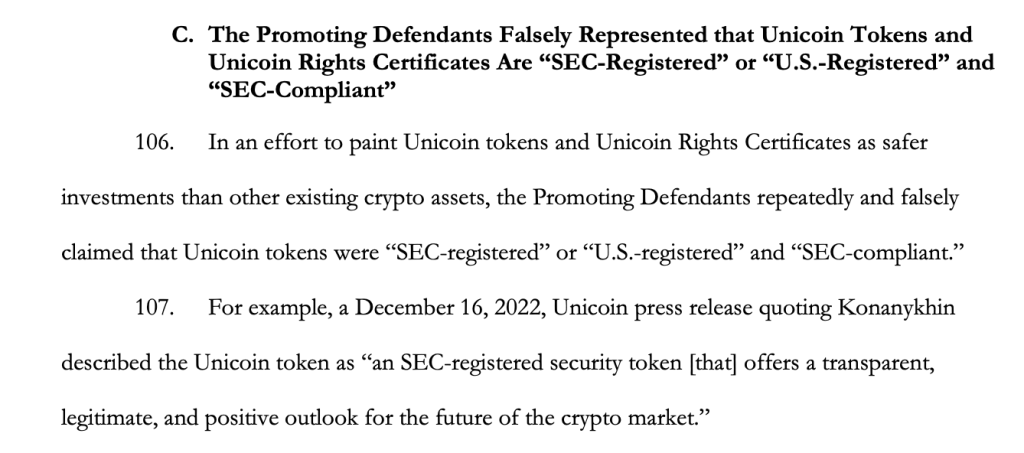
The **U.S. Securities and Exchange Commission (SEC)** has recently taken significant legal action against a cryptocurrency project known as **Unicoin**. On Tuesday, the SEC charged Unicoin and three key executives with orchestrating a fraudulent investment scheme that yielded over **$100 million** from thousands of unsuspecting investors. The complaint underscores critical issues surrounding transparency, accountability, and the securities markets within the realm of cryptocurrency.
The SEC’s complaint names three principal figures: **CEO and board chairman Alex Konanykhin**, former president and board chairwoman **Silvina Moschini**, and former chief investment officer **Alex Dominguez**. The regulatory body alleges that these individuals were involved in disseminating **false and misleading statements** in the sale of rights certificates and common stock from February 2022 up to the present day. The enormity of the allegations highlights a critical moment in the SEC’s ongoing battle against fraudulent crypto schemes.
Misrepresentation of Asset Value
One of the most shocking aspects of the SEC’s findings is the claim that Unicoin falsely represented its **Unicoin tokens** as being backed by billions of dollars in **real estate holdings**. In reality, the assets were worth merely a fraction of that claimed value. This misrepresentation raises serious questions about the integrity of the information being shared with potential investors, effectively misleading them into believing they were part of a legitimate investment opportunity.
Allegations of Fabricated Sales
Investigation reports indicate that Unicoin allegedly claimed to have sold over **$3 billion** worth of certificates when the actual proceeds fell dramatically short, never exceeding **$110 million**. This discrepancy raises significant red flags about the reported success and legitimacy of the company’s operations and ambitions. The SEC’s complaint elaborates on the extensive marketing activities undertaken by Unicoin, which included prominent advertisements in major airports, on taxis in **New York City**, on television, and throughout various social media platforms. This aggressive approach convinced over **5,000 investors** to purchase rights certificates, which were portrayed as *safe and profitable** “next-generation” crypto assets.
Legal Consequences for Unicoin’s Executives
The SEC has taken serious steps in its enforcement actions against both Unicoin and its key executives, asserting that they violated **federal securities registration rules**. Notably, Alex Konanykhin reportedly sold nearly **38 million** of his certificates at discounted prices, even targeting investors that had previously been barred in an attempt to circumvent registration exemptions.
Due to these infractions, the SEC seeks **permanent injunctive relief** alongside the **disgorgement of any ill-gotten gains** alongside prejudgment interest. The regulator is also pursuing significant **civil penalties** and the implementation of officer-and-director bars against the accused.
Involvement of Legal Counsel
The SEC’s action does not stop at the executives; it also extends to **Richard Devlin**, the company’s general counsel. Devlin is accused of negligently repeating similar **misstatements** in private placement materials. While he has not admitted to or denied the allegations, he has agreed to a final judgment that imposes a permanent injunctive relief and mandates the payment of a **$37,500 civil penalty**. This introduces a critical discussion about the responsibilities of legal professionals in financial dealings, especially within the unregulated constraints of the crypto market.
Comparative Context with Previous SEC Cases
This enforcement action distinctly contrasts earlier SEC cases regarding unregistered token sales that often focused primarily on token distribution methods. Cases like those against **Telegram** and **Kik** revolved around the lack of registration for their token distributions. In contrast, the allegations against Unicoin are centered around a **sophisticated marketing scheme** built on the false promises of asset backing, highlighting the evolving nature of fraudulent practices in the cryptocurrency domain.
The SEC’s actions serve as a reminder about the importance of due diligence and research when engaging with cryptocurrency investments. As digital currencies and assets become ever more integral to the global financial landscape, instances like these underline the necessity for increased regulatory scrutiny and investor education.
The Future of Cryptocurrency Regulations
The Unicoin case casts a long shadow over the highly speculative world of cryptocurrency investments and emphasizes the dire need for stricter regulations and protections for investors. As governmental and regulatory bodies take premium actions against misleading practices, the crypto industry must prioritize **transparency** and **trustworthiness** to regain the faith of investors.
This situation continues to unfold, prompting stakeholders in the cryptocurrency space to reevaluate their strategies and distilling lessons to ensure such fraud does not happen again. In a fast-paced, rapidly evolving market, the calls for a more structured regulatory framework are likely to intensify.