
Asteroids Near Venus: An Invisible Threat to Earth
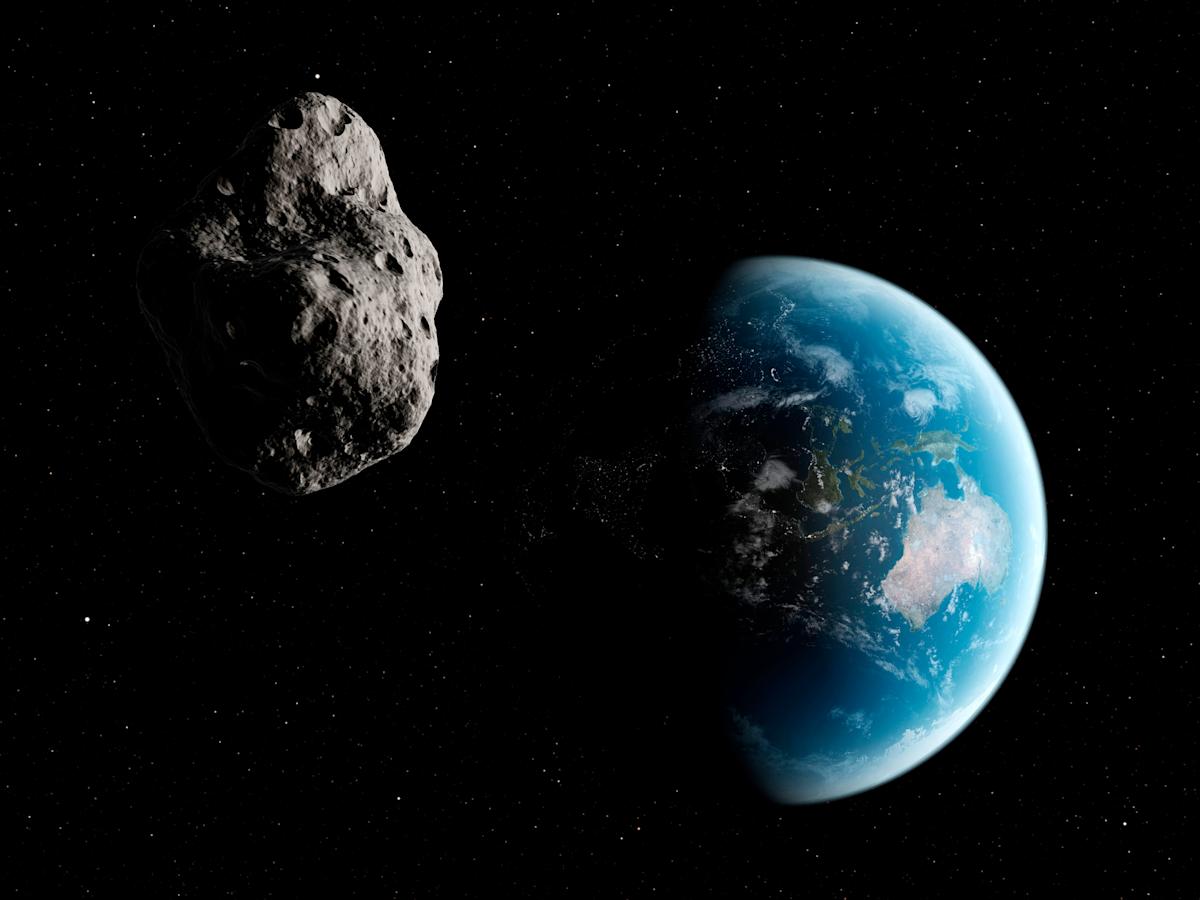
Researchers are not hesitant to label certain asteroids as an “invisible threat” . To assess the risks posed by an asteroid potentially colliding with Earth, there’s no need to venture into the far reaches of the solar system. Instead, one can simply observe our closest neighbor, Venus . This planet, as it orbits the Sun, is accompanied by a number of co-orbital asteroids—those that share its orbit—which could pose dangers to our home planet due to their proximity.
20 Known Co-Orbital Asteroids
In a recent study published in the journal Astronomy & Astrophysics , a team of astrophysicists from Brazil, France, and Italy at the University of São Paulo examined these asteroids with synchronized orbits around Venus and the risks they represent. Currently, 20 co-orbital asteroids have been identified, but the authors emphasize that their objective is to evaluate the potential threat posed to Earth by the yet-undetected population of Venus’s co-orbital asteroids.
Hidden Risks: Asteroids Veiled by Sunlight
According to the researchers, the twenty observable asteroids present a moderate risk , as their movements and trajectories are easier to predict. On the other hand, asteroids that are “hidden by the Sun’s glare” are extremely challenging to detect, making them much more unpredictable. The study authors attempted to map out these concealed asteroids by creating digital clones of all objects observed near Venus and conducting orbital simulations over a span of 36,000 years .
Identifying Three Particularly Dangerous Asteroids
This computational model yielded concerning findings. The researchers, as quoted by Gizmodo , suggest there exists “a substantial population of potential co-orbitals with low eccentricity, capable of numerous close encounters—possibly even collisions—with Earth.” Three asteroids, in particular— 2020 SB , 524522 , and 2020 CL1 —have caught the attention of researchers from the University of São Paulo because their orbits bring them “dangerously close to Earth.”
Celestial Objects That Could Razed Entire Cities
The British media explains that these three asteroids do not follow perfectly stable trajectories, meaning that any gravitational perturbation could alter their orbits, drawing them closer to Earth. According to the Daily Mail , these co-orbital asteroids measure between 100 to 400 meters in diameter , making each of them capable of leveling entire cities and triggering massive fires and tsunamis if they were to collide with our planet.
The Need for Increased Monitoring
While the probability of Venus’s co-orbital asteroids crossing Earth’s orbit remains low, it is not zero. The authors of the study assert that this risk justifies increased monitoring of these asteroids. Currently, existing technologies cannot sustain long-term observations of these asteroids. “Current terrestrial observations are constrained by periodic observation windows and limitations of solar elongation,” researchers indicate in their study’s summary.
The Potential Launch of Space Probes to Venus
According to scientists, the upcoming deployment in July 2025 of the new American optical telescope Vera C. Rubin , situated in Chile, may alleviate some of these issues by enabling researchers to “detect some of these objects under favorable configurations.” However, researchers firmly believe that the best way to better understand this invisible threat would be to send observation probes near Venus, capable of collecting precise data about these concerning co-orbital asteroids.
In conclusion, the study of Venus’s co-orbital asteroids is crucial not only for understanding their nature but for assessing the potential risks they pose to Earth. As technology evolves, our ability to monitor these celestial objects will improve, paving the way for better preparedness against the silent risks they might present. By focusing on these intriguing asteroids, scientists can contribute to our collective knowledge and ultimately safeguard our planet from unforeseen threats.