
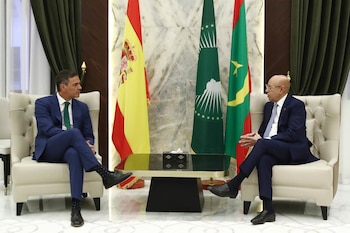
Strengthening Ties: Pedro Sánchez’s Visit to Mauritania
The President of the Government, Pedro Sánchez, is set to make his third visit to Mauritania within a year and a half this Wednesday. This ongoing engagement underscores Spain’s commitment to enhancing cooperation with the African country, particularly in addressing the critical issue of irregular immigration from its shores to the Canary Islands.
The Immigration Crisis
Despite Spain’s longstanding partnership with Mauritania in managing migration, the country was identified as the leading source of irregular immigrants to Spain in 2024, according to the National Security Report 2024. The report highlighted that 25,081 immigrants reached Spanish territories from Mauritania, a figure that nearly matches the combined totals from Morocco (13,217) and Algeria (12,038). This stark reality poses a significant challenge, particularly as Mauritania’s contributions represent nearly one-third of the total 61,372 arrivals by sea last year.
Recent Developments in Cooperation
Sánchez’s most recent trip follows a series of discussions, including a joint meeting with Ursula von der Leyen, President of the European Commission, in February 2024. Continued dialogue on migration has emerged as a focal point in these exchanges with Mauritania’s President, Mohamed Uld Ghazuani. Notably, the two nations signed a memorandum of understanding in August, focusing on circular migration projects—an initiative aimed at temporary employment for Mauritanian workers in specific sectors, mirroring existing agreements with countries like Morocco.
This visit is part of Sánchez’s broader strategy to “consolidate and expand cooperation in immigration matters,” taking an integral approach that encompasses not only security and the dismantling of human trafficking networks but also exploring regular migration pathways beyond circular labor agreements.
High-Level Meetings and Collaborative Efforts
An essential feature of this visit is the first high-level meeting (RAN) between Spain and Mauritania, slated to take place in Nuakchot. Attendees will include several key figures from the Spanish government, including third vice president Sara Aagesen, as well as ministers from foreign affairs, interior, transport, inclusion, digital transformation, and agriculture.
Such high-level summits reflect the strong relationship between Spain and Mauritania and elevate the latter to the status of other significant partners such as Morocco and Algeria, with whom Spain has maintained similar dialogues for years.
This meeting serves as a testament to Spain’s commitment to considering Mauritania as a “key partner” for both Spain and the EU in the Sahel region, identified as a critical area concerning jihadist violence and its potential spread beyond hotspots like Mali, Burkina Faso, and Niger.
Economic Collaboration and Development Initiatives
In tandem with immigration discussions, Spain aims to bolster economic ties, trade, and investment with Mauritania, thereby promoting inclusive, sustainable, and enduring growth. The schedule for Sánchez’s visit also includes the Spain-Mauritania business forum, planned to coincide with the summit, underlining the importance of fostering economic relationships.
Moreover, Spain’s long-term commitment to the developmental goals of Mauritania is evident in the plans to expand Spanish language education, specifically through the opening of a new Cervantes Institute branch in Nuakchot, which will enhance cultural exchange and educational cooperation.
Conclusion
Sánchez’s agenda for this visit encompasses a bilateral meeting with President Ghazuani, followed by discussions with various ministers from both governments. The culmination of these talks will result in a plenary session, during which a political declaration and four memoranda of understanding will be established, including a statement of intent regarding social security. This trip exemplifies Spain’s proactive approach in addressing migration issues while simultaneously fostering economic growth and cultural ties with Mauritania, thus cementing a collaborative future between the two nations.