
Samsung Joins the Trillion Dollar Club
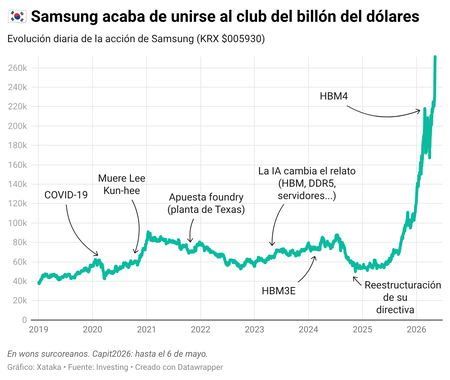
Samsung has officially reached a market capitalization of one trillion dollars, with its shares soaring more than 15% in a single day. This milestone places Samsung in an exclusive group, making it only the second Asian company to achieve such a valuation, alongside TSMC. While both companies manufacture chips, Samsung’s journey to this point is complex and reflects significant shifts in the global tech landscape.
The Importance of AI in the Hardware Hierarchy
The New Power Players
The rise of Artificial Intelligence (AI) is reshaping the hardware hierarchy. The companies that control the memory powering data centers are increasingly influential in determining how quickly the world can scale its AI models. For nearly a decade, Samsung has held the title of the largest memory manufacturer globally, and as of 2026, this position is crucial to its trillion-dollar valuation.
Contextualizing the Memory Chip Business
The business of memory chips has historically been cyclical, with fluctuations between shortages and overproduction leading to volatile price changes. However, the advent of AI has introduced new complexities into the mix. Data centers now demand vast quantities of High Bandwidth Memory (HBM), creating structural bottlenecks in the supply chain. Building new manufacturing capabilities takes two to three years, meaning we may not see relief from the current shortages anytime soon.
Recent Financial Performance
Samsung’s financial metrics from the first quarter of the year paint a positive picture:
- Operating profit has surged to eight times that of the previous year.
- Revenue has reached an all-time high of 133.9 trillion Korean won.
- The semiconductor division contributes over 90% of the company’s total profit.
The Internal Conflict
A Double-Edged Sword
While the booming semiconductor division drives up profits, it also presents a paradox. Unlike TSMC or NVIDIA, Samsung also manufactures smartphones and televisions, which rely on the same memory chips that are now in short supply and high demand. The soaring profits from semiconductors are pressuring the profit margins of its consumer electronics divisions, effectively making Samsung an internal rival to itself.
Market Dynamics and Future Outlook
Beyond Quarterly Results
The recent surge in stock prices isn’t solely due to impressive quarterly results. Reports indicate that Apple has initiated discussions with Samsung and Intel regarding chip manufacturing in the U.S. to diversify its supply chain away from TSMC. Winning this contract could have significant ramifications for the semiconductor supply chain.
The Big Question: How Sustainable Is This Growth?
Despite the current bullish outlook, Samsung faces challenges. The prosperous memory cycle won’t last indefinitely. As new factories bring increased supply to market, prices are expected to eventually drop, with one caveat: if AI demand continues to outpace production capacity as it has thus far. Samsung’s production capacity is entirely sold out for this year, illustrating the immense pressure the system is currently under.
Conclusion
While Samsung’s achievement of joining the trillion-dollar club is a significant milestone, it comes with inherent complexities. The interplay of AI-driven demand and internal competition among Samsung’s various business units creates both opportunities and challenges. As the market evolves, the key question remains: Can Samsung sustain its growth amid shifting dynamics in the tech world?