
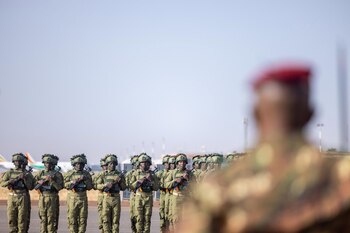
Launch of the Unified Force of the Alliance of Sahel States (FU-CEE)
The recent opening ceremony in Bamako marked a significant milestone in the Sahel region as Mali, Burkina Faso, and Niger officially launched the Unified Force of the Alliance of Sahel States (FU-CEE). This event saw the transfer of national flags and emblems to military commands, symbolizing a unified regional military structure aimed at addressing persistent violence and insecurity affecting vulnerable populations.
Strategic Shift Towards Regional Sovereignty
Media reports highlight that the formation of FU-CEE is a direct response to the perceived ineffectiveness of international and multilateral interventions in countering jihadist violence and internal strife. Discontent with the limited success of external actors has led the military governments to pursue a more autonomous approach to security, moving away from collaborative efforts with entities like the Economic Community of West African States (ECOWAS).
Objectives and Operational Framework of FU-CEE
The primary goal of FU-CEE is to regain effective control of security and civil protection for its member states. By prioritizing sovereign decision-making, this initiative aims to reduce reliance on foreign powers and multilateral strategies, allowing them to tailor operations to their unique circumstances.
Deployment and Capacity Building
The initial deployment of FU-CEE focuses on establishing independent logistics and communication systems, which include new chains of command and significant integration of military information. This operational framework aims to enhance the rapid response capacity in areas formerly under international assistance.
Future Collaborations and Regional Dynamics
While FU-CEE emphasizes regional autonomy, the founding nations have not ruled out forming partnerships with external nations, including Russia. However, they have made it clear that any future collaboration will strictly respect the sovereignty and political control of the member states, signaling a desire for a transparent and equitable partnership model.
Challenges Ahead
The operational model of FU-CEE focuses on strengthening governmental authority and restoring institutional integrity in areas affected by armed conflict. The main challenges will involve adapting to the changing dynamics of conflict while providing essential services to displaced populations.
Addressing Humanitarian Concerns
From a humanitarian perspective, the leaders of the military junta have acknowledged the deteriorating conditions faced by communities due to ongoing security crises. FU-CEE’s mandate includes rebuilding social structures and ensuring the protection of displaced persons, fostering a renewed sense of stability in the regions most impacted by violence.
Conclusion: A New Era of Regional Governance
The formal establishment of FU-CEE underscores the intention of Mali, Burkina Faso, and Niger to take decisive control of their security and administrative frameworks. This initiative is perceived not only as a tactical measure but as a foundational step towards a new form of regional governance that prioritizes self-determination and addresses the challenges posed by external influences.