

France has long been recognized as the queen of world tourism, drawing nearly 90 million visitors in 2024 alone. While Spain shadows closely behind, recent developments in France are raising eyebrows among travelers and airlines alike. Recent reports indicate that a “solidarity tax” will soon hike ticket prices, causing notable backlash from budget airlines like Ryanair , which is scaling back its routes in response to this new levy.
Volotea
The tax in question is known as the Taxe de Solidarité Sur Les Billets d’Avion (TSBA) . This levy, implemented by French authorities, aims to finance international aid programs and promote ecological initiatives. Earlier this year, the tax surged by an alarming 180% . For instance, on economical flights within France or Europe, the tax increased from €2.66 to €9.50 . The implications of this increase cannot be underestimated.
Comparatively, countries like Spain have their own rates, but they are significantly lower. A similar infrastructure-related fee there will see an increase of €0.68 per passenger starting March 1, 2026. This is a mere 6.5% rise , much less shocking than what travelers in France will face. Countries such as Italy , Germany , and the Netherlands also have varying tax rates affecting air travel.
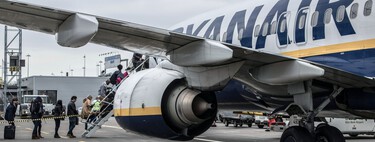
Ryanair is reacting fiercely to this tax. As Europe’s largest airline by fleet size, it considers the increase excessive, threatening to withdraw routes it deems unsustainable. The airline’s statement suggests that smaller regional flights will be the hardest hit, largely because the elevated costs will drastically reduce profitability for “low-cost” carriers.
According to a report from Radar Travel, Ryanair plans to suspend operations at Strasbourg , Brive-La-Gaillarde , and Bergerac airports starting this winter. The airline will cut 25 routes , affecting approximately 750,000 passengers and leading to a 13% reduction in its operations across France.
The consequences are quite severe for the impacted cities:
- Brive stands to lose routes including London-Stansted.
- Strasbourg will lose connections to Porto and Agadir .
- Bergerac could see a decrease in activity by up to 33% , which may jeopardize its airport structure.
Although these cities are particularly affected, larger airports like those in Toulouse , Marseille , and Beauvais in Paris will also experience reduced activity. As stated by Jason McGuinness , Ryanair’s Chief Commercial Officer, unless the French government reverses this “unfair air tax,” the airline’s investments will likely shift to more competitive European markets such as Sweden , Hungary , and parts of Italy . Here, local governments are eliminating air taxes to foster tourism and bolster economic recovery.
Volotea , on the other hand, is seizing this opportunity. This low-cost Spanish airline focuses on connecting smaller cities in Europe that major airlines often overlook. By 2025, Volotea aims to operate 420 routes across 100 cities in 18 European countries . Notably, the cities of Marseille and Toulouse are already part of their route network.
As highlighted in a report by Hosteltur, Volotea has its sights set on the routes Ryanair will abandon, including the connections between Strasbourg and Agadir (Morocco) as well as Porto . The company plans to create 70 new jobs to accommodate these routes, capitalizing on Ryanair’s retreat.
Ultimately, this escalating dispute between Ryanair and the French authorities reflects a larger trend in the airline industry, where profit margins are continually challenged by increasing operational costs. In the age of budget airlines, even minor expenses such as the solidarity tax can have substantial ripple effects on travel dynamics and economic vitality in affected regions. It remains to be seen how consumers will react and whether additional airlines will adapt to the evolving landscape in French aviation.