
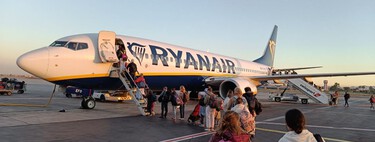
Ryanair’s Grounding Dilemma: A Week of Passenger Chaos
For a plane to take off on time while leaving hundreds of passengers behind is an unusual scenario. Yet, this has happened multiple times with Ryanair flights in recent weeks. Intriguingly, the issue stems largely from a new European Union border control system rather than the airline itself.
The New Border System: Entry and Exit System (EES)
The European Union has recently launched the Entry and Exit System (EES), a digital border control protocol mandating non-EU citizens—including British travelers post-Brexit—to register their biometric data each time they cross a Schengen area border. This includes capturing facial scans and fingerprints.
Initially rolled out in October, the EES was intended to be fully operational in all Schengen countries by April 10. However, it appears that the time required to process each passenger at these new border checks was grossly underestimated.
What Happened in Milan?
On April 16, a Ryanair flight destined for Manchester departed from Bergamo Airport, leaving passengers behind who were still caught in lengthy border control lines. An affected traveler, 18-year-old Adam Hassanjee, reported that he and others had been stationary in the queue for over an hour and a half before witnessing the plane take off without them. Consequently, he had to arrange a costly detour through Malta to reach his final destination in Leeds.
This was not an isolated incident; a similar scenario unfolded for EasyJet passengers at Linate Airport, where only 34 out of 156 travelers managed to board their flight to Manchester.
Another Grounding Incident
On April 10, coinciding with the EES’s full activation, another Ryanair flight from Tenerife South to East Midlands left passengers behind, including a teacher, his wife, and their two-year-old child. They had to spend £1,600 to find an alternative route home, as the next available Ryanair flight was not until a week later.
Ryanair’s Response: They Didn’t Leave Anyone Behind
Ryanair firmly disputes the notion that they “left passengers behind.” They assert that only those at the gate when boarding closed were allowed to board. According to the airline, once the boarding is closed and the passenger manifest is legally signed and submitted to the captain, they can take no further action. Ryanair positions the border control issues as external to their operations.
The Bigger Picture: Punctuality vs. Passenger Experience
On a technical level, Ryanair’s claims may hold water. However, the airline’s operations give off an impression that it prioritizes punctuality over accommodating passengers locked in prolonged border control delays. Such practices are not uncommon in the airline industry, but the recent chaotic implementation of the EES highlighted substantial communication failures. Peter Walker, another passenger left stranded in Tenerife, noted the absence of airline personnel to assist or keep travelers informed.
Brussels’ Take: The EES Is Functioning Well
The European Commission has defended the EES, asserting it “works very well” in most countries, while acknowledging that technical difficulties emerged during the initial rollout. Since its inception in October, the system has managed over 56 million border crossings and identified 28,500 individuals, including 700 classified as security threats, highlighting the need for the system despite its current teething issues.
In summary, Ryanair’s recent challenges reveal the complicated interplay between new regulatory frameworks and airline operations, leaving many travelers anxious and frustrated.
Cover image | Niels Baars