
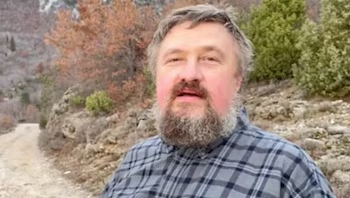
Konstantin Rudnev: A Controversial Perspective on Prisons and Democracy
Background on Konstantin Rudnev
Konstantin Rudnev, a Russian citizen, has recently made headlines following the revocation of his house arrest by the Federal Justice of Bariloche. Rudnev, known for his involvement in a religious sect, has been under scrutiny due to allegations of human trafficking. His arrest began in March 2025 at Bariloche airport, following a federal investigation into these serious accusations. After spending over a month in a villa in Buenos Aires under house arrest, he is now instructed to return to the Federal Penitentiary Service.
The Call for Prison Reforms
In a series of recorded videos that followed the revocation of his house arrest, Rudnev expressed controversial views regarding the prison system. “Prisons must be abolished,” he asserted, advocating for a system where individuals serve their sentences at home, surrounded by family. He argues that prison isolates individuals from their families and does not rehabilitate them, but rather hardens them further into a life of crime.
Critique of Democracy
Rudnev transitioned into a broader critique of the political systems, claiming, “There is no true democracy anywhere.” He questioned the very foundations of democratic governance, referencing historical events like the bombings of Hiroshima and Nagasaki. He insinuated that if true democracy existed, the people would have rejected such violent decisions. Furthermore, he highlighted the disparity between public opinion and governmental decisions, citing unpopular reforms in Russia such as the pension reform that pushed retirement age by five years—a move that met significant public resistance.
Personal Allegations and Political Persecution
Rudnev claimed to be a victim of political persecution both in Russia and abroad, stating, “I was persecuted in Russia and I will be persecuted in other countries.” This sentiment reinforces his narrative of being unjustly targeted, which resonates with various political dissidents facing opposition from authoritarian regimes.
Repercussions of Incarceration
In his reflections, Rudnev emphasized the emotional toll of incarceration, stating, “Prisons separate people from their families, leave children fatherless, and deprive parents of seeing their children for years.” He suggested that a more compassionate society would ultimately lead to a decline in crime rates, a claim that provokes the ongoing debate concerning rehabilitation versus punishment.
Legal Complications Ahead
Despite his controversial assertions, Rudnev’s legal battles are far from over. His defense attorney, Martin Sarubbi, argues that there is no substantial evidence linking Rudnev to the trafficking activities he is accused of. Sarubbi plans to appeal the recent decision, emphasizing that Rudnev’s health condition is not compatible with incarceration.
Conclusion
Konstantin Rudnev’s statements and the underlying issues they represent highlight a complex intersection of justice, rehabilitation, and governance. His stance on abolishing prisons and the critiques of democracy spark important discussions about the effectiveness of current systems and the potential for reform. As his legal proceedings continue, Rudnev’s case will remain in the spotlight, challenging societal notions of punishment and redemption.