
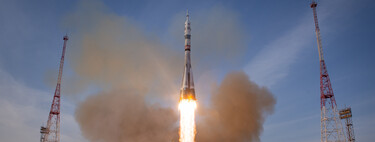
Russia’s Cat-and-Mouse Game in Space: A Closer Look at Two Satellites
Recent observations of two Russian satellites have stirred intrigue in the space community for several reasons. Firstly, their sophisticated maneuvers showcase impressive technical capabilities. Secondly, the potential hidden motives behind their actions fuel speculation and concern.
The Close Encounter
It’s not a coincidence. The American space monitoring company COMSPOC reported that, on April 28, the Russian satellites COSMOS 2581 and COSMOS 2583 approached each other to within a mere 3 meters. This extraordinary precision raises many questions about the activities and objectives of these spacecraft.
More Satellites in the Mix
Both COSMOS 2581 and COSMOS 2583 were launched alongside their companion satellite, COSMOS 2582, into low Earth orbit in February 2025. This trio engaged in the maneuvers that led to the close approach. Interestingly, another subsatellite, dubbed Object F, was also involved, although it remained at a considerable distance of just under 100 kilometers during the engagement.
Speculations on Military Intentions
Spying on spies. The launch of these satellites was steeped in secrecy, with no formal explanation provided regarding their purpose. The recent maneuvers have led to suspicions, particularly given the parallels to the activities of COSMOS 2542, which was previously seen shadowing a U.S. spy satellite in 2020. If the two new satellites are indeed engaging in similar operations, the implications for international security are significant, as advancements in their precision could potentially elevate their threat level.
A Broader Context of Satellite Maneuvers
Other countries. It is worth noting that Russia is not isolated in its satellite maneuvers. Other global powers, including China and the United States, have similarly showcased satellites capable of closely monitoring foreign spacecraft. The trend indicates that space espionage is becoming a multifaceted battleground, where nations vie for information and security.
Alternative Explanations
Other possibilities. Proximity maneuvers are not exclusively military in nature. They can also serve various benign purposes, such as maintenance or debris removal. With the growing concern over space debris in low Earth orbit, such maneuvers could be valuable for cleaning and ensuring the safety of operational satellites. Thus, while speculation abounds regarding military intentions, the actions of these Russian satellites could equally reflect a range of non-threatening objectives.
Conclusion
As baffling as the recent activities of COSMOS 2581 and COSMOS 2583 may be, the truth behind their maneuvers remains shrouded in mystery. Whether they signify an ambitious military operation, a routine maintenance task, or something entirely different, one thing is clear: the dynamics of space are becoming increasingly complex, prompting ongoing observation and analysis by experts worldwide.
Image | Bill Ingalls