
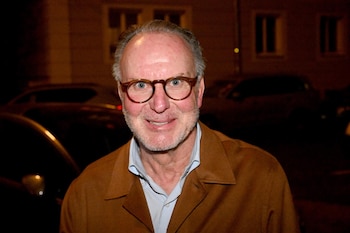
The former German soccer player Karl-Heinz Rummenigge recently addressed the topic of the Club World Cup and its implications for professional soccer players. He urged everyone not to overstate the concern regarding the additional matches that this tournament imposes, as it is a rare event held only every four years . Rummenigge noted that as players demand increasingly high salaries , there is a pressing need to explore additional sources of income . The ex-Bayern Munich star shared his thoughts in an interview published by the sports weekly ‘Kicker’ .
“As a player, I would have loved to participate in such a tournament. Of course, this season does involve more games due to the Club World Cup, but it should also be acknowledged that this tournament is celebrated only once every four years,” explained Rummenigge. He has held a significant role at Bayern Munich and suggests that the rising salary demands are a collective responsibility shared by players and their agents alike. “They have contributed to this situation and the ‘trap’ they’ve created for themselves,” he added.
Rummenigge believes that the demand for higher wages pushes clubs to seek out new avenues for financial sustainability—hence, the emergence of various tournament formats. He mentioned that a lack of willingness among players to compromise on their salary poses a contradiction that bears scrutiny. The former player hinted at the implications of this mindset on the overall landscape of soccer, saying, “Otherwise, many international players would have participated in the Confederations Cup in the United States, which yielded little added value for their clubs.” Now, however, he affirms that the tournament has helped promote the German champions globally, attract new fans, and provide financial benefits.
Moreover, Rummenigge believes that the recent successes of European and South American teams in the semifinal rounds of the tournament represent a reflection of the current dynamics in world football . He followed the tournament with enthusiasm, stating that he “enjoyed a lot” of the competition. Rummenigge also commented on the often vocal critical stance of German audiences towards the national team and tournaments in general. “Germany has once again become the world champion of criticism,” he joked, pointing out that television ratings in Germany remained robust, especially among younger viewers.
His observations were not limited to the performances on the field; he also noted a distinct uptick in merchandise sales. “The sales of Bayern T-shirts in the United States multiplied by seven ,” he stated, viewing this surge as a significant positive outcome of the tournament held in the U.S.
Rummenigge’s insights highlight a critical intersection between financial sustainability and the evolution of soccer culture. The Club World Cup serves as both an opportunity and a challenge for players and clubs alike, navigating the demands of the sport while striving for economic viability. As the landscape of football continues to shift, the responsibilities of players, clubs, and governing bodies become increasingly intertwined. With more games on the horizon, the discussion surrounding player welfare and club economics is likely to intensify, pushing all parties to seek more innovative solutions.
Ultimately, Rummenigge’s comments resonate with the larger conversation about global football’s future. His perspective brings attention to the complexities of player salaries, tournament structures, and the ever-evolving demands on professional athletes. Balancing tradition with modernity will undoubtedly be a key challenge as soccer continues to grow in popularity and financial stakes. As the dialogue progresses, it is essential for stakeholders within the sport to consider the broader implications of their decisions, both on and off the field.