
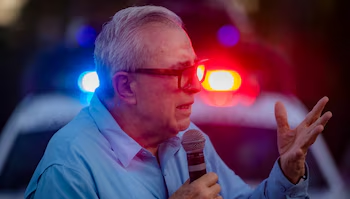
Rubén Rocha Moya Affirms His Commitment to the FGR Summons
The former governor of Sinaloa, Rubén Rocha Moya, has made headlines by publicly confirming his intention to comply with the summons from Mexico’s Attorney General’s Office (FGR). This announcement follows a turbulent period in which he stepped back from public life due to serious allegations originating in the United States.
Context Behind the Summons
Rocha Moya’s reappearance comes just 22 days after he stepped aside amidst accusations linking him to the Sinaloa Cartel’s faction known as Los Chapitos. The Attorney General’s summons, first reported on May 23, 2026, has significant implications for his political career and personal reputation.
Upon receiving the summons, Rocha Moya took to social media to address not only the public but also national leaders, expressing his commitment to transparency. He stated, “I am an honest man who has nothing to fear. My biography testifies to what I am.”
The Nature of the Accusations
The urgency surrounding Rocha Moya’s legal battles stems from allegations filed by the Southern District Court of New York. Former officials from his administration face severe charges that could culminate in lengthy prison sentences. The accusations include:
- Conspiracy to import narcotics
- Possession of machine guns and explosive devices
- Conspiracy to possess machine guns and destructive devices
These charges could potentially lead to life imprisonment or a mandatory minimum of 40 years in prison.
Response to Allegations
In his recent statements, Rocha Moya exuded confidence, indicating that he plans to confront the allegations head-on. He reassured the public and party members that he would respond to the legal challenges “with your head held high and with the certainty that the truth will prevail.” His intention to engage actively with the investigation highlights his commitment to public accountability amid serious accusations.
Current Investigations and Political Landscape
The legal matters involving Rocha Moya have not only affected him but have also cast shadows over several officials linked to his administration. Recently, the Sinaloa State Congress extended a license to Rocha Moya and other implicated officials, allowing them to step back for over 30 days to not impede the FGR’s investigations.
Currently, among the accused, only Enrique Inzunza Cázarez, a senator and former secretary general of Sinaloa, remains in office. Many others have either resigned or faced legal consequences related to the alleged activities they’ve been implicated in during Rocha Moya’s tenure.
Conclusion
As Rubén Rocha Moya prepares to face the FGR summons, the political implications for Sinaloa are substantial. His commitment to transparency and justice may resonate with some constituents, but the underlying accusations present a complex narrative that could hinder his political future. With severe penalties at stake and investigations ongoing, this chapter in Rocha Moya’s career promises to captivate observers and participants in Mexican political discourse.