
The Possible Reversal: Keiko Fujimori’s Rising Odds
Outlook from Roberto Sánchez
In a recent statement, Roberto Sánchez, the candidate from Together for Peru, commented on Ipsos’ latest polling data suggesting a potential shift in the runoff results favoring his opponent, Keiko Fujimori. This revelation has stirred conversations and concerns, considering that initial quick counts had shown Sánchez as the leading candidate.
Analyzing the Polls
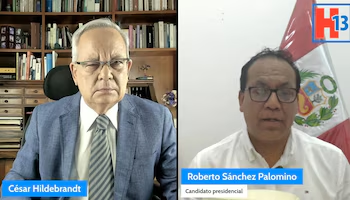
During an interview with journalist Caesar Hildebrandt, Sánchez addressed the claims made by Alfredo Torres, the head of Ipsos. Torres expressed the likelihood of this being the first instance where a quick count is reversed, favoring Fujimori. This assertion raised eyebrows not only among political analysts but also among supporters of both candidates.
Sánchez acknowledged the importance of these probabilities but urged caution. “That’s what the probabilities are, they are probabilities, they are not facts,” he stated, emphasizing the need for transparency in the electoral process. The call for respecting the voting rights of all Peruvians remains a focal point of his campaign.
Insights into Electoral Dynamics
Sánchez elaborated on the unpredictable nature of Peruvian politics, suggesting that anomalies often arise during elections. He remarked, “It is difficult to say that things are not strange,” highlighting the complexities involved. The sentiment resonated with many political observers who recognize the volatility of public sentiment in elections.
Despite the possibility of setbacks indicated by the Ipsos data, Sánchez maintains a positive outlook. He expressed confidence, stating, “We feel like winners… So, we trust in that will of the vote.” With 50.3% of the votes according to quick counts, he firmly believes that the legitimate voice of the people should prevail.
The Numbers Game
The numerical breakdown of the election adds another layer to the discussion. The quick count recorded a narrow margin – Sánchez leading with 50.3% versus Fujimori’s 49.7%, with a margin of error of +/- 1.9 percentage points. This razor-thin margin illustrates how every vote counts in this tightly contested race.
By the latest count from the National Office of Electoral Processes, Sánchez has secured 50.118% of the votes, equivalent to 8,881,791 votes, while Fujimori follows closely behind with 49.882%, amounting to 8,840,082 votes. The difference stands at a mere 41,709 votes, showcasing how precarious and charged the electoral environment is.
Conclusion: A Fight for Democracy
Sánchez’s statements underscore a broader theme in the electoral dialogue – the fight for democracy and the repudiation of historical governance styles, such as Fujimoriism. As Peru navigates this challenging electoral landscape, the narratives surrounding both candidates will continue to evolve.
In these final phases of the electoral process, the hope for a transparent and fair outcome remains paramount, resonating with voters who aspire for genuine democratic governance. The coming days will be crucial, not only for Sánchez and Fujimori but for the future direction of Peruvian politics as a whole.