
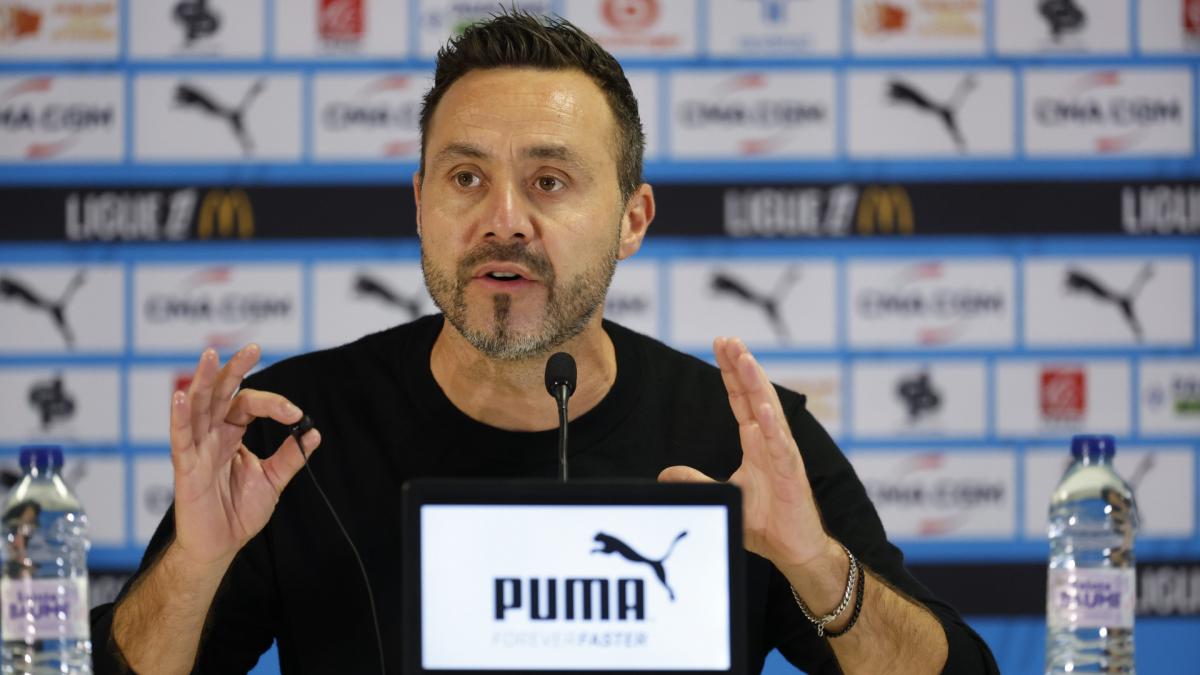
Roberto de Zerbi’s journey as a football manager has been a mix of challenges and victories, and his return to Marseille has made headlines. In a recent interview, he reflected on a significant moment from his first season, particularly his candid reactions to a crushing defeat against Auxerre at the Vélodrome. This match, which ended in a disheartening 0-3 loss, sparked conversations about his future in the club.
The Emotional Rollercoaster
After the defeat, some analysts and fans interpreted de Zerbi’s demeanor as a sign of defeatism or a potential exit strategy. However, the Italian coach clarified that his response was not a sign of weakness. Instead, he painted the scenario as an act of responsibility—a deliberate choice to shield his players from the harsh criticisms that would inevitably follow such a disappointing performance.
“It was not to say: ‘I’m going,’” he explained. “On the contrary. It was a responsibility to send a signal to everyone, especially to the players.” De Zerbi’s mission was clear: to uplift his team and shift the spotlight away from their struggles. In football, as in life, leadership often requires making difficult choices, and de Zerbi chose to absorb the pressure himself rather than letting it crush his squad further.
A Tactical Shift
In his explanation, de Zerbi elaborated on the tactical mindset he employs as a coach. “If we cannot express ourselves at the Vélodrome,” he stated, “that means that I cannot make you succeed.” This statement encapsulated his belief that a coach should stand at the forefront of the team’s challenges, allowing the players to focus solely on their game.
By redirecting the criticism toward himself, de Zerbi believed he could allow his players the mental space to recalibrate their performance. He effectively positioned himself as a shield, confronting the external pressures of the media and fans head-on, thereby granting his players a chance to regain their confidence.
Historical Context
De Zerbi’s approach is not without precedents. Reflecting on his time as the coach of Shakhtar Donetsk during the severity of the Ukrainian invasion, he recalled a similar moment of unity amidst chaos. “When the war broke out in Ukraine, when we were all in the basement of the hotel, the president was not there, the director general was not there, the sports director was not there, they all left. The only ones who were there were the coach and his staff,” he recounted.
This historical context adds depth to de Zerbi’s character and coaching philosophy, showcasing his commitment to his players, even in the face of overwhelming adversity. Such experiences have equipped him with unique insights into managing a team under pressure, both on and off the field.
Leadership Beyond the Pitch
Leadership in football transcends technical skills and formations; it involves fostering a culture of resilience and community. de Zerbi’s decision to handle the team’s criticism reflects a broader leadership principle—one that advocates for personal sacrifice for the benefit of the group.
Coaches often find themselves at the center of media attention; their every action scrutinized while players lurk in the shadows. It takes a bold leader like de Zerbi to recognize when to step forward and when to step back. By doing so, he not only influences match outcomes but also impacts the overall morale and psychological well-being of his team.
Building Future Success
With a new season approaching, de Zerbi’s focus will inevitably shift to turning the lessons learned from past setbacks into a foundation for future success. His experiences serve as a reminder that every setback can be an opportunity for growth. Just as he reassured his players after the humiliating defeat to Auxerre, coaching is about adaptability, resilience, and using each moment to refine strategies for improvement.
As he embarks on this new chapter with Marseille, fans and analysts alike will be eager to see whether his methods will translate to consistent results on the pitch. The expectations are high, but under de Zerbi’s leadership, there’s no denying that the club has a fighting chance of overcoming its challenges and emerging stronger than ever.
In reflecting on moments from past seasons, de Zerbi has reaffirmed that coaching is about navigating through storms with grace, shielding his team from criticism, and fostering an environment where players can thrive. Every setback may appear daunting, but with the right approach, they can pave the way to future achievements.