
Extraordinary Discovery of 6-Million-Year-Old Ice
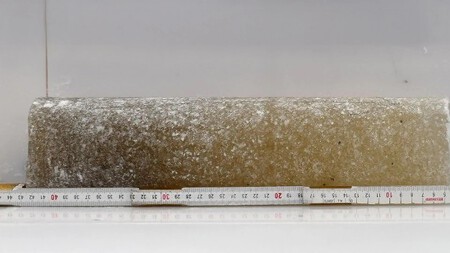
A team of scientists has made a groundbreaking discovery in the frozen Allan Hills, located east of Antarctica: they have extracted ice samples that date back 6 million years, making them the oldest ice samples ever dated directly. Enclosed within these ancient ice layers are air bubbles that offer a glimpse into Earth’s Miocene atmosphere—a time when the planet was considerably warmer and sea levels were notably higher than they are today.
A Time Capsule in Ice
The research, published in the journal PNAS on October 28, was spearheaded by Sarah Shackleton of the Woods Hole Oceanographic Institute and John Higgins of Princeton University. This discovery more than doubles the age of the oldest known ice, previously estimated at around 2.7 million years. Shackleton describes ice cores as “time machines” that allow us to better understand past environmental conditions. The newly analyzed Allan Hills cores are crucial, as they push back our knowledge of Earth’s climatic history further than previously thought possible.
How They Found It
From 2019 to 2023, the Center for the Exploration of Older Ice (COLDEX) team drilled between 100 and 200 meters deep into the ice sheet of the Allan Hills region, which sits about 2,000 meters above sea level. This area is unique because its topographical features and ice flow patterns help preserve ancient ice closer to the surface. Consequently, much shallower drilling is required to reach these significant ages than what would be necessary in the Antarctic interior.
Dating the Ice
The age of the ice was determined by measuring the radioactive decay of argon isotopes trapped in the air bubbles. This innovative method allows for direct dating of the ice, circumventing the need for analyzing surrounding rock or soil. The analysis revealed that the air bubbles encapsulated in the ice date back a staggering 6 million years, coinciding with an era where megafauna such as saber-toothed tigers, Arctic rhinos, and the earliest mammoths roamed the Earth.
Cooling of Antarctica
Further studies of the oxygen isotopes in the ice cores indicate that the Allan Hills have cooled by approximately 12 ºC over the last 6 million years. This finding provides the first direct evidence quantifying how much the Antarctic climate has shifted since that ancient warm period. Ed Brook, director of COLDEX and a paleoclimatologist at Oregon State University, pointed out that the team has created a “library of climate snapshots” significantly older than any previously reported ice core data.
Why This Findings Matter
As global temperatures rise due to human-driven factors, studying these ancient air bubbles becomes crucial. They can offer insights into historical greenhouse gas concentrations and ocean heat levels, providing a context for understanding the natural components contributing to climate change over geological time.
Surviving Extreme Conditions
Researchers continue to explore the conditions that enable such ancient ice to be preserved close to the surface. Shackleton notes that a combination of strong winds and extremely low temperatures plays a vital role. These factors help maintain the ice’s integrity, allowing for a unique opportunity to study old ice in a challenging field environment.
Next Steps
The COLDEX team is set to return to the Allan Hills to conduct further drilling, hoping to recover even older samples. They have also planned a comprehensive long-term study to extend climate records even further back in time between 2026 and 2031.
This remarkable discovery not only reshapes our understanding of past climates but also highlights the ongoing importance of scientific exploration in frozen frontiers.