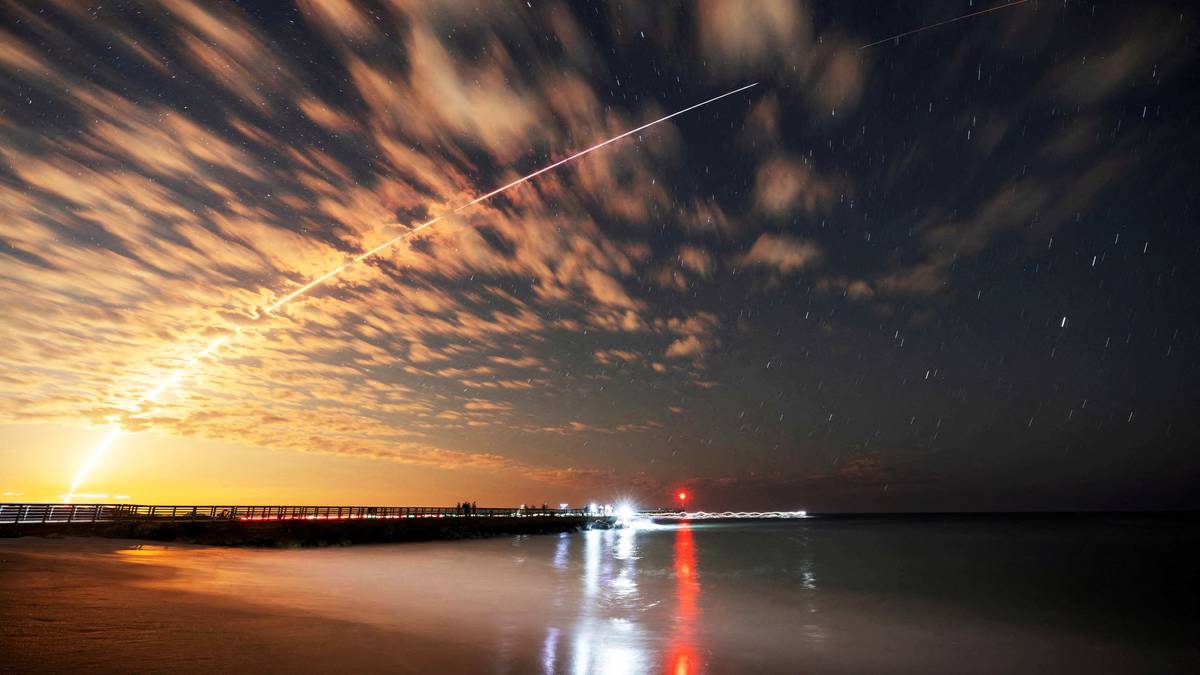
The case summarized researchers warn that Starlink satellites can damage the ozone layer, which protects against dangerous UV radiation. When the satellites burn up in the atmosphere, large amounts of aluminum dust are developed that can weaken the ozone layer. There has been an explosive growth in the number of satellites being shot into space over the last five years, with Starlink as the largest player. The Starlink satellites have an estimated life of about five years, and many have already begun to fall. Starlink plans to replace the satellites that expire, and have been granted permission to shoot 12,000 new ones, with plans for a total of 42,000. Researchers call for those who allow permission to shoot satellites are more aware of the problem. The summary is made by a Ki service from Openai. The content is quality assured by news’s journalists before publishing. In a world with a steady stream of bad climate news, the struggle for the ozone team stands out as an honorable exception. In the 1980s, the world was shaken by information about the ozone hole, which was then described as a giant, man-made disaster that potentially threatened all life on earth. Within a few years, all the countries of the world agreed to limit the emissions of gases that could destroy the ozone layer. – The ozone layer is very important. It protects us from dangerous UV radiation. Both humans, animals and plants. This is stated by climate scientist at Cicero, Øivind Hodnebrog, who is researching the ozone team. Threatened again, research shows that the ozone layer is again threatened. In an article in Geophysical Research Letters, a group of scientists point out that satellites may be a danger to the ozone layer. The vast majority of satellites are designed so that they burn up in the atmosphere when their lifetime is over. By burning up, they avoid parts hitting the earth and can harm humans. The researchers show that when the satellites burn up, large amounts of aluminum dust develops. Precisely that dust is the danger of the ozone layer. – We are at the beginning of a major research project. It is too early to say for sure that it is a negative effect, but we have begun to see parts of evidence. That’s what José Pedro Ferreira, one of the researchers behind the study, says to the New York Times. The ozone layer protects against damaged ultraviolet radiation. Experts warn that thinner ozone layers can lead to more skin cancer. Photo: Gleb Garanich / Reuters / NTB stay long in the atmosphere The dust causes the ozone layer to weaken. And the dust stays in the atmosphere for a long time. – It takes a long time for the aluminum to come down to the ozone layer. These can be decades, says Hodnebrog. The result is that it will take a long time for you to see the effect on the ozone layer. – If there is a big effect on the ozone layer of these satellites, it will take a long time before we discover it, says Hodnebrog. Explosive growth Although humans have shot satellites in space since 1957, there has been tremendous growth over the last five years. In ten years, there is a doubling in the number of objects being shot into space. The vast majority of satellites that are now shot up belong to Starlink. It is a company founded by Elon Musk that makes the Internet available via satellite. According to Space.com, it was a total of 7086 Starlink satellites in the year on February 27 this year in circulation around Earth. Elon Musk at a SpaceX event in Texas. Photo: Michael Gonzalez / AFP / NTB A regular Starlink satellite weighs around 250 kilos. When it burns into the atmosphere, about 30 kilos of aluminum dust develops. The Starlink satellites have an estimated life of about five years. This means that many have now begun to fall down. Only in January this year, around 120 of the satellites fell down. That’s what Astronomer Jonathan McDowell says at the Harvard University of SpaceWeather. -Pryers with satellites-from one lead Var perspective, I would definitely say that here we should stay a bit, says climate scientist at Cicero Øivind Hodnebrog. Photo: Cicero Starlink plans to replace the satellites that expire. The company has been allowed to shoot 12,000 and plans for 42,000. In addition, Amazon and other companies plan to shoot between 3000 and 13,000 satellites. The EU also has plans. Before Christmas, they signed a contract to develop a system called Iris². All of these satellites will lead to far more harmful aluminum in the atmosphere in the future. The researchers have calculated to be 650 percent more than natural levels. – It is worrying that we piss with satellites and continue with it for a long time. Without knowing if it has negative consequences. When we find it out, it may be too late to do anything about it, says Øivind Hodnebrog. He calls for those who give permission to shoot satellites are more aware of the problem. – I would not say that everyone should go around and be worried about this, but at least those who work with satellites. And authorities. They should definitely think about this. Especially those who provide approvals to companies like Starlink and Amazon, he says. On January 10 this year, a Spacex Falcon 9 was loaded with Starlink satellites, shot from Florida. Photo: Reuters A rare success – the struggle to save the ozone team has been a huge success, says Hodnebrog. He points out that the world in a few years gathered about solutions. Now it is climate change that is the threat. – Hopefully it is something you can learn from now with all the other climate problems we have, but it is more complex and more complex, says Øivind Hodnebrog. CO₂ in the atmosphere measured in parts per million particles (PPM) 460 parts per million particles (PPM)? Pressure for the explanation of parts per million, abbreviated PPM go to news’s climate status Why is the graph so wavy? This is about seasons. In the summer, the amount of CO₂ goes down because plants and trees absorb CO₂ from the air. In winter, the plants die, the CO₂ releases and the graph goes up. Since there are more plants and trees in the northern hemisphere, it is the seasons here that control the amount of CO₂ in the atmosphere. What is the problem of much CO₂ in the atmosphere? The greenhouse effect makes the soil livable, but more greenhouse gases, like CO₂, increases this effect and makes the soil warmer. The graph starts in 1960 because this was the year when the world began to measure CO₂ systematically. It happened at Mauna Loa in Hawaii and the curve shows the measurements from there. Before the world was industrialized, there were around 280 ppm CO₂ in the atmosphere (year 1700). The researchers have found this out by analyzing ice core samples. Does the less CO₂ in the atmosphere of emissions are cut? No, not immediately. If we cut emissions, the amount of CO₂ in the atmosphere will only increase more slowly. The decline in emissions must be large and last long before we can see effect. Imagine that the atmosphere is a bathtub and the greenhouse gases are the water you fill in. Even if you turn the tap, the bath will not be empty of water. This is the case with greenhouse gases and CO₂. It takes a long time for CO₂ to break down into the atmosphere. This is why the experts want technology that sucks out greenhouse gases from the atmosphere, in addition to cutting emissions. The world’s politicians have decided that they will try to limit the heating of the world to 1.5 degrees, compared to the temperature before the industrial revolution. Then we have to keep the amount of CO₂ in the atmosphere of less than 430 ppm, according to the UN Climate Panel. Published 12.03.2025, at. 09.22
ttn-69