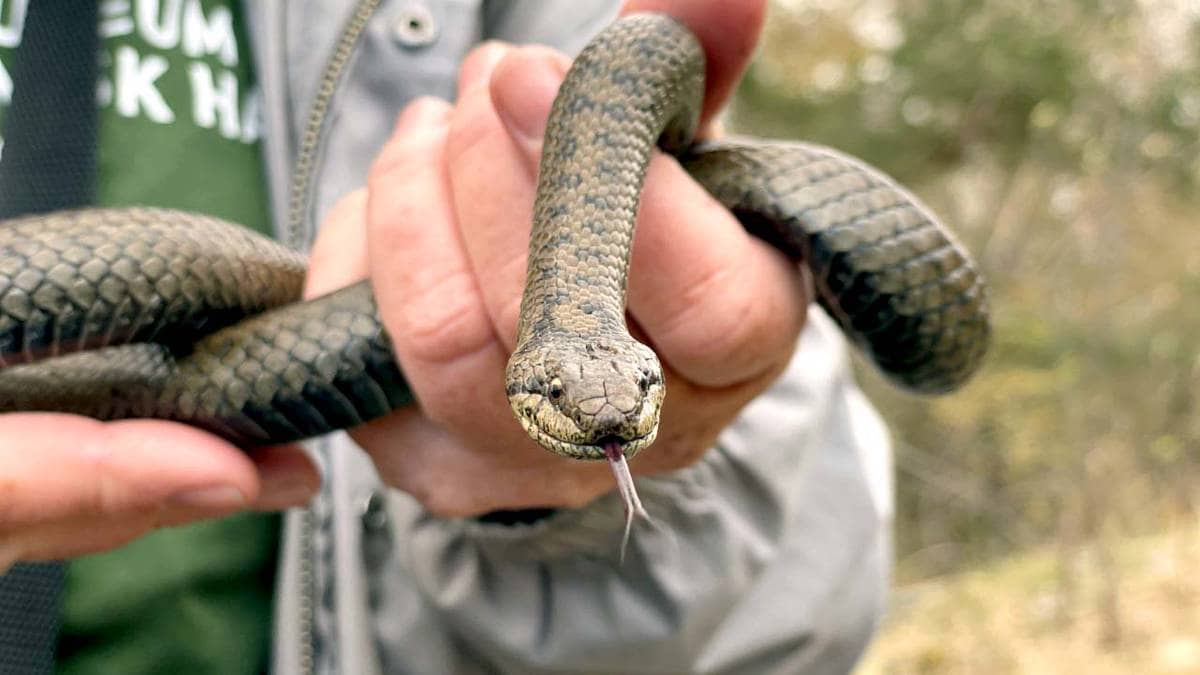
The case summarized: UiA and Swedish researchers are investigating a deadly fungal disease that threatens snake species worldwide. The fungus first infects skin and shells, and then attacks eyes, lungs and other internal organs, which can cause breathing difficulties and blindness of the snakes. The fungus was first discovered in the US in 2006 and in Europe in 2017, but has not yet been found in Norway. The fungus cannot infect humans directly, but humans can help spread it to new areas through soil and equipment. The researchers hope to find out more about how the disease is spreading and how it should be handled. Research can provide important knowledge about the history of the disease and what can be done to protect snakes in the future. The summary is made by a Ki service from Openai. The content is quality assured by news’s journalists before publishing. – We must understand the extent of the fungal disease. It can have major consequences for snake species all over the world, says zoologist Beate Strøm Johansen at the Nature Museum and Botanical Garden at the University of Agder (UiA). UiA, together with researchers in Sweden, will research dead snakes to find out more about the disease, called Snake Fungal Disease (SFD). Discovered in the US mushrooms first infect skin and shells with brown and dry spots. Eventually, eyes, lungs and other internal organs are also attacked. The snakes can have difficulty breathing and become blind. Snakes in Norway 🐍 In Norway we have three hose species: viper, delete and buorm. Hogworm is the only gifitge. It is characterized by the black zigzag pattern on the back. The name can be confusing, but the steelworm is not a snake species. The steelworm is a lizard. All snakes in Norway are protected. It is illegal and hunt or kill snakes in nature. The fungus was first discovered in the United States in 2006. In 2017 it was discovered in Europe for the first time, then in the UK. It has not yet been found in Norway, but that does not mean that it is not here, says the zoologist. – We are trying to find out if there is snake fungus here, and hope that we get answers to it during the year. The researchers have so far investigated around 120 snakes from the Evolutions Museum in Uppsala and the Natural History Museum in Oslo. Reptile researcher Beate Strøm Johansen. Photo: Kai Stokkeland / news No danger of “The Last of Us” in the HBO success “The Last of Us”, the Earth is almost wiped out by a mysterious parasite mushroom. The UiA researcher assumes that it is not such a fungus. – It only infects snakes, not humans. Nor can lizards or geckos be infected by the disease, says Johansen. The fungus cannot infect humans directly, but humans can help spread it to new areas. It can happen through soil and equipment that is moved around. Can provide important knowledge now hopes that they will find answers to how the disease is spreading and how to handle it. – It can give us important knowledge about both the history of the disease and what we can possibly do to protect snakes in the future, says Malene Ø. Nygård to UiA. She is a conservator and molecular biologist at the UiA’s Nature Museum. Malene Nygård hopes the research will answer how to protect hoses from the disease. Photo: Leif Dalen / news For the autumn, the researchers will look further at snakes from the Natural History Display Riksmuseet in Stockholm and from collections in Trondheim. – This is a field of research that is in an explosion. There are more and more researchers in countries in Europe now trying to find out what it is like with snake mushrooms and their snakes, says zoologist Johansen. Published 12.05.2025, at. 05.21
ttn-69