
Analysis of the Report on the Muslim Brotherhood and Political Islamism in France
The recent report titled "Muslim Brotherhood and Political Islamism in France" has sparked significant discussion across the nation. Delivered to President Emmanuel Macron, the document sheds light on the intricate relationship between the Muslim community and educational establishments in France. This report underscores the importance of educational institutions as a major influence in the political landscape, particularly focusing on the Frériste ideology.
The Role of Muslim Denominational Education
The report highlights that Muslim denominational education serves as a cornerstone of the Muslim Brotherhood’s influence in France. As noted by the authors, "The educational sector appears to be the priority of the French branch, to a degree that distinguishes it from its European counterparts." This assertion points to a unique framework where education is not merely a tool for learning but a method for ideological propagation and community building.
Among the five Muslim institutions that have established a contract with the French state, it is crucial to note that three are affiliated with the National Federation of Private Muslim Education, which originates from the Muslim Brotherhood. This affiliation raises concerns about the potential radicalization of students and the establishment of a parallel educational system that may not conform to the secular values upheld by the French Republic.
The Case of Averroes High School
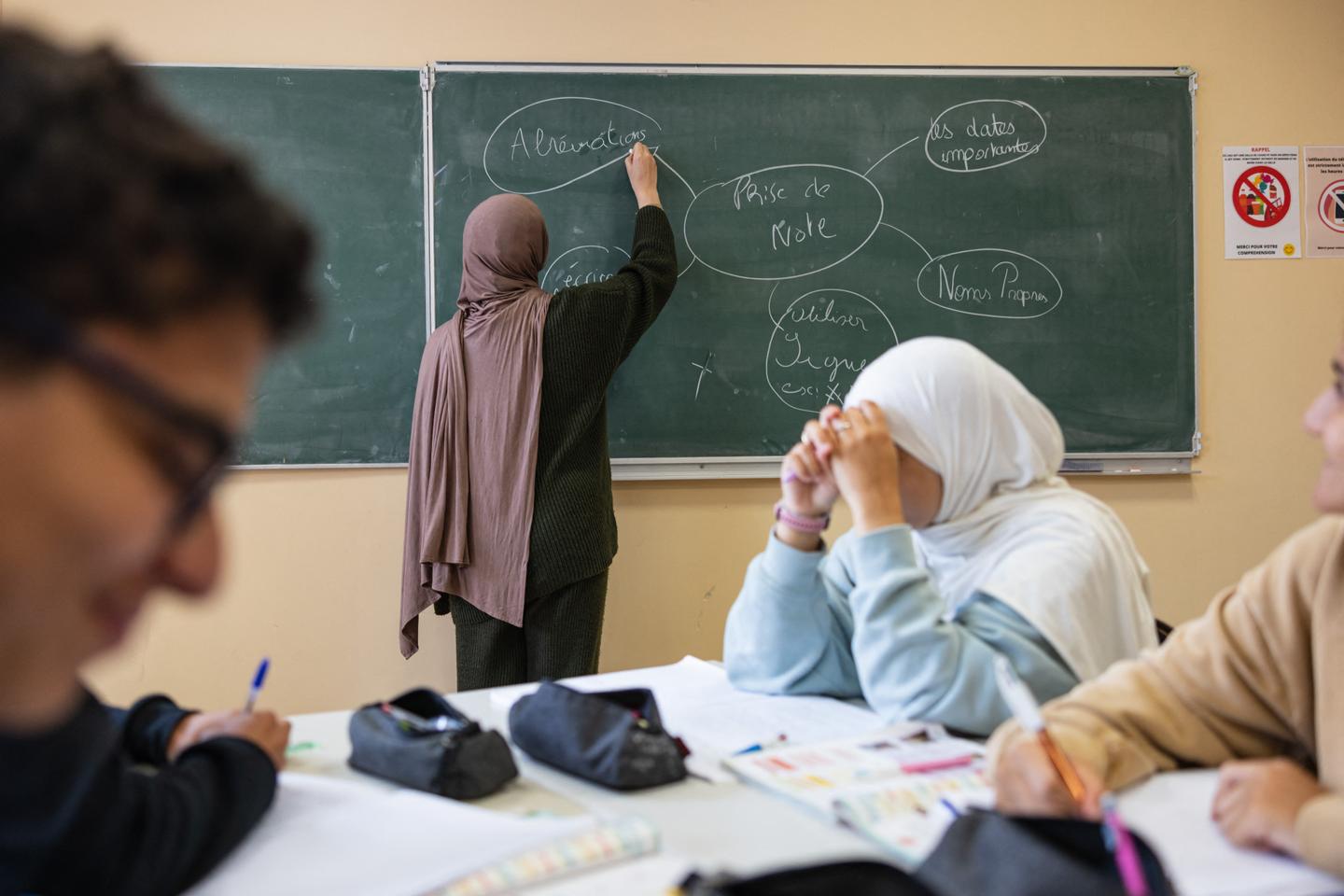
One of the institutions central to this discourse is Averroes High School located in Lille. This establishment was the first Muslim private school to receive state funding in 2008, but it surprisingly became the first to lose such financial support by the end of 2023. The report indicates that the school has been viewed as a bridgehead for Frériste Islam, prompting scrutiny from the authorities.
A recent legal battle has highlighted the fragile elements surrounding the school’s operational legitimacy. A procedure initiated by the North Prefecture aimed to revoke the contract with Averroes, citing various concerns. However, the Lille administrative court nullified this move on April 23, 2025, raising questions about the legal and ethical implications of the decision. Eric Dufour, the principal of Averroes, expressed confusion at the report’s implications, noting, "All these arguments were denied by the facts, by the evidence. But everything happens as if nothing had happened." This statement encapsulates the disconnection between policy actions and the reality faced by educational institutions.
Political Implications of the Report
The political ramifications of this report cannot be understated. It provides a roadmap for future governmental actions against what is perceived as the growing infiltration of political Islamism into public life. As France grapples with issues of national identity and secularism, understanding the role of Muslim educational institutions becomes ever more essential. This report offers a critical lens for lawmakers and educators alike, prompting a re-evaluation of partnerships with religious organizations.
The growing presence of the Muslim Brotherhood within educational sectors lays a foundation for a potential ideological battle over the curriculum, with ramifications reaching into the broader societal context. The state must navigate the delicate balance between supporting education and safeguarding secular values, a challenge that has implications beyond mere policy.
Community and Educational Impact
Communities directly affiliated with these educational establishments often perceive the report as a double-edged sword. On one hand, they may view the findings as a recognition of their efforts to provide education aligned with their cultural values. On the other hand, they must confront the potential stigma associated with being labeled as part of a movement that some perceive to be extremist.
The educational models put in place by these institutions foster a sense of community empowerment while simultaneously opening up pathways for potential radicalization. This duality presents educators and community leaders with a unique challenge to maintain a balance between cultural expression and adherence to the broader societal norms of France.
Conclusion: A Path Forward
Navigating the complexity of the intersection between education, community, and politics requires a nuanced approach. The report on the Muslim Brotherhood and Political Islamism in France serves as a significant marker in this ongoing dialogue. By understanding the implications of educational influence in the context of political Islamism, stakeholders can develop strategies that safeguard both national identity and cultural integrity in an increasingly diverse society.
As this issue continues to unfold, it is essential for both policymakers and community leaders to engage in constructive dialogue, creating avenues for understanding while addressing the legitimate concerns that arise from such affiliations. The future of educational policy and community relations in France will depend on the decisions made today as stakeholders seek to navigate the intricate tapestry of French society.