
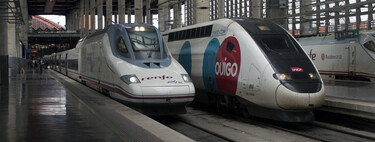
The Future of High-Speed Train Pricing: A Mirage or Reality?
The landscape of high-speed train travel in Spain is changing rapidly. Álvaro Fernández Heredia, the president of Renfe, recently made headlines by predicting an impending rise in high-speed train prices. In a keenly watched interview with Chain Being, he suggested that competitors like Ouigo and Iryo might soon exit the Spanish market. This raises questions about the future of affordability in high-speed travel.
High-Speed Pricing Trends
Among the notable statements made in the interview, Fernández Heredia highlighted a significant concern: train prices are on the rise. He stated, “If our competitors raise prices, we will follow that trend,” indicating a price correlation within the industry’s competitive dynamics. Just recently, the removal of AVLO services from the Madrid-Barcelona corridor has led to an immediate spike in ticket prices, rendering the landscape even more precarious for budget-conscious travelers.
“If our competitors raise prices, which is something they have begun to do, we will follow that trend.”
As a consequence, average ticket prices are currently above 80 euros , with the lowest fares not dipping below 50 euros . The changes have made travel less accessible, raising concerns for many customers who rely on high-speed trains for efficient transportation.
<img alt="Ouigo is operating at a loss between Madrid and Zaragoza. At the moment it is not going to raise prices (for now)" width="375" height="142" src="https://i.blogs.es/ba3fa2/51666494662_2edb3e1fd0_6k/375_142.jpeg"/>Public Service vs. Profitability
Fernández Heredia has emphasized that Renfe has a duty to provide a public service , even in financially unprofitable corridors. This philosophy shapes their approach to pricing. As the president states, they must maintain commensurate pricing with competitors while also ensuring they serve areas where others do not find it economically viable.
“Our distribution of dividends is to stop where the others do not stop… Our High-Speed is the only one that is economically sustainable.”
Notably, many of Renfe’s routes are not profitable but are essential for regional connectivity . This situation has raised calls for more equitable measures, echoing sentiments shared by Óscar Puente , the Minister of Transport, who previously pointed out the paradoxical burden on Renfe in a competitive high-speed market.
<img alt="The Government is sure that France supports Ouigo and wants to sue her. Ouigo's answer: gift train trips." width="375" height="142" src="https://i.blogs.es/414bde/img_3759/375_142.jpeg"/>Private Sector Challenge
Fernández Heredia asserts that companies like Ouigo and Iryo benefit from significant backing from their home countries, making it challenging for them to justify operating at a loss in Spain. The president’s critique touches on concerns that such firms can drive prices down initially, weakening local competitors who lack state support.
While Ouigo has refuted these claims, asserting that their strategy reflects standard practices in new markets, the tension reveals underlying issues . The Spanish government had raised alarms about potential unfair competition , signaling that scrutiny of Ouigo’s practices may be forthcoming.
<img alt="Spain forced to open its lines to Ouigo. France is now doing everything possible to prevent the entry of Renfe." width="375" height="142" src="https://i.blogs.es/05fbf7/img_6337/375_142.jpeg"/>Financial Losses Across the Board
The pricing wars have not come without their costs; all three major operators, Renfe , Ouigo, and Iryo, reported staggering financial losses. A recent report indicated that collectively they lost almost 100 million euros in 2024 alone on high-speed operations. The breakdown of these losses reveals that Ouigo accounts for a significant chunk at 40.5 million euros , while Iryo followed with 31.5 million euros , not far behind Renfe’s own losses of 27 million euros .
Despite these losses, it is worth noting that competition has benefited consumers, saving around 500 million euros since the sector opened to competitors. This demonstrates that while operators face economic challenges, the value provided to consumers has increased.
The Road Ahead
As we look forward, it appears that while some price increases may continue, the competition will likely keep prices in check. Particularly in less trafficked corridors outside high-demand routes like Madrid-Barcelona, pricing may stabilize or even thrive. However, with the anticipated exit of competitors, we could see prices gradually climb again, returning to a less favorable environment for travelers.
Photo credits | Alan Grant