
Demands for Justice: Families of Political Prisoners Rally in Venezuela
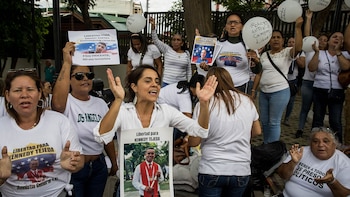
In the heart of Caracas, a significant event unfolded as a group of women—the relatives of political prisoners—gathered to call for a review of the cases of their loved ones detained following the tumultuous July 2024 presidential elections in Venezuela. These women have come together in a powerful display of solidarity, seeking accountability and compassion from the highest levels of the judiciary.
A notable participant in this gathering, Luisa Barrio, spoke passionately about their plight. “We are in a vigil asking for an audience with the Supreme Court of Justice (TSJ) director,” she stated. “We need to know what has happened, especially since there have been no liberations since March.” The desperation palpable in her voice, she urged that the cases of the political prisoners required urgent attention, as many remain unreviewed, with deteriorating health conditions worsening their situations.
The vigil continued, with many participants refusing to leave until they received a response regarding the welfare of the prisoners. Barrio emphasized that urgent action was required as “there are many who have serious health issues, including women still held in custody.” The conditions in Venezuelan prisons have garnered much attention, with reports highlighting the health crisis plaguing many detainees. “At least 100 prisoners from Tocorón prison in the state of Aragua are suffering from diseases such as respiratory issues, abscesses, and dengue fever,” she added.
Moreover, Barrio raised alarming concerns regarding mental health among inmates, sharing that some detainees had attempted to take their lives due to the unbearable conditions they face. “There are detainees who require medication because they are experiencing severe depressive episodes,” she stated. The families are not alone in their battle for justice; numerous NGOs and human rights organizations are keeping a close eye on these developments.
The Venezuelan NGO Criminal Forum has reported that there are currently 807 political prisoners in Venezuela. This number follows the release of 55 prisoners and the recent arrest of nine individuals, creating what many call a “revolving door” of political detainment. The report noted a disturbing trend where, while some are released, others quickly take their place, perpetuating a cycle of repression against dissenting voices.
Among those currently detained, the organization detailed that 712 are men, 95 are women, and four teenagers, aged between 14 and 17 years. Given these intensifying circumstances, it becomes clear that the situation is critical and requires immediate intervention.
In a complex political landscape, the government has shown a willingness to negotiate, as evidenced by the recent diplomatic dialogues involving the United States. On July 18, the Venezuelan regime released a group of political prisoners, including ten Americans, as part of a negotiation that permitted the return of 252 migrants who had been detained in another country. However, this temporary relief has sparked claims of a “brutal wave of repression” from opposition leader María Corina Machado, who has highlighted over 20 cases of missing individuals and new arrests.
Critics of the Nicolás Maduro regime assert that such actions serve to mask deeper issues of systematic oppression while choosing to target dissenters harshly. In this context, international attention is increasingly needed. As human rights advocates rally for change, the call for justice and accountability remains louder than ever.
Families who have gathered in Caracas represent a broader and growing movement that seeks not only the redemption of their loved ones but also a promise for a better future for all Venezuelans. They stand as a testament to the unyielding human spirit, courageously demanding their right to justice amidst oppression.