

The mili , or military service , has witnessed a resurgence in Europe, particularly in light of the ongoing War in Ukraine. In this context, a more emboldened Putin has motivated countries such as Lithuania, Latvia, France, and Denmark to reconsider and strengthen their military recruitment efforts. Many nations have been looking at the “Nordic model,” and now, Germany appears set to adopt a similar framework.
However, the proposed changes are nuanced.
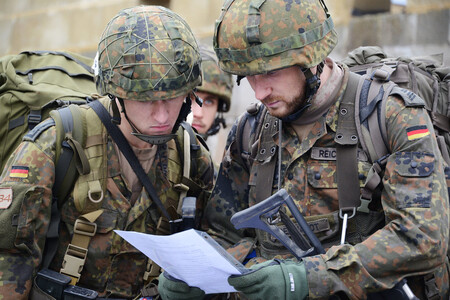
The awakening of an army. In a recent report by the Financial Times, it was revealed that Germany is preparing to make a significant shift in its defense policy by launching a new program for voluntary military service . The goal is to recruit up to 40,000 young people annually, aligning itself with the new European strategic landscape following Russia’s invasion.
Suspended since 2011, Germany’s previous mandatory military service has been the subject of intense debate. However, the government’s recent decision to adopt a voluntary model (inspired by the Swedish system) is designed not only to address the shortfall in troops but also to create a robust military reserve for potential future crises.
The road map. The forthcoming proposal is set to be presented as a bill to the German Cabinet at the end of August. This entails a phased approach, beginning with an expansion of the current voluntary program’s capacity from 15,000 this year to anticipated annual increments of 3,000 to 5,000 young people, targeting the goal of 40,000 by 2031.
This initiative aims to enhance the number of reservists , incorporating individuals who have completed the voluntary service. Some of these recruits are expected to opt for a professional military career . Currently, The Bundeswehr comprises about 182,000 professional troops, with plans to increase this figure to 260,000 by 2035. Concurrently, the reservist body seeks to expand from 60,000 to 200,000, necessitating significant transformations in recruitment and training processes.
Economic incentive. To facilitate these aims, the program outlines a series of incentives designed to attract 18-year-olds , the primary demographic targeted by this initiative. Starting in 2026, all males reaching this age (approximately 300,000 annually) will be required to complete a mandatory questionnaire assessing their eligibility for service, while female participation will remain voluntary.
Those who sign up can expect a net salary of approximately 2,000 euros monthly, alongside language courses, technical training, driving license subsidies, and the opportunity to gain essential labor skills beyond military training. Basic service will last six months but can be extended if volunteers express interest. From 2028 onward, all 18-year-old males must participate in a mandatory medical assessment , even if they do not intend to enlist, to maintain an updated database of potential reserves for future conflict scenarios.
7th Army
The new Merz doctrine. This initiative fits within the vision of Chancellor Friedrich Merz , who has committed to making the German army a more formidable conventional force in Europe. His government has already earmarked hundreds of billions of euros for rearmament. This new voluntary military service is expected to address the long-standing personnel shortages in the Armed Forces and reinforce Germany’s role within NATO and as a pivotal player in continental security.
In the background: The threats emanating from Russia, coupled with the deterioration of the pacifist strategic culture that followed World War II, and growing global tensions have led Berlin to redefine its military role. This decision, although framed as voluntary , may include provisions that could enable the reinstatement of mandatory service if the current strategy fails to achieve its targets.
Volunteer with shadows. Although full reinstatement of mandatory military service is currently ruled out, the project does include mechanisms that could effectively lay the groundwork for future conscription if needed. Unlike the Swedish model, where recruits are actively selected from among eligible citizens, in Germany, only those expressing interest will be considered.
Nevertheless, the requirement for all 18-year-old males to undergo medical evaluations will contribute to creating a structured national assessment system—one that could be activated more readily if circumstances demand it. Furthermore, the legal provisions also include a clause allowing for the formal restoration of conscription, albeit without specifying a particular activation threshold. This model thus represents a balance between Germany’s pacifist traditions and the necessity to respond to a new era of insecurity.
European echo. Moreover, Germany is not the only nation rethinking its approach to military service. In France, Macron has advocated for the reactivation of Voluntary National Service to bolster reserve numbers, aspiring to double them within the next decade, though he has declined to support a return to compulsory recruitment.
In Eastern Europe, countries like Poland , Lithuania , and Finland are rapidly enhancing their military capabilities and reservist forces. Germany’s model, given its scale and ambition, could serve as a potential reference for other Western democracies aiming to bolster their defense without reintroducing mandatory service directly. In a Europe that is rearming, this structured volunteering (encouraged yet not enforced) emerges as a politically viable strategy to fortify military preparedness without disrupting social consensus.

Margin of uncertainty. It is clear that the success of the German plan will hinge on its ability to engage young individuals, implement robust logistics, achieve social acceptance, and adapt to an ever-changing geopolitical landscape. While attractive incentives have been crafted, it remains uncertain whether these will suffice to recruit tens of thousands each year, especially given a generation increasingly unfamiliar with the military lifestyle.
Nonetheless, this initiative signifies the dawn of a profound transformation in Germany’s defense paradigm, heralding implications that transcend mere recruitment numbers. It symbolizes a country that, after decades of strategic caution, is finally prepared to embrace a central military role in Europe’s defense architecture.