

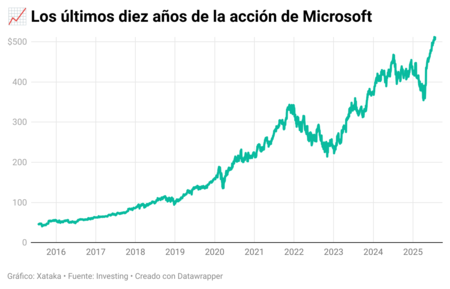
Microsoft’s recent decision to fire 15,000 employees marks a significant shift in the tech giant’s landscape. This massive layoff, compounded by the earlier dismissals of 10,000 in early 2023 and 3,500 in 2024, comes despite a surge in the company’s stock price, exceeding $500 for the first time in history, alongside reports of record income and benefits.
Understanding the Layoffs
Why is it important: In a recent internal memo, CEO Satya Nadella acknowledged the “apparent incongruity” of the company’s robust performance juxtaposed with such drastic job cuts. He emphasizes the need to reassess existing work principles in an evolving industry.
The Industry Shift
The current Microsoft operates in a curious duality:
- Consistent job cuts.
- Growing investments in AI infrastructure that are fundamentally transforming their operational model.
Even as they reduce their workforce, the overall team size remains relatively stable due to hiring specialized talent in AI, offsetting layoffs in other areas. Notably, Microsoft has recently onboarded 24 engineers from Google DeepMind within the last semester, showcasing their commitment to enhancing AI capabilities.
Current Corporate Atmosphere
“This is the enigma of success in an industry without franchise value,” Nadella stated. He expressed that these decisions weigh heavily, impacting not just the individuals laid off but their colleagues and friends. The current challenge for Microsoft lies in balancing the maintenance of its core businesses while simultaneously inventing new categories and business models. He describes it as a process of unlearning and learning concurrently.
The Paradigm Shift
Nadella’s communication is largely seen as damage control amid rising discontent among employees and former employees regarding the workplace atmosphere he’s cultivated over the past decade. Reports indicate a strain in workplace morale, further underscored by Tom Warren of The Verge, who described the deteriorating work conditions in detail.
To sustain its ambitious initiatives in AI, characterized by substantial investments in data centers and AI chips, Microsoft must minimize operational expenses. The straightforward equation of increased capital investment necessitating reduced salary expenditures inevitably leads to fewer managerial roles and more coding necessity.
Identity Transformation
Microsoft appears to be redefining its identity—from a “software factory” to an “intelligence engine.” This transformation shifts the focus from merely developing tools for specific tasks to empowering individuals to create their own tools. Nadella envisages a future where “ 8 billion people can invoke a researcher, analyst, or programmer.” This bold vision necessitates a revamp of their workforce.
- Losers: Employees who do not align with this new strategy.
- Winners: New talent acquisition from the AI sector, particularly from powerhouses like Google and Meta.
While the numerical strength of the workforce might remain stable, the profile of employees is undoubtedly evolving.

Navigating a New Normal
The tech industry, formerly heralded as a bastion of job stability , is experiencing an unprecedented wave of layoffs, with nearly 100,000 layoffs recorded so far this year, with Microsoft leading the charge. This phenomenon underscores a crucial truth: achieving success in the AI era does not guarantee job security. Instead, it requires relentless reinvention, creating a new normal marked by disruption.
Resonating with History
Nadella has drawn parallels between the present moment and the PC revolution of the 90s, promising employees that they will look back at this time as a period of immense learning, impactful contributions, and being part of a transformative experience. Whether this strategic transformation proves worthwhile—considering the human cost—remains to be seen. For now, Microsoft epitomizes the reality that even success can encounter significant challenges when the industry’s rules shift dramatically.