
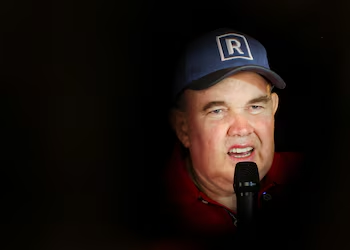
Rafael López Aliaga’s Claims of Electoral Fraud: A Political Controversy
Allegations of External Influence
Rafael López Aliaga, the leader of Renovación Popular and a key figure in Peru’s political landscape, recently raised eyebrows by linking alleged electoral fraud to international involvement. Speaking with CTV Peru, he implicated not only former Chilean president Gabriel Boric but also elements from “what remains of Cuba, Venezuela, and Bolivia.” These claims came after he was excluded from the runoff elections, stirring significant debate amidst the current political climate in Peru.
The Forces Against Peru
In his assertions, López Aliaga suggested that various “serious forces against Peru” have converged. He identified notable entities, including the troubled Brazilian construction giant Odebrecht and the Graña y Montero group, which has been rebranded as Aenza. These accusations reflect a broader narrative where corruption and political extremism are linked to electoral processes, a frequent theme in Latin American politics.
López Aliaga remarked, “There comes together all the filth of corrupt business groups with what is the extreme left,” framing his perspective within a battle between ideologies—capitalist versus socialist.
The “Red Tide” and Regional Dynamics
In a passionate address, López Aliaga referred to a “red tide,” evidently drawing parallels to the prevailing leftist governments in the region. He critiqued the political dynamics in Bolivia and Chile, emphasizing the narrative of survival and political infiltration. His statements reflect a prevalent fear among some political factions in Peru that leftist ideologies could influence or destabilize the nation.
Criticism of Competitors
The former mayor did not shy away from criticizing Keiko Fujimori, the candidate from Fuerza Popular, who is running for the fourth time. He condemned plans for deploying “90,000 representatives” nationwide for the second election round, suggesting that if fraud occurs, the vast mobilization would be a mere front for electoral manipulation.
López Aliaga strongly believes in a conspiracy orchestrated within Peru’s electoral systems. He asserted, “When the red one comes out, the communist comes out that leads us to be Venezuela,” underscoring his fears about the potential communist influence over the electoral process.
Call for Re-evaluation of Election Results
Despite presenting his allegations, López Aliaga has not offered substantial evidence to support his claims of electoral fraud. He cited delays in the opening of polling stations in Lima, his base of support, as a reason for his grievances. He has since threatened electoral authorities for a repeat voting session or supplementary elections to address his concerns.
Nevertheless, a report from the Transparency Civil Association indicated that these logistical issues did not significantly alter the electoral outcome, contradicting López Aliaga’s narrative. The report confirmed the legitimacy of the results, which positioned Fujimori and Roberto Sánchez in the runoff.
Conclusion
Rafael López Aliaga’s strong accusations highlight the tense political atmosphere in Peru, with the interplay between local and foreign influences at the forefront. His claims serve as a reminder of the complexities involved in the nation’s electoral integrity, though they remain unsubstantiated by tangible evidence. As the runoff approaches, the focus will undoubtedly remain on how these accusations shape public perception and influence voter behavior in Peru’s dynamic political landscape.