
The Controversial Presentation of the Lima-Chosica Train Project
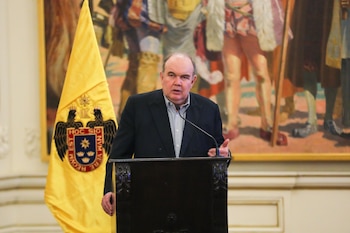
The mayor of Lima, Rafael López Aliaga, transformed the presentation of the Lima-Chosica train project into a politically charged event, filled with accusations of corruption and pointed remarks directed at the administration of President Dina Boluarte. This event, which drew local authorities and media attention, was marked by a musical show that served as a backdrop to a speech overflowing with drama and indignation.
Political Climate and Corruption Accusations
During his speech, Mayor López Aliaga claimed that he, along with various Lima councilors, had been criminally denounced due to the train project, a view that was met with skepticism from both the Executive and experts in public administration. “I have to be grateful; here is a whole job of the Lima councilors who are criminally denounced because of this blessed train,” he stated defiantly. The tone of his remarks suggested that he sees these allegations not as hindrances, but as badges of honor.
Defiance in the Face of Legal Challenges
López Aliaga further emphasized his resilience by proclaiming, “In my case, I am not worried because I am tanned. I have pig leather; at my age and circumstances, it slips off me. Follow me denouncing. Here there is a ‘Porky’ fighter who has won in good faith.” This bravado was not merely theatrics; it underscored the political climate characterized by intense scrutiny and allegations surrounding public figures.
He portrayed the challenges of public office as a “cross,” claiming that those who take on such roles are subjected to unwarranted attacks. “When you enter a public office out of pure altruism, it becomes a burden, but it’s a cheerful burden,” he declared, implying that despite the noise surrounding his administration, the pursuit of the train project remains paramount.
Calls for Local Collaboration
During the presentation, López Aliaga urged fellow mayors to take proactive steps towards advancing the railway project, even in the absence of support from the central government. “If the central government does not want to invest in the basics that are the protection fences for train crossings, I call upon my congressional counterparts to step in,” he said. His comments reflect an urgent need for collaboration among local entities, particularly in times of bureaucratic gridlock.
Executive Government’s Response
In a sharp counter to the mayor’s claims, Minister of Transport and Communications, César Sandoval, publicly criticized López Aliaga’s handling of the project. Hours before the presentation, Sandoval acknowledged the mayor’s concerns but insisted that public management must adhere strictly to existing legal frameworks. He emphasized, “Lord mayor, the public management of works and projects should be done technically and respectfully, following the regulations that protect us.”
Minister Sandoval further added, “You can insult everything you want, but things are done legally. With your economic power, you cannot violate the norms and laws.” This indicates a growing tension between local and national authorities, hinting at potential conflicts in public policy and governance.
Congressional Oversight
Adding to the scrutiny, Congresswoman Susel Paredes sent a request to the Lima municipal government for transparency regarding the musical event held in conjunction with the presentation. She demanded detailed financial information related to the event, including the estimated budget and amounts spent on artists, logistics, and production services. This reflects a growing demand for accountability within local governance.
The need for transparency in public projects remains critical, especially in a context where public trust in government institutions is wavering. Events like these not only serve as platforms for political messaging but also highlight the intricate relationships between various levels of government in Peru.
The ongoing saga surrounding the Lima-Chosica train project and the accompanying political drama illustrates a crucial moment in Peru’s governance landscape. As tensions escalate between local leaders and the central government, the question remains whether collaborative efforts can transform ambitious projects into reality, or if they will succumb to the challenges of corruption and mismanagement.