
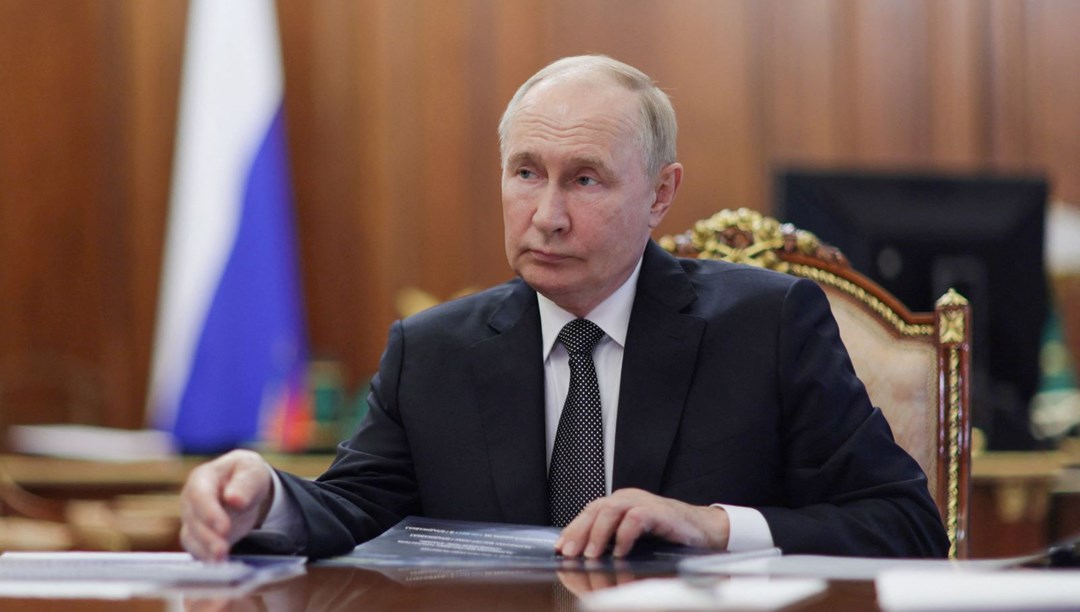
Putin Addresses Government Officials on Ukrainian Drone Attacks
In a recent meeting with government officials in the capital city of Moscow, Russian President Vladimir Putin made significant allegations regarding the ongoing conflict with Ukraine. He asserted that Ukraine has been conducting “terrorist attacks” utilizing drones as their primary weapon. This assertion highlights a significant escalation in the tensions between the two nations, prompting a strong response from the Russian leadership.
Claims of Targeting Non-Military Objectives
During his remarks, Putin emphasized that the Ukrainian military tends to target civilian structures and locations that do not hold military significance. He stated, “The enemy often selects targets such as civilian facilities, homes, and people,” further substantiating his claims with recent developments observed on the ground. This strategy allegedly employed by the Ukrainian forces indicates a troublesome tactical shift in the ongoing military conflict.
Putin’s comments also suggest that such actions could potentially be classified as war crimes, drawing attention to the evolving nature of warfare in the region. The impact of drone technology on military operations has fundamentally changed the dynamics between combatants, allowing for remote engagements that can be orchestrated without direct human presence on the battlefield.
Impact on Specific Regions
The Russian President specifically mentioned that certain regions, particularly Bryansk, Kursk, and Belgorod, have been significantly affected by these supposed drone strikes. This statement underlines the direct consequences of the conflict on Russian territory, as the impacts of the war spill over into Russian civilian life and governance.
Bryansk, Kursk, and Belgorod are strategically important Russian regions, as they share borders with Ukraine. The escalation of attacks in these areas raises concerns about the potential for broader military confrontations on Russian soil. These developments are not just military in nature; they are a matter of national security for Russia, prompting the government to take necessary precautions to protect its citizens.
Russian Military Response
In light of these recent allegations and threats, Putin has indicated that the Russian military is actively engaged in enhancing border security. He remarked, “It has been decided to create a safe buffer zone along the border." This statement reflects a strategic move on the part of the Russian military to establish protective measures against further threats that might arise from Ukrainian operations.
Moreover, the creation of this buffer zone aims to mitigate the potential risks associated with cross-border attacks. By delineating a secure area, Russia intends to safeguard its territories and protect its civilian population from the impact of this ongoing conflict. The establishment of this zone could further escalate tensions, as it may also restrict the movement of people and goods across the border.
The Broader Implications of Drone Warfare
The use of drones in warfare has transformed traditional military tactics, allowing for the ability to strike from a distance without the presence of troops in harm’s way. This development is significant, especially considering that many nations are increasingly investing in drone technology. The implications of drone warfare extend beyond the immediate battlefield; they challenge existing international laws and norms surrounding warfare.
Furthermore, the narrative of “terrorism” surrounding drone strikes raises questions about accountability and the ethical dimensions of conflict. The civilian toll of such operations invariably impacts public perception and complicates political discourse both domestically and internationally. As countries like Russia and Ukraine continue to navigate this volatile landscape, the discourse surrounding drone use in warfare will likely dominate future conversations.
The Future of Russian-Ukrainian Relations
The relationship between Russia and Ukraine remains extremely strained, with both sides entrenched in their respective positions. Ukraine continues to combat Russian influence and aggression, while Russia seeks to maintain its territorial integrity and regional dominance. The use of drones further complicates this relationship, potentially ushering in a new era of combat methods that could alter the course of future conflicts.
As the situation evolves, the response from global actors and organizations will play a pivotal role in shaping the outcome of this ongoing conflict. The heightened rhetoric, along with military preparations hinted at by Putin, suggests that both nations are gearing up for a prolonged and potentially more violent struggle.
In conclusion, the meeting in Moscow highlights the tensions between Russia and Ukraine, particularly regarding drone warfare and its humanitarian implications. The situation not only affects the dynamics between the two nations but also raises significant questions about the nature of modern warfare and its consequences for global security.