
The Future of Vision: Alice’s Journey with the Prima Microchip
Introduction to the Prima Microchip
Implantable chips and brain-computer interface (BCI) technologies hold immense promise for the future of medicine. Among the latest advancements is the Prima, a retinal microchip developed by Science Corporation, founded by Max Hodak, a figure formerly associated with Neuralink. This innovation brings newfound hope to individuals suffering from neurodegenerative diseases, particularly in restoring partial sight to patients affected by conditions like age-related macular degeneration (AMD).
Alice’s Remarkable Story
Alice Charton, an 87-year-old resident of Paris, represents a beacon of hope for many. Diagnosed with age-related macular degeneration, a condition that affects over 200 million people worldwide, she faced the grim reality of losing her central vision. While dental procedures may remain routine for some, Alice bravely ventured into the realm of technology-driven healing. The implantation of the Prima microchip transformed her life, allowing her to partially see again—an inspiring narrative that even earned her a spot on the cover of TIME magazine.
Understanding the Prima Microchip
The Prima microchip is a compact device measuring just 2 x 2 millimeters and features approximately 400 electrodes. Importantly, it’s crucial to clarify that the chip does not restore vision to its full capacity. While it has enabled Alice to read for about two hours a day, she cannot recognize faces or navigate independently through crowded spaces. Nevertheless, Alice states with enthusiasm, “This has given me hope. It has literally changed my life.”
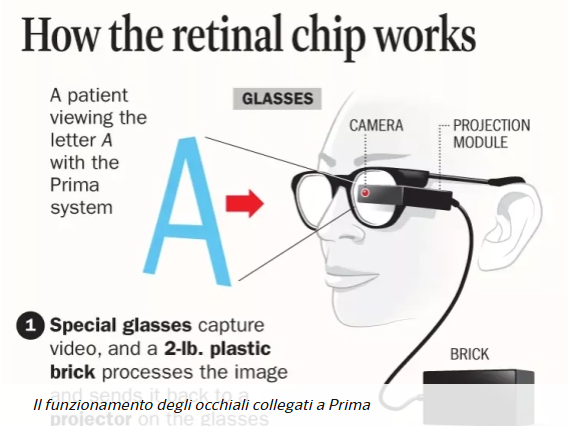
In a groundbreaking procedure, surgeons implanted the chip using minimally invasive techniques directly into the affected area of Alice’s retina. Patients like her must wear specialized glasses equipped with a camera to capture visual information, which the Prima microchip then converts into electrical signals.
How the Prima Microchip Works
The retinal microchip functions as a “connection bridge” between external light signals and retinal neurons, compensating for the damaged photoreceptors inherent in AMD. By converting infrared light into electrical stimuli, the microchip sends signals to the optic nerve, facilitating the perception of visual images.
According to a recent experimental study published in the New England Journal of Medicine, about 80% of participating patients using the Prima could read up to the fifth line on an eye chart, a significantly better performance than previous technologies.
Current Limitations and Future Aspirations
Although the Prima microchip offers a remarkable leap forward, it currently provides monochrome vision, limited to shades of black and white. The broader vision of restoring full color vision remains a critical area of research and development for the Science Corporation team.
Conclusion
Alice Charton’s journey with the Prima microchip underscores the pivotal role that advancements in medical technology play in enhancing the quality of life for those afflicted with vision loss. The future of brain-computer connections promises even more remarkable possibilities, as we edge closer to finding solutions for previously incurable conditions. As innovations like Prima continue to evolve, the dream of restoring sight becomes increasingly tangible, offering hope to millions around the globe.