
Highlights from the Debate
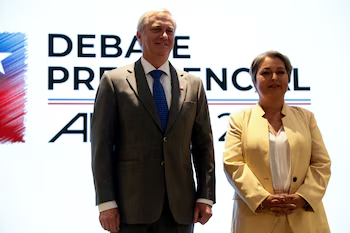
At precisely 9:00 p.m., the much-anticipated presidential debate kicked off, featuring official candidate Jeannette Jara and Republican leader José Antonio Kast. This event was orchestrated by the National Television Association of Chile (Anatel) and served as the final debate before the runoff presidential election set for Sunday the 14th.
Structure of the Debate
The debate lasted two and a half hours, covering nine distinct themes divided into blocks. Each candidate was allotted specific time for answering questions. The format included not only direct questions but also cross-examinations, allowing candidates to challenge each other’s assertions. As a concluding measure, each candidate had the opportunity to deliver closing remarks directly to the camera.
Strict Guidelines
Participants were subject to rigorous regulations—only a pencil and paper were permitted, and the use of any electronic devices was strictly prohibited. This rule aimed to ensure that the candidates engaged in a genuine back-and-forth dialogue, relying solely on their knowledge and public speaking skills.
Key Moments in the Debate
One of the most pivotal moments came when Jeannette Jara was questioned about her political affiliation with the Communist Party (PC). Jara responded emphatically, declaring the necessity of building politics on a broad and inclusive base. She stated, “Politics is built on a broad political base, but also on a social basis. Also on the organization of the country’s residents. If we think that governing without the capacity to make progress, we are stagnant.” This statement underscored her commitment to a governance model that includes diverse viewpoints and collaborative efforts.
Crucial Question on Political Affiliation
In a moment that attracted significant attention, Jara was asked whether she would renounce her communist militancy. Her succinct answer, “That’s how it is!” was met with intrigue, hinting at potential shifts in her political stance leading up to the elections.
Public Perception and Predictions
Following the debate, polls and expert analyses leaned in favor of José Antonio Kast as the perceived winner of the second round. The implications of this debate are far-reaching, and it appears to have solidified existing perceptions while also introducing new dynamics into the election narrative.
Final Takeaway
As the election nears, the stakes could not be higher. With varied responses and positions revealed in the debate, voters are now scrambling to assess how these revelations might influence their choices ahead of the pivotal election day. As we await further developments, Jara and Kast’s contrasting visions for Chile are likely to shape the political landscape in the weeks to come.
News in development….